Wilmington's R-3 Duplex Rezoning Reprices Infill Land for Small-Scale Investors
Wilmington's R-3 duplex rezoning reprices infill parcels for small-scale investors. A capital allocation analysis of what the entitlement shift means.

Mar 13 2026
1 min read
Business Summary
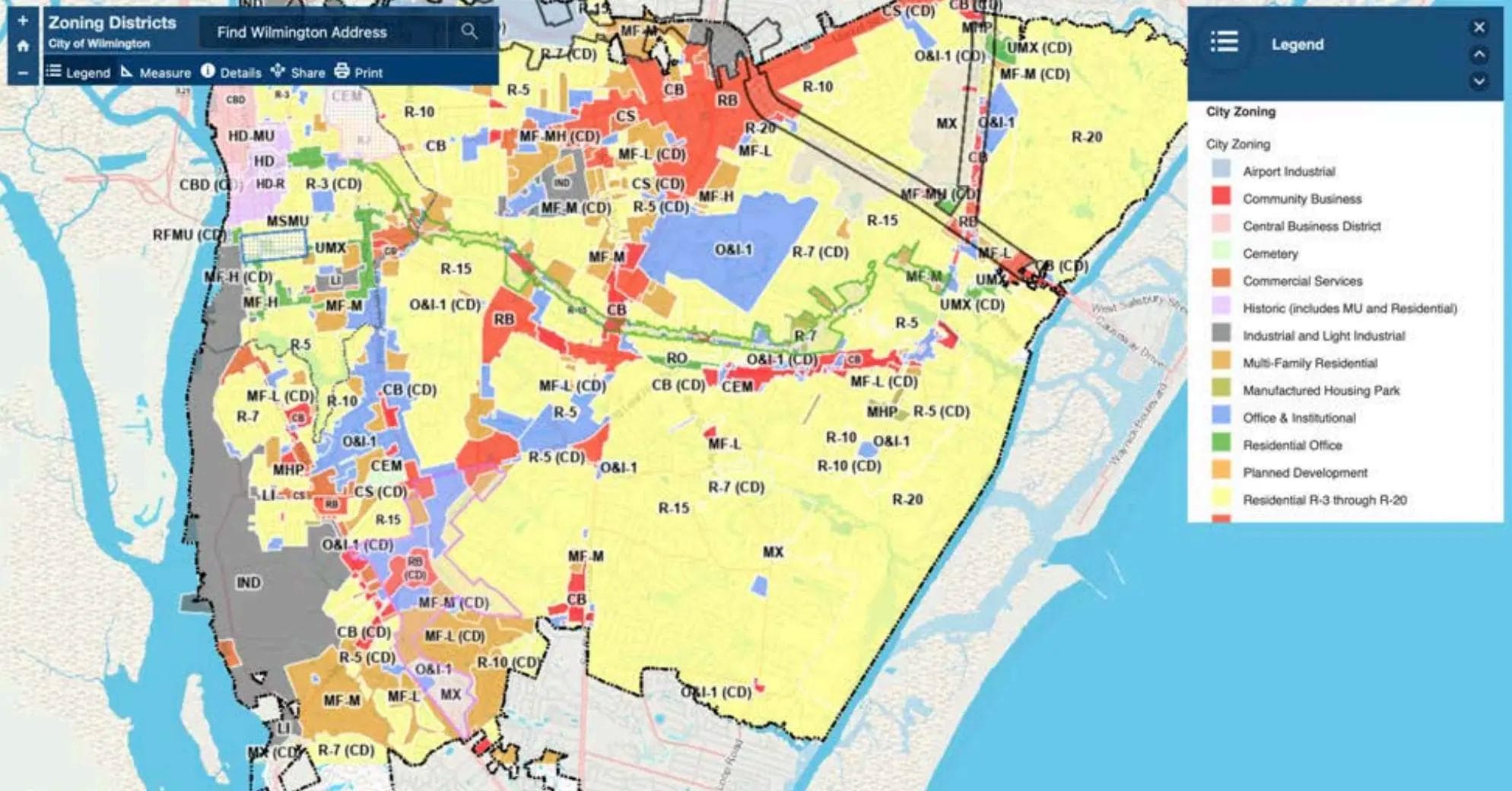
Wilmington City Council approved amendments to the Land Development Code allowing duplex construction on smaller lots within the R-3 zoning district, subject to specific design standards. While framed as a "missing middle" housing policy, the entitlement change fundamentally alters highest-and-best-use calculations for every R-3 parcel in the city — effectively repricing infill land for small-scale multifamily investors without requiring a single rezoning application. For capital allocators watching the Wilmington market, this is a zoning-driven value event disguised as housing policy.
Fast Facts
- Policy action: City Council approved Land Development Code amendments for R-3 zoning district
- Effective scope: Duplex housing now permitted on smaller lots in R-3 areas where previously restricted
- Condition: Projects must meet specific design standards (details not yet published in available records)
- Reported date: On or before March 9, 2026, per Wilmington Chamber reporting
- Policy framing: "Missing middle" housing strategy targeting areas with existing infrastructure
- Key data gaps: No parcel-level acreage counts, corridor maps, or per-parcel valuation uplift figures have been publicly released
What Happened
The Wilmington Chamber of Commerce confirmed in its March 9, 2026 President's Report that City Council amended the Land Development Code to permit duplex housing on smaller lots within R-3 residential districts. The policy targets neighborhoods already served by existing water, sewer, and road infrastructure — a deliberate choice to concentrate new density where the city can absorb it without major capital expenditure.
The amendment does not require individual property owners to seek rezoning. Any R-3 parcel that meets the updated lot-size minimums and design standards is now entitled for duplex use by right. That distinction matters: it converts what was previously a single-family-only entitlement into a small-scale multifamily entitlement across an entire zoning class, not just a handful of approved projects.
Specific design standards were cited as a condition, though the full text of those standards has not appeared in publicly available reporting as of this writing.
Why It Matters
Entitlement changes at the zoning-class level are among the most efficient ways a municipality can move land values without spending public dollars. By allowing duplexes by right in R-3, Wilmington has effectively doubled the theoretical unit capacity of qualifying parcels. For any investor running a highest-and-best-use analysis on R-3 land, the pro forma just changed.
Consider the math directionally: a single-family lot generating one rental unit now supports two. Even before construction, the entitlement itself carries value — a dynamic well understood by land bankers and infill developers. The absence of a rezoning requirement removes months of approval risk and thousands in application costs, lowering the barrier for small-balance investors who typically operate at the 1–4 unit scale.
For the broader Wilmington housing market, the policy adds supply capacity in established neighborhoods rather than pushing growth to the suburban fringe. That has infrastructure cost implications for the city and competitive implications for suburban garden-apartment developers who now face a new class of infill competition.
What Stands Out
- By-right entitlement is the real story. Eliminating the need for individual rezoning applications removes the single largest friction point for small-scale multifamily investment. This is not a pilot program — it is a blanket policy shift across an entire zoning class.
- Design standards are the unknown variable. The requirement for specific design standards could meaningfully constrain which parcels are economically viable for duplex conversion. Until those standards are published and tested in the field, the effective scope of the policy remains unclear.
- Infrastructure-first targeting is fiscally disciplined. Concentrating new density in areas with existing infrastructure avoids the capital trap of extending services to greenfield sites. This reduces the city's per-unit cost of accommodating growth.
- No public data exists on R-3 parcel inventory. The number of R-3 parcels, their aggregate acreage, and their geographic concentration have not been released in connection with this policy. Without that data, market-wide valuation impact cannot be credibly estimated.
- Southeast peer comparison is warranted but unconfirmed. Charleston, Savannah, and Raleigh have all explored or implemented duplex liberalization policies in recent years. Wilmington's move fits a regional pattern, but direct policy comparisons require granular review of each city's lot-size minimums, design standards, and infrastructure conditions.
Market Lens
Analyst Angle: Capital Allocation
This rezoning reshuffles the capital allocation calculus for investors operating in the $200,000–$600,000 per-parcel range — the sweet spot for small-balance multifamily and house-hack buyers. Previously, deploying capital into R-3 meant accepting single-family returns. Now, the same capital can target duplex yields without rezoning risk.
The likely near-term effect is increased competition for well-located R-3 lots, particularly those near employment centers, transit corridors, and UNCW. Investors who move early — before the market fully prices in the entitlement change — stand to capture the spread between legacy single-family land values and the new duplex-entitled basis.
Suburban multifamily developers should take note as well. Every duplex that comes online in an infill R-3 neighborhood is a unit that does not lease in a Class B garden complex on the city's periphery. The competitive pressure may be diffuse, but it is real.
Lenders active in the Wilmington market should begin updating their underwriting frameworks for R-3 parcels. Appraisals that rely on single-family comparables will understate the entitled value of duplex-eligible lots — a gap that creates both risk and opportunity depending on which side of the transaction you sit.
Risks & Watch-Outs
- Design standard ambiguity: Until the specific design requirements are publicly detailed and tested through permitting, the effective development envelope for R-3 duplexes is unknown. Overly restrictive standards could neutralize much of the entitlement value.
- Permitting and inspection capacity: Adding a new class of entitled projects increases demand on the city's Development Review team. If permit timelines stretch, the theoretical by-right advantage erodes in practice.
- Construction cost environment: Entitlements do not build buildings. Wilmington's construction labor market remains tight, and materials costs in the Southeast continue to reflect post-pandemic inflation. Duplex pro formas that assume pre-2022 cost structures will not pencil.
- Neighborhood opposition: Missing-middle policies frequently generate pushback at the project level even when approved at the policy level. Investors should anticipate friction in established single-family neighborhoods.
- Market absorption: No demand study has been published alongside this policy. If duplex supply outpaces rental demand in specific R-3 corridors, per-unit rents could compress — particularly for small operators without property management scale.
- Valuation data vacuum: The absence of pre- and post-entitlement land comparables means early movers are pricing risk with limited market evidence. That cuts both ways.

Daniel Price
Daniel Price brings a decade of experience advising developers and institutional investors on large-scale commercial real estate projects. Now based in Wilmington, he covers local business expansion, leasing trends, and the economics behind downtown redevelopment and land use shifts.
Related Posts
More stories from the same category




Recent Posts
Stay up to date with our latest stories



Subscribe to Newsletter
Provide your email to get email notification when we launch new products or publish new articles