Mayfaire Submarket Tightens as Center Point's Phase I Retail Sells Out Before Opening
Center Point's 32,000 sq ft Phase I retail is fully committed near Mayfaire. Wilmington NC commercial real estate investors eye the Military Cutoff corridor.

Mar 11 2026
1 min read
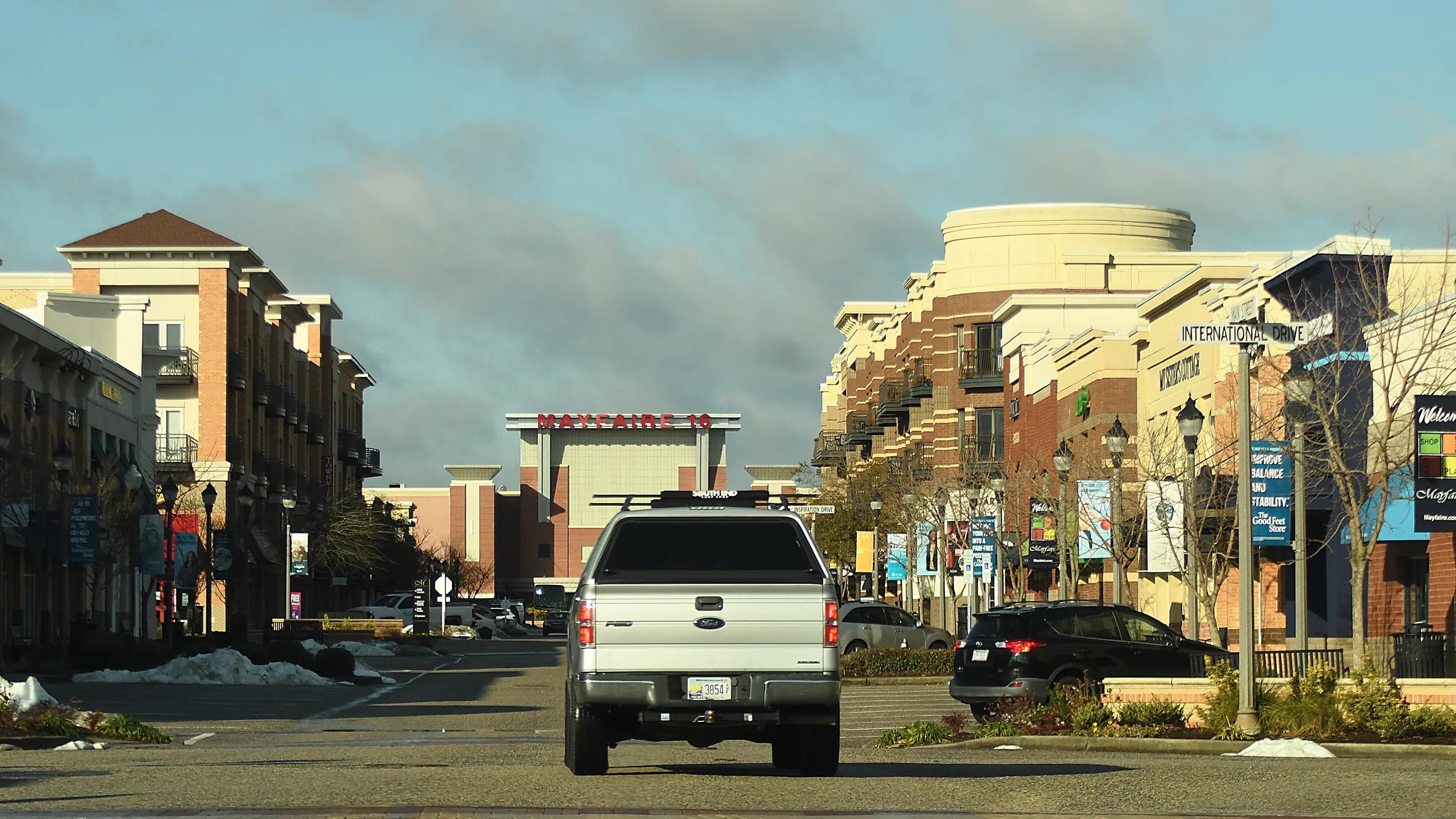
Wilmington, NC — The Military Cutoff corridor — already anchored by Mayfaire Town Center, the region's dominant 610,000-square-foot open-air retail destination — is absorbing a significant wave of new mixed-use density. The Center Point development, adjacent to Mayfaire, has fully committed its Phase I retail component before construction is complete, while local brokers are calling Mayfaire and downtown Wilmington the two strongest commercial submarkets heading into 2026.
Center Point Phase I: Fully Committed Before It Opens
Center Point, a joint venture between The Beach Company and Swain & Associates, is delivering a mixed-use campus directly adjacent to Mayfaire Town Center along Military Cutoff Road. The project's Phase I retail component — approximately 32,166 square feet of retail and restaurant space — is fully committed, according to developer Swain, who noted that demand has been strong enough that the team is already in design for a Phase II retail component.
Phase I of the broader Center Point campus also includes 351 apartments and 6,941 square feet of live/work space. CBRE|Raleigh brokers Charlie Coyne and Matt Larson are handling retail leasing for the project.
Mayfaire Itself Continues to Evolve
Meanwhile, Mayfaire Town Center — owned by CBL Properties (NYSE: CBL) since its $192 million acquisition — continues layering in upscale and experiential tenants. Recent and upcoming additions include:
- Ben & Jerry's — opening Spring 2026
- Free People and FP Movement — 2,300 and 2,200 sq ft respectively on Main Street
- lululemon — expanding to a new 5,200-square-foot space on Main Street
- Reeds Jewelers — relocated flagship at 9,000 square feet on Inspiration Drive, carrying Rolex and David Yurman
- KidStrong — youth fitness franchise, now open at Mayfaire Community Center
- Altar'd State Kids — opened July 2025, first standalone children's concept for the brand
Rack Room Shoes is also growing its footprint within the center, relocating to make way for the Main Street upscaling.
The Submarket Forecast
Lindsey Hess, Senior Vice President at Cape Fear Commercial, identified the Mayfaire submarket and downtown Wilmington as the two nodes projected to see the strongest commercial demand in 2026. The midtown Wilmington corridor — primarily medical office — is a secondary growth zone. Hess also noted that following the post-pandemic price correction, commercial asset prices are expected to tick upward in 2026, restoring investor returns for buyers who acquired during the correction window.
Why This Matters for Investors
Retail Is Winning Here While It Struggles Nationally
Open-air, experience-anchored retail continues to outperform enclosed malls and secondary strip centers nationwide — and Mayfaire exemplifies this format. CBL's continued investment in upgrading the tenant roster with brands like Free People, lululemon, and Anthropologie signals institutional confidence in the corridor's long-term demand ceiling. For investors evaluating retail exposure in the Carolinas, Mayfaire's submarket dynamics represent a durable demand story rather than a cyclical one.
Center Point's Pre-Leased Phase I Is a Market Signal
When a mixed-use retail component of 32,000+ square feet commits fully before opening — in a market that already has a dominant retail neighbor — it reveals genuine unmet demand in the trade area. The demand overflow into a planned Phase II suggests that Military Cutoff retail rents have pricing power, and that investors positioned in this submarket can expect favorable renewal and lease-up dynamics.
Office Demand Is Quietly Compressing Vacancy
The Military Cutoff corridor's office market — originally built out by SAMM Properties between 2010 and 2018 across six buildings — leased up rapidly and has maintained low vacancy. Hess noted that Wilmington has historically lacked speculative office development, which kept vacancy structurally low even during the pandemic-era national office downturn.
Investors acquiring office product in or adjacent to the Mayfaire submarket are entering a market where supply discipline has protected against the oversupply plaguing larger metros.
Broader Implications for the Mayfaire Corridor
- Retail rental rates are supported by an affluent captive trade area. The Mayfaire submarket draws from Wrightsville Beach, Landfall, Figure Eight Island, and Porters Neck — some of the highest-income zip codes in eastern North Carolina. That consumer base insulates the corridor from softening more acutely felt in working-class retail strips.
- Mixed-use density compounds corridor value. Center Point's 351 apartment units add rooftop population directly adjacent to retail, which drives foot traffic and de-risks restaurant and service tenants. Investors in retail NNN product near the corridor should expect tenant credit quality to improve as the residential density increases.
- National brands are using Wilmington as a Carolinas expansion market. Several recent Mayfaire additions — FP Movement, Altar'd State Kids, Ben & Jerry's — represent first-to-market Wilmington entries. That pattern indicates national retailers view the Wilmington trade area as under-retailed relative to its consumer spending power.
- Commercial price recovery is underway. After a post-pandemic correction in commercial values, Cape Fear Commercial's forecast calls for price appreciation in 2026. Buyers who acquired assets in 2024 or early 2025 are likely sitting on early-stage mark-to-market gains.
What's Next for Investors
The most immediate catalyst is Center Point's Phase II retail design process. When tenant commitments are announced for Phase II — expected to exceed the ~32,000 sq ft of Phase I — that will further confirm the Military Cutoff corridor's capacity to absorb new retail supply without cannibalization. Investors should also track whether CBL Properties announces additional anchor or junior anchor upgrades at Mayfaire proper, as each upscaling move raises the floor on achievable rents for neighboring inline tenants.
Any off-market opportunities in the corridor's office product — particularly the SAMM Properties portfolio — would warrant serious underwriting attention given Hess's forecast for continued Mayfaire submarket demand in 2026.
Investor Takeaways
- The Mayfaire submarket is the strongest retail and office node in Wilmington — and institutional money already knows it. CBL's continued investment and Center Point's full pre-commitment confirm this corridor is the market's premier commercial address.
- Center Point's Phase II retail is the next leasing event to track. A fully committed Phase I before opening validates demand; Phase II design underway signals the developer is betting on sustained absorption.
- Commercial prices are moving up from the correction low. Cape Fear Commercial's 2026 forecast calls for upward price pressure after the post-pandemic correction — investors who waited for the trough may be late, not early.
In Summary
The Military Cutoff corridor is executing on multiple tracks simultaneously — experiential retail upgrades at Mayfaire, new mixed-use density at Center Point, and an office submarket that has maintained low vacancy while national peers struggled.
For commercial real estate investors seeking exposure to Wilmington's strongest demand nodes, this corridor is the clearest entry point in the market. The combination of institutional anchoring, affluent trade area demographics, and proven lease velocity at new product makes the Mayfaire submarket a durable hold — and potentially an attractive acquisition target for investors underweight on Carolinas open-air retail.

Daniel Price
Daniel Price brings a decade of experience advising developers and institutional investors on large-scale commercial real estate projects. Now based in Wilmington, he covers local business expansion, leasing trends, and the economics behind downtown redevelopment and land use shifts.
Related Posts
More stories from the same category

Recent Posts
Stay up to date with our latest stories



Subscribe to Newsletter
Provide your email to get email notification when we launch new products or publish new articles