ECCRE Closure Removes Independent Player From Wilmington's CRE Brokerage Map
ECCRE's closure removes an independent CRE brokerage from Wilmington's market, concentrating deal flow among larger firms as consolidation pressure builds.

Mar 25 2026
1 min read
Business Summary
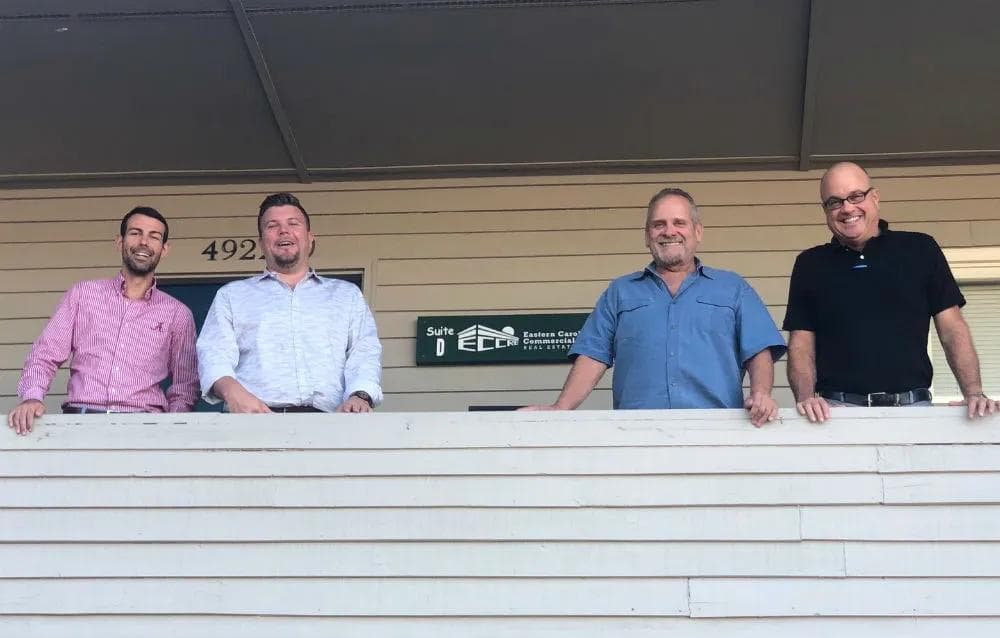
Eastern Carolinas Commercial Real Estate (ECCRE), a Wilmington-based independent commercial brokerage, will shut down by the end of March 2026 following owner Garry Silivanch's retirement. The closure eliminates one of the market's smaller independent shops and funnels an undisclosed client book and listing pipeline toward competitors — likely Cape Fear Commercial, CBRE, and Maus Warwick Matthews — at a time when mid-sized Southeast metros are seeing steady consolidation of CRE brokerage services toward larger, tech-enabled platforms.
Fast Facts
- Firm: Eastern Carolinas Commercial Real Estate (ECCRE), Wilmington, NC
- Closure date: End of March 2026
- Reason: Retirement of owner Garry Silivanch
- Employee count: Not publicly disclosed
- Client book value / listing pipeline: Not publicly disclosed
- Key local competitors: Cape Fear Commercial, CBRE (Wilmington office), Maus Warwick Matthews
- No public data available on ECCRE deal flow volume, transaction dollars, or acreage under listing
What Happened
Garry Silivanch, the owner of ECCRE, announced his retirement and the firm's closure effective this month. The decision was described as "long-awaited and well-deserved" — language that suggests a planned wind-down rather than a distress exit or forced closure. No information has surfaced on whether ECCRE agents will migrate to a specific competitor, whether any client transition agreements are in place, or how active listings will be reassigned.
The closure was first reported by WilmingtonBiz on March 23, 2026. No SEC filings, permit records, or workforce filings (such as a WARN Act notice) have been associated with the shutdown, consistent with a small firm below federal reporting thresholds.
Why It Matters
Wilmington's commercial real estate services market is not large enough to absorb an independent firm's exit without competitive consequences. Every active listing that changes hands, every tenant-rep relationship that migrates, and every investor contact that lands at a new desk reshuffles leverage among the remaining brokerages.
For investors and developers active in the Cape Fear region, the practical implication is straightforward: the pool of independent, locally rooted CRE advisors just got smaller. That concentrates institutional knowledge and deal access among a handful of firms, most of which operate with regional or national affiliations. Whether that benefits clients through broader platform resources or costs them through reduced competition depends on how effectively the remaining players absorb ECCRE's relationships.
For the brokerage professionals themselves, ECCRE's closure is a case study in the sustainability question facing independent CRE shops in mid-sized metros: rising compliance costs, escalating technology requirements (CRM, data analytics, marketing platforms), and the gravitational pull of branded networks make it increasingly difficult for small firms to compete on anything other than hyperlocal expertise and personal relationships.
What Stands Out
- Retirement, not retreat. This is not a market-driven failure. Silivanch's exit appears voluntary, but the fact that no succession plan preserved the firm as a going concern suggests the business model was not transferable — a common pattern in owner-operator brokerages where the principal is the firm.
- No disclosed absorption deal. The absence of any announced merger, acquisition, or agent migration agreement means ECCRE's clients and listings may scatter across multiple competitors rather than consolidating under one roof. That creates a brief window of opportunity for aggressive brokerages to recruit.
- Data vacuum. The lack of publicly available metrics — transaction volume, deal count, listing square footage — makes it impossible to quantify ECCRE's actual market share. This is itself a signal: in a market with limited CRE data transparency, the loss of any active participant reduces price discovery and deal benchmarking.
- Timing coincides with broader regional uncertainty. Wilmington's commercial real estate outlook is complicated by the $1.3 billion Wilmington Harbor 403 dredging project, which faces a DEQ objection (issued February 24, 2026), 100% public opposition at DEQ hearings, 95% opposition in written comments, and a Wilmington City Council resolution in opposition (February 3, 2026). Port-adjacent industrial and logistics CRE demand — a potential growth driver — remains in question.
- Consolidation is the trend, not the exception. Across Southeast metros in the 200,000–500,000 population range, independent CRE brokerages have been losing ground to affiliated or branded firms for over a decade. ECCRE's closure fits the pattern.
Market Lens: Commercial Real Estate
Wilmington's CRE services sector is functionally an oligopoly among a small number of firms. Removing an independent operator — even a small one — tightens that structure. The competitive implications are clearest in two segments: land brokerage for development sites and tenant representation for local businesses, both areas where independent firms historically compete on relationships rather than platform scale.
The larger firms positioned to absorb ECCRE's market presence — Cape Fear Commercial, CBRE, Maus Warwick Matthews — each bring different advantages. Cape Fear Commercial offers deep local roots. CBRE brings national data infrastructure and institutional investor access. Maus Warwick Matthews occupies a regional middle ground. How ECCRE's agents and clients distribute among them will shape competitive dynamics for the next 12–18 months.
No public data exists on Wilmington-area CRE brokerage market share, total transaction volume, or absorption metrics, which limits quantitative analysis. That gap itself is worth noting: decision-makers in this market are operating with less transparency than peers in Raleigh, Charlotte, or Charleston.
Risks & Watch-Outs
- Client disruption risk. Active deals in ECCRE's pipeline may face delays or renegotiation as relationships transfer. Principals with pending transactions should confirm representation continuity.
- Agent migration uncertainty. Without a disclosed transition plan, ECCRE's agents may scatter, taking institutional knowledge in different directions and fragmenting client service.
- Reduced competition. Fewer independent brokerages means fewer competitive bids for brokerage assignments, which could incrementally raise commission costs or reduce service optionality for owners and tenants.
- Market data gap. Wilmington's CRE market already lacks the transaction transparency common in larger metros. Losing an active participant further reduces the data ecosystem.
- Macro headwinds. The harbor dredging project's regulatory uncertainty, combined with broader interest rate and construction cost pressures, clouds the near-term CRE outlook — context that makes brokerage consolidation more consequential than it would be in a growth-phase market.
Takeaway for decision-makers: If you have active or pending commercial real estate engagements tied to ECCRE, confirm your representation status and listing continuity now. For competing brokerages, the next 30–60 days represent a discrete window to recruit experienced agents and acquire client relationships. For market watchers, this is a small but clear signal: Wilmington's CRE services sector is consolidating, and the independent brokerage model in this market is under structural pressure.

Daniel Price
Daniel Price brings a decade of experience advising developers and institutional investors on large-scale commercial real estate projects. Now based in Wilmington, he covers local business expansion, leasing trends, and the economics behind downtown redevelopment and land use shifts.
Related Posts
More stories from the same category

Recent Posts
Stay up to date with our latest stories



Subscribe to Newsletter
Provide your email to get email notification when we launch new products or publish new articles