DEQ Objection Stalls $1.3B Harbor Deepening, Clouds Port-Adjacent Investment
NC DEQ's objection to the $1.3B Wilmington Harbor deepening project creates material delay risk for port-adjacent investment across the MSA.

Mar 26 2026
1 min read
Business Summary
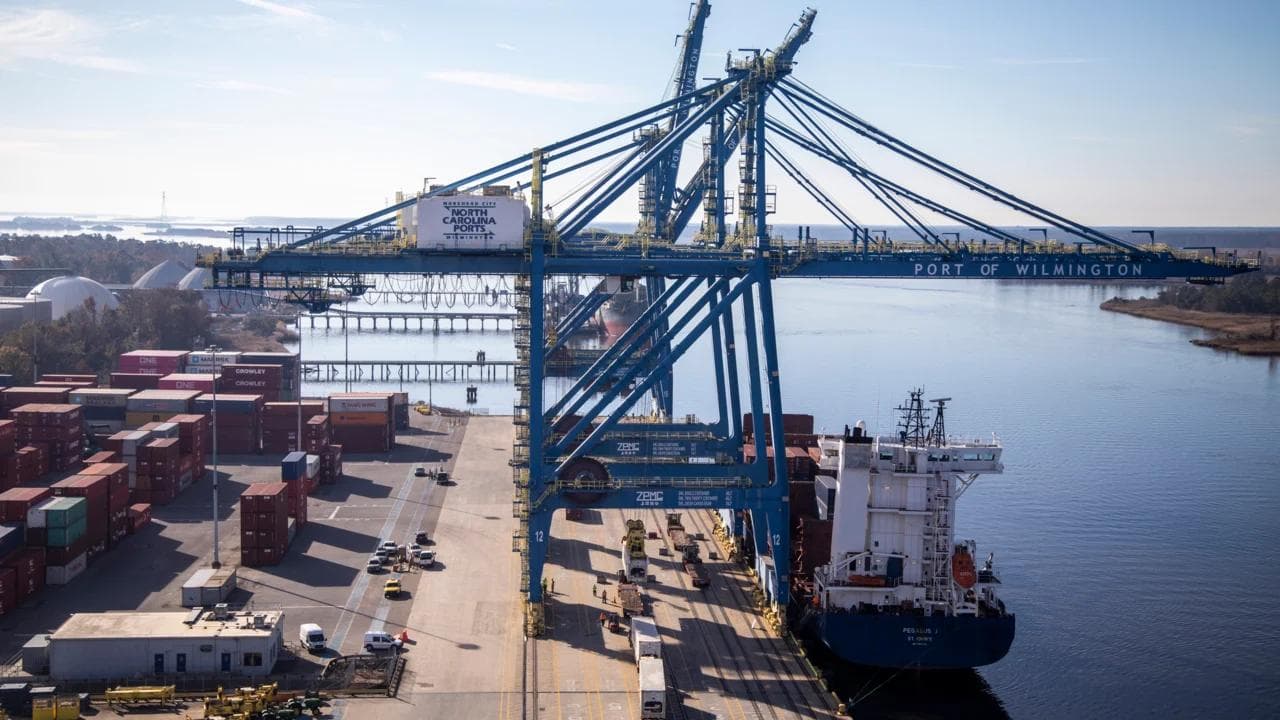
North Carolina's Division of Coastal Management formally objected on February 24, 2026, to the U.S. Army Corps of Engineers' federal consistency determination for the $1.3 billion Wilmington Harbor deepening project, citing insufficient data on PFAS contamination, flooding risk, dredged material placement, and environmental harm.
The objection injects material regulatory uncertainty into the single largest infrastructure investment tied to the Port of Wilmington — a project designed to deepen the Cape Fear River channel from 42 feet to 47 feet and reposition the port competitively against Norfolk and Charleston.
For investors, developers, and lenders with capital deployed or planned in logistics, industrial, and port-adjacent real estate across the Wilmington MSA, this is a timeline risk that demands repricing.
Fast Facts
- Project cost: Over $1.3 billion (federal share: $830 million+; state share: ~$340 million)
- Channel depth change: 42 feet to 47 feet, with widening in select portions
- DCM objection issued: February 24, 2026 (15-page letter from Director Tancred Miller)
- Public hearing turnout: 72 attendees, unanimous opposition; 95% of written comments opposed
- Wilmington City Council: Passed unanimous opposition resolution on February 3, 2026
- USACE response: Under review as of March 2, 2026; characterized objection as "disappointing" and "disconcerting"
- Development timeline: 3.5 years of coordination between USACE Wilmington District and NC Ports Authority
- Draft EIS released: September 2025
- Dispute resolution available: Under 40 C.F.R. § 930.43(d)
What Happened
The USACE Wilmington District and NC Ports Authority spent 3.5 years developing the Section 403 Navigation Improvement Project, releasing a Draft Environmental Impact Statement in September 2025 and submitting a federal consistency determination in October 2025.
DCM held a public hearing in Wilmington on November 17, 2025, where all 72 attendees spoke in opposition. The public comment period closed December 20, 2025, with 95% of written submissions opposing the project. USACE and NC Ports requested a review pause extending to January 19, 2026.
On February 3, 2026, Wilmington City Council passed a unanimous resolution opposing the project without further study. Notably referencing a potential future 51-foot deepening as a competitive consideration. Three weeks later, DCM Director Tancred Miller issued a 15-page objection letter under the Coastal Zone Management Act, citing four primary deficiencies: inadequate PFAS sediment analysis, cumulative flooding risk, gaps in dredged material placement planning, and insufficient economic justification relative to adverse impacts on fisheries, wetlands, shorelines, and historic properties. USACE Colonel Brad Morgan called the decision "disappointing" after years of coordination, with the Corps confirming it was reviewing the objections as of March 2, 2026.
Why It Matters
The Wilmington Harbor deepening is the linchpin capital project for the Port of Wilmington's competitive positioning in the South Atlantic port hierarchy. The 5-foot depth increase would allow the port to accommodate larger Post-Panamax vessels, a prerequisite for maintaining relevance as Charleston and Norfolk continue their own capacity expansions. Over $830 million in federal funds have been earmarked — capital that now sits in regulatory limbo.
For the broader Wilmington MSA economy, the port is an anchor for logistics, warehousing, and industrial employment. While no specific job counts or throughput figures were included in the DEIS (itself a point of criticism), the Wilmington Chamber has publicly cited thousands of jobs and regional supply chain dependencies tied to port operations. A prolonged delay or project redesign directly affects the demand trajectory for industrial and logistics real estate along the Cape Fear corridor, as well as planned infrastructure investments premised on expanded cargo throughput.
What Stands Out
- Unanimous local opposition is rare and significant. 100% opposition at a public hearing and 95% in written comments signals a political environment that makes fast-track resolution unlikely, regardless of federal intent.
- The DEIS was criticized for inadequate economic analysis. DCM's objection explicitly challenged the cost-benefit framing — a signal that the project's investment thesis may need substantial rework before clearing regulatory gates.
- City Council's 51-foot reference is a double signal. The same resolution that opposes the current plan floats a deeper channel, suggesting local leadership sees competitive value in port expansion but lacks confidence in the current execution plan.
- PFAS is the wildcard. The Cape Fear River basin's well-documented PFAS contamination history makes sediment disturbance an acute liability. This is not a generic environmental concern — it is a region-specific risk with legal and remediation cost implications.
- Federal dispute resolution is available but slow. The CZMA pathway under 40 C.F.R. § 930.43(d) allows USACE to escalate, but mediation and secretarial override processes add 12–18 months or more to any timeline.
Market Lens: Competitive Positioning
The central question for capital allocators is whether the Port of Wilmington can maintain its growth trajectory without the channel deepening — and the answer is almost certainly no, at least not at the pace required to compete with Charleston and Norfolk. Both rival ports are actively investing in deeper channels and expanded terminal capacity. Every quarter of delay at Wilmington widens the competitive gap.
The Wilmington Urban Area MPO's engagement in NCDOT's statewide multimodal freight plan (stakeholder process week of March 17, 2026) signals that regional freight advocates recognize the urgency. But freight plan inclusion is a long-cycle play; it does not substitute for a resolved harbor project. Industrial developers and logistics tenants underwriting new projects based on expanded port throughput should stress-test their models against a 2–3 year delay scenario, minimum.
Risks & Watch-Outs
- Permitting timeline: Federal dispute resolution could extend the regulatory process by 12–18 months or longer, with no guaranteed outcome.
- PFAS liability: Sediment disturbance in a PFAS-contaminated basin introduces environmental litigation risk that could further delay or reshape the project.
- Funding durability: The $830 million+ federal earmark is not permanently committed; extended delays risk reallocation in future congressional cycles.
- Political headwinds: Unanimous City Council opposition and near-total public opposition create a challenging political environment for project advocates.
- Competitive erosion: Charleston and Norfolk are not waiting. Each quarter of Wilmington delay compounds the throughput and vessel-size disadvantage.
- Execution risk on redesign: If USACE must revise the DEIS to address DCM's objections — particularly on PFAS and economic analysis — the timeline resets substantially.
Bottom line for decision-makers: Any capital commitment in the Wilmington MSA predicated on expanded port capacity should now carry a regulatory delay premium. Stress-test industrial and logistics underwriting against a scenario where the 47-foot channel is not operational before 2030. The project's economic logic may survive, but its timeline almost certainly will not.

Marcus Lane
Marcus Lane writes about real estate, urban planning, and regional business strategy across Southeastern North Carolina. With a background in market analysis and civic reporting, he brings practical insights to emerging development stories and public-private partnerships.
Related Posts
More stories from the same category



Recent Posts
Stay up to date with our latest stories

Subscribe to Newsletter
Provide your email to get email notification when we launch new products or publish new articles