305K SF in Leland Leases Confirms Brunswick County as Cape Fear's Industrial Center of Gravity
Two 305K SF industrial leases in Leland confirm Brunswick County as the Wilmington MSA's primary absorption corridor amid tightening supply.

Mar 16 2026
1 min read
Business Summary
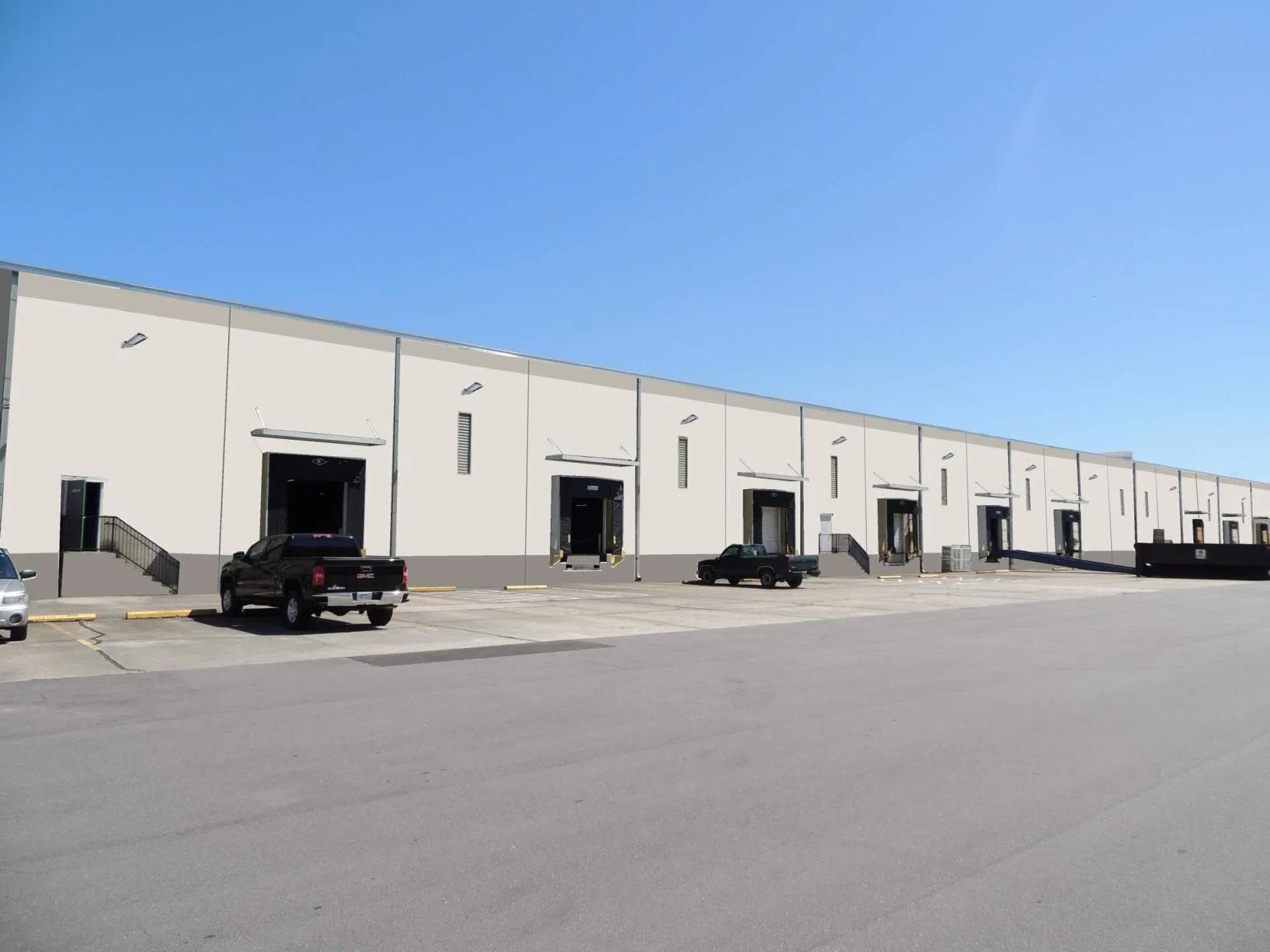
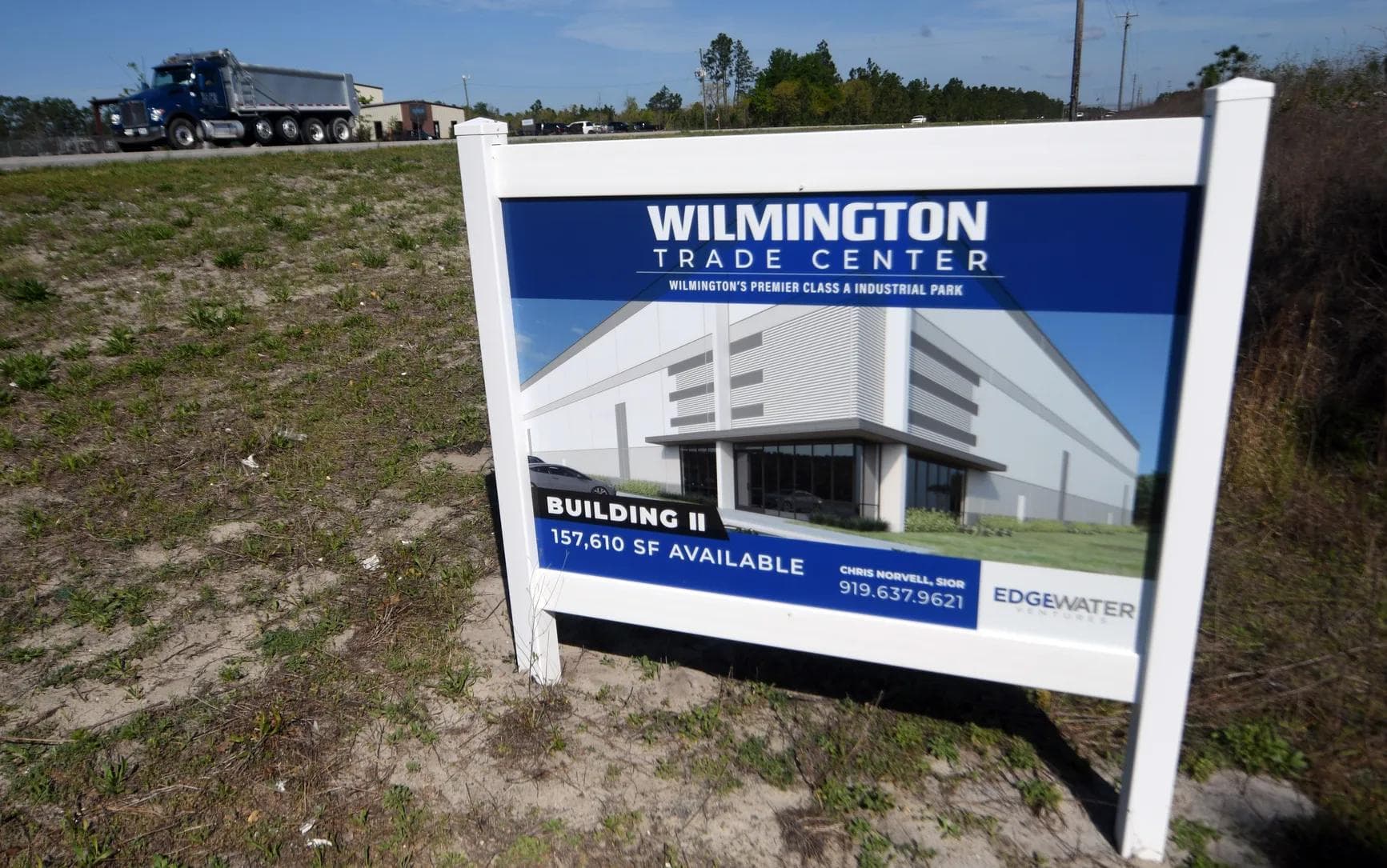
Two industrial leases totaling 305,000 square feet at the Edgewater site in Leland — signed in March 2026 by an unnamed Raleigh-based firm — represent one of the Cape Fear region's largest recent leasing events and confirm that large-format industrial demand is clustering south of the Cape Fear River. The deals landed in Brunswick County, North Carolina's fastest-growing county (2.6% annual population growth, 12th nationally among MSAs), rather than supply-constrained New Hanover County, reinforcing a pattern driven by megasite readiness, rail access, and zoning speed. For capital allocators and developers watching the Wilmington MSA, the signal is unambiguous: Brunswick is absorbing speculative product as fast as it delivers.
Fast Facts
- Total leased: 305,000 SF across two deals at Edgewater, Leland submarket
- Tenant: Raleigh-based firm (name undisclosed); exact SF split between the two leases not publicly reported
- Edgewater spec building: 286,000 SF in the International Logistics Park; Phase 1 (150,000 SF) was 100% pre-leased before completion
- Adjacent megasite footprint: International Logistics Park + Mid-Atlantic Industrial Rail Park combine for 2,000+ acres of permitted industrial land
- Zoning speed: Brunswick County's Industrial General (IG) approvals average 45 days
- Transport access: 25 minutes to ILM Airport, 90 minutes to MYR; US 74/76/Future I-74 connecting to I-40, I-95, and I-140
- Brunswick County unemployment: 4.1% (NC: 3.7%, US: 4.2%)
- Pipeline investment context: Epsilon Advanced Materials ($650M, 1.5M SF, 500+ jobs); US MgO ($5M, 75,000 SF, 35 jobs at $52/hour)
What Happened
As reported by Triangle Business Journal and WilmingtonBiz in March 2026, a Raleigh-based company executed two industrial leases totaling 305,000 SF at the Edgewater industrial development in Leland. The deals absorbed new speculative flex and warehouse space in the International Logistics Park, a submarket positioned adjacent to the Mid-Atlantic Industrial Rail Park. Edgewater's 286,000 SF spec building had already pre-leased its first 150,000 SF phase before construction was finished, so these new commitments extend absorption into the building's remaining capacity and potentially additional inventory.
The tenant's identity has not been disclosed. The exact split between the two leases was not reported, though the combined volume places the event among the largest single-quarter industrial commitments in the Cape Fear region's recent history.
Why It Matters
This transaction volume matters for three reasons.
First, absorption is outpacing supply. Leland's speculative industrial product is leasing before or immediately upon delivery. The 150,000 SF Phase 1 pre-let followed by 305,000 SF in additional commitments means roughly 455,000 SF of demand materialized against a single development — a pace that suggests the Wilmington MSA's industrial vacancy rate in the Brunswick submarket is compressing, not stabilizing.
Second, demand is concentrating in Brunswick, not New Hanover. New Hanover County faces constrained land supply, higher entitlement friction, and fewer shovel-ready parcels capable of accommodating 100,000+ SF users. Brunswick offers 2,000+ acres of combined megasite inventory with cleared Phase 1 environmental assessments, on-site utilities, and a 45-day IG zoning approval timeline. That infrastructure advantage is now converting into measurable leasing velocity.
Third, the tenant profile signals diversification. A Raleigh-based firm leasing industrial space in Leland indicates demand from firms outside the immediate Wilmington labor market — likely logistics, distribution, or light manufacturing operations leveraging Brunswick's transport corridors to serve coastal and inland markets.
What Stands Out
- Pre-leasing velocity is the lead indicator. Phase 1's 100% pre-let means developers can underwrite additional spec with lower risk. Expect capital to flow toward Edgewater-adjacent parcels in the next 12–18 months.
- 305,000 SF in a single quarter is outsized. While specific historical quarterly absorption figures for the Wilmington MSA industrial market are not publicly available, the scale of this event — nearly equivalent to the entire 286,000 SF spec building — exceeds typical mid-market quarterly norms by a wide margin.
- Rent trajectory is upward. Tightening supply against sustained demand in a submarket with limited competing new deliveries creates textbook conditions for landlord pricing power. Industrial rents in Leland should be monitored quarterly for 10–15% escalation potential.
- Brunswick's pipeline deepens the moat. Epsilon Advanced Materials' $650M, 1.5M SF graphite facility (500+ jobs, production starting Q1 2026) and US MgO's $5M, 75,000 SF plant (35 jobs at ~$108,160/year) add manufacturing tenancy that reinforces demand for ancillary warehouse and logistics space.
- 12,500 planned homes on 4,300+ acres ensure a growing residential labor pool, reducing commute-driven workforce risk for industrial tenants.
Market Lens
Angle: Commercial Real Estate — Demand Signal
The 305,000 SF Edgewater leases are best read as a demand signal for the broader Wilmington MSA industrial market. Speculative product in the Leland submarket is functioning as a release valve for demand that cannot be accommodated in New Hanover County. Brunswick's megasite infrastructure — rail, road, utilities, cleared entitlements — has moved from competitive advantage to competitive necessity. Developers evaluating new speculative industrial starts in the Wilmington MSA now face a binary question: build in Brunswick where absorption is proven, or risk slower lease-up elsewhere with higher land and permitting costs.
For institutional investors and REITs tracking secondary Southeast industrial markets, Brunswick County's absorption velocity, combined with a $650M+ committed investment pipeline, positions the Leland submarket as a credible allocation target — no longer a speculative bet on population growth but a demonstrated demand node.
Risks & Watch-Outs
- Tenant concentration risk. Two leases from a single Raleigh-based firm mean 305,000 SF of exposure to one company's operational trajectory. A pullback or downsizing would create significant vacancy in a thin submarket.
- Spec development overreaction. Strong absorption can trigger overleveraged speculative pipelines. If multiple developers break ground simultaneously, 2027–2028 deliveries could outpace demand in a macro slowdown.
- Labor market tightness. Brunswick County's 4.1% unemployment rate, already above state average, could constrain hiring for new industrial tenants — especially as Epsilon's 500+ jobs and US MgO's 35 positions compete for the same workforce.
- Infrastructure delivery timing. Future I-74 completion and utility expansion are load-bearing assumptions in Brunswick's megasite marketing. Delays in state or federal infrastructure spending could slow the next wave of tenant commitments.
- Tariff and trade policy exposure. Epsilon Advanced Materials' India-based ownership and EV battery supply chain orientation make it sensitive to trade policy shifts. Any disruption to EV incentives or graphite tariffs ripples through Brunswick's industrial narrative.
- Macro rates. Industrial development and investment are rate-sensitive. A sustained higher-for-longer interest rate environment compresses cap rates and raises the cost of speculative construction financing.
Bottom line for decision-makers: Brunswick County's 305,000 SF absorption event is not an outlier — it is the measurable result of infrastructure investment, zoning efficiency, and megasite readiness converging with real tenant demand. Developers and investors with Wilmington MSA exposure should reweight toward Brunswick's Leland submarket, but size positions carefully against single-tenant concentration and the risk that today's absorption pace invites tomorrow's oversupply.

Daniel Price
Daniel Price brings a decade of experience advising developers and institutional investors on large-scale commercial real estate projects. Now based in Wilmington, he covers local business expansion, leasing trends, and the economics behind downtown redevelopment and land use shifts.
Related Posts
More stories from the same category

Recent Posts
Stay up to date with our latest stories



Subscribe to Newsletter
Provide your email to get email notification when we launch new products or publish new articles