Wilmington Tech Jobs Outpace State and Nation, Signaling a Second Growth Engine
NC Tech report confirms Wilmington outpaced state and national tech job growth. What the data signals for office demand and labor markets.

Mar 05 2026
1 min read
Business Summary
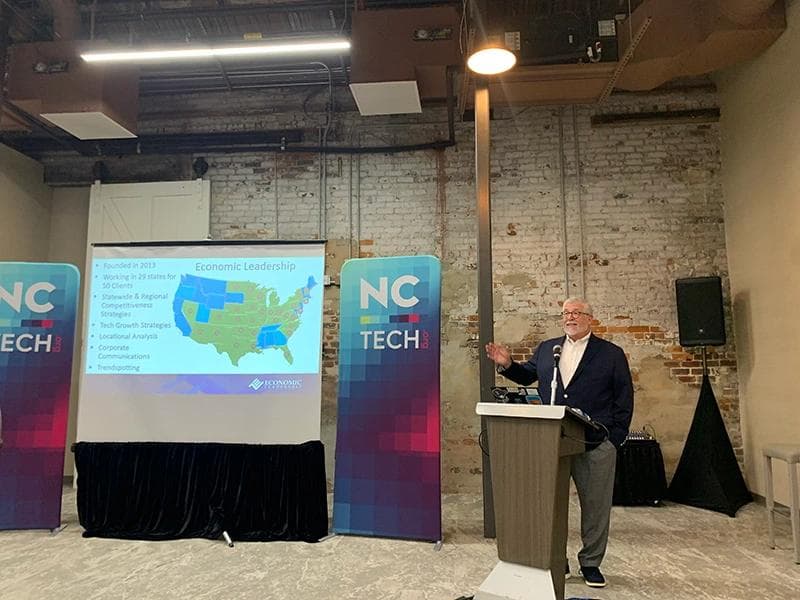
Wilmington's technology sector grew faster than both North Carolina and U.S. averages from 2019 to 2024, according to the NC Tech Association's March 2026 State of Technology Industry Report. The finding lands in a metro already running at 3.4% unemployment with healthcare dominating the job outlook, making tech the most plausible candidate for labor market diversification. For investors and commercial real estate professionals, the question is no longer whether Wilmington has a tech presence — it's whether the infrastructure, talent pipeline, and office inventory can keep pace with demand.
Fast Facts
- Wilmington MSA unemployment: 3.4% (not seasonally adjusted, early 2026)
- NC tech job growth, 2019–2024: 19%, ranking 7th nationally — nearly 6 percentage points above the U.S. average
- NC tech job growth in 2024: Net positive, despite a national decline of -2.6%
- Software services employment (NC): 106,200 workers, up 37% from 2019–2024
- NC tech sector GDP contribution: $99 billion (12% of state GDP)
- NC tech sector total earnings: $45 billion in 2024 (12% of state earnings)
- NC tech job multiplier: 3.24 (4th-highest sector in state) — supporting 736,480 direct and indirect jobs
- Statewide tech establishments: 35,170 in 2024, up 830 from the prior year
- NC effective business tax rate: 3.4% (ranked #1 lowest nationally)
- Women in NC tech workforce: 37.4% (ranked #1 nationally)
- IT subcategory projection: 11% growth over the next 5 years (NC ranked #9 nationally, up from #14)
- Skyline Center: Wilmington City Council authorized four new leases in March 2026
What Happened
The NC Tech Association's 2026 STIR report confirmed that the Wilmington MSA outpaced both North Carolina and the nation in technology sector job growth over the five-year period ending in 2024. Statewide, the tech industry added jobs at a 19% clip — 7th-highest among all states — while the nation as a whole posted a 2.6% decline in tech employment in 2024 alone. North Carolina's tech sector bucked that national contraction, remaining net positive.
Software services led the charge statewide, growing 37% to 106,200 workers. The IT subcategory, representing 54% of tech jobs, is projected to add another 11% over the next five years. Separately, NC Commerce projections indicate Professional, Scientific, and Technical Services — the closest state-level proxy for tech-aligned employment — will add 36,000 jobs at a 15.4% growth rate through 2026, second only to healthcare's 93,000-job, 16.1% growth outlook.
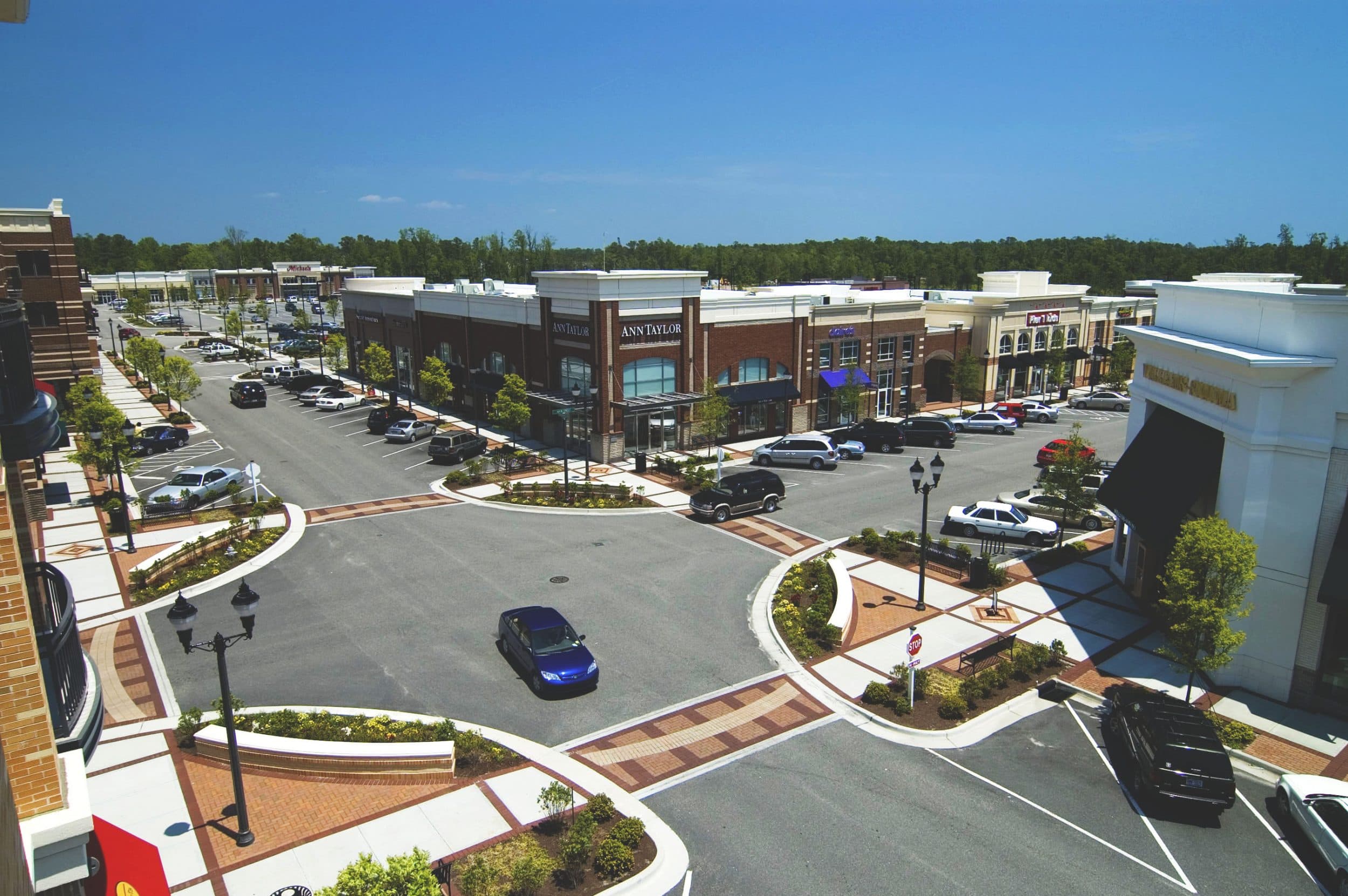
In Wilmington, the City Council authorized four new leases at the downtown Skyline Center in March 2026. While no square footage or dollar amounts were disclosed, the action coincides with reported tightening at Mayfaire Town Center as tech-adjacent tenants scale.
Why It Matters
Wilmington's economy has historically leaned on healthcare, tourism, and military-adjacent activity. A tech growth rate that exceeds both the state — already a top-10 performer nationally — and the U.S. average repositions the metro as a legitimate secondary tech hub in North Carolina. The 3.24 job multiplier for tech means every direct hire supports roughly two additional jobs across the local economy, amplifying wage and spending effects well beyond the sector itself.
At $45 billion in statewide tech earnings and a $99 billion GDP contribution, the dollars flowing through this sector are large enough to move commercial real estate fundamentals, particularly in a mid-sized MSA like Wilmington where absorption of even modest square footage can shift vacancy rates meaningfully.
What Stands Out
- Wilmington outperformed without a Research Triangle anchor. The metro lacks the institutional density of Raleigh-Durham but still beat state and national growth rates — a signal that cost-of-living arbitrage and remote-work migration are real structural tailwinds, not just narrative.
- The national tech contraction makes NC's resilience more notable. Holding positive while the U.S. shed tech jobs at -2.6% in 2024 suggests North Carolina's tax and regulatory environment (3.4% effective business tax, #1 nationally) is functioning as a competitive moat.
- Software services growth at 37% is the headline within the headline. This subcategory is the most portable — least tied to physical infrastructure — making it the most likely driver of Wilmington's gains via remote and hybrid employment.
- Office demand signals are early but directional. Four new leases at Skyline Center and tightening at Mayfaire don't constitute a boom, but they align with what you'd expect in the early innings of a tech-driven absorption cycle.
- UNC Wilmington's STEM pipeline is an unquantified variable. The report does not isolate Wilmington-specific job counts or university output. The STEM pipeline thesis is reasonable but unconfirmed by this data.
Market Lens
Angle: Demand Signal
The strongest read here is demand-side. Wilmington is absorbing tech workers at an above-average rate into a labor market already near full employment. When a 3.4% unemployment metro adds higher-wage tech jobs — supported by a 3.24 multiplier — the downstream effects hit housing, retail, and commercial real estate in sequence. The four new Skyline Center leases are a leading indicator, not a lagging one. Developers and landlords with Class A or flex-office inventory in the Midtown, downtown, or Mayfaire corridors should be pricing in tighter conditions over the next 12–18 months.
For capital allocators, the arbitrage thesis is straightforward: Wilmington offers tech-sector exposure at a lower cost basis than the Triangle or Charlotte, with a tighter labor market that supports wage growth and consumer spending. The risk is that growth remains diffuse and hard to measure at the MSA level, making underwriting difficult without granular employment data.
Risks & Watch-Outs
- Data granularity is thin. The STIR report does not publish Wilmington-specific tech job counts, establishment numbers, or wage data. The "outpaced" finding is directional, not dimensioned. Investors should press for MSA-level breakouts before making allocation decisions.
- Remote work is a double-edged sword. If Wilmington's tech gains are primarily remote workers employed by Triangle or out-of-state firms, the local commercial office demand signal weakens considerably.
- Office supply remains undefined. No vacancy rates, absorption figures, or asking rents were disclosed for Skyline Center or Mayfaire. Tightening is reported but not quantified.
- Macro headwinds persist. National tech employment fell 2.6% in 2024. A deeper contraction in 2025–2026 could reverse migration patterns and suppress demand.
- Healthcare dominance could crowd out. With a 22,000-job healthcare outlook, labor competition for support roles — admin, facilities, project management — could tighten the talent pool for tech firms that need those same workers.
Bottom line for decision-makers: Wilmington's tech growth outperformance is confirmed at the directional level and structurally plausible given cost arbitrage, remote migration, and state-level tax advantages. But the absence of MSA-specific job counts, wage data, and commercial real estate metrics means this is a signal to watch closely — not yet a signal to underwrite aggressively. The next data point that matters: whether Q2 2026 lease activity at Skyline Center and Mayfaire translates into measurable absorption and rent movement.

Jordan Reese
Jordan Reese covers commercial real estate and business trends across Wilmington and the greater Cape Fear region. With a focus on investment activity and regional growth, Jordan provides clear, research-informed reporting for business owners, investors, and civic stakeholders.
Related Posts
More stories from the same category




Recent Posts
Stay up to date with our latest stories







Subscribe to Newsletter
Provide your email to get email notification when we launch new products or publish new articles