Tropicana's $5.4M Oleander Drive Buy Signals Grocery Format Divergence
Tropicana Supermarkets paid $5.4M for a 43,516-sq-ft Oleander Drive building, betting Wilmington's demographics support international grocery.

Apr 13 2026
1 min read
Business Summary
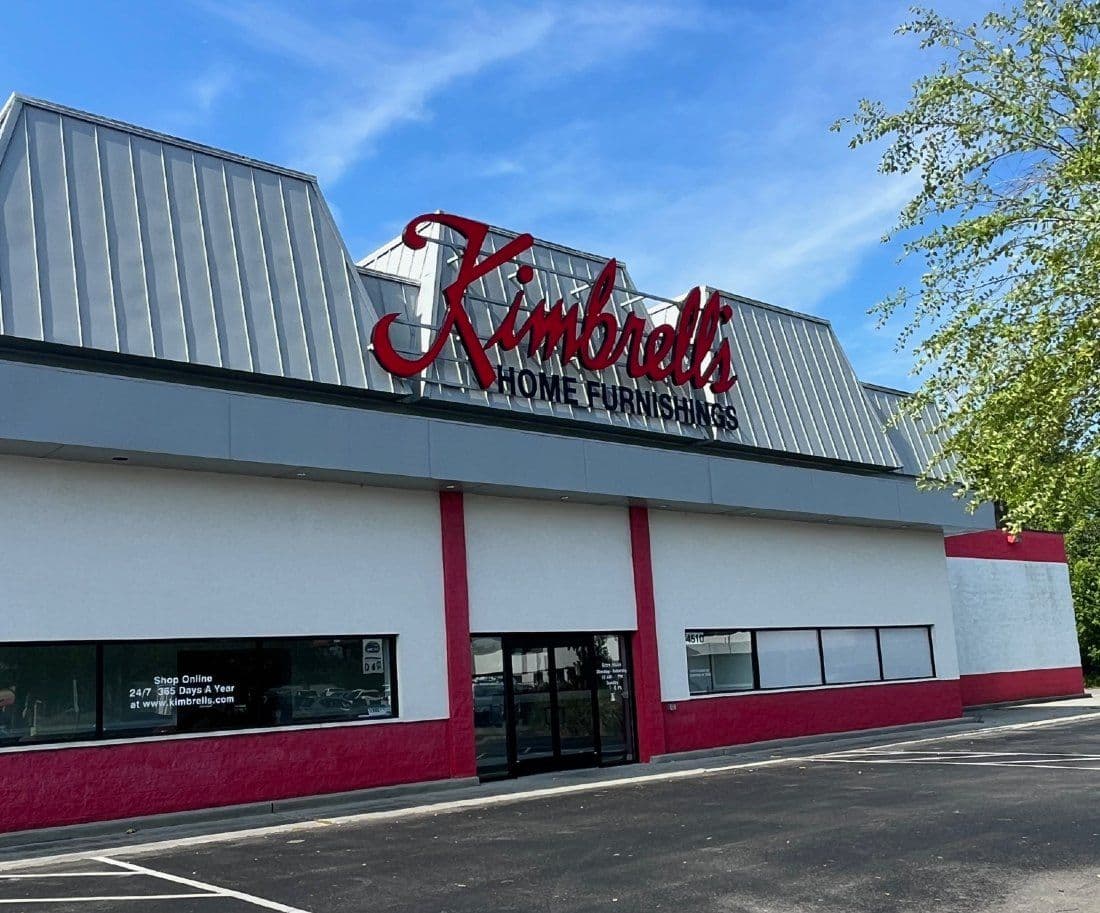
Tropicana Supermarkets paid $5.4 million in April 2025 for the 43,516-square-foot former Kimbrell's Furniture building at 4510 Oleander Drive in midtown Wilmington — its first store in the market and either its sixth or seventh North Carolina location. The acquisition converts a legacy big-box shell that has cycled through Toys R Us and furniture retail into an international grocery concept, landing on one of Wilmington's highest-traffic commercial corridors. Paired with Publix's simultaneous push into Leland with a 50,325-square-foot new-build, the move suggests the Cape Fear region's population base is now deep enough to absorb two fundamentally different grocery strategies at once.
Fast Facts
- Purchase price: $5.4 million for 43,516 sq ft (~$124/sq ft)
- Address: 4510 Oleander Drive, Wilmington, NC
- Buyer: Tropicana Supermarkets, led by CEO Chris Gutierrez (per New Hanover County records)
- Building history: Former Toys R Us → Kimbrell's Furniture → Tropicana Supermarkets
- Chain footprint: 6–7 stores across North Carolina; nearest existing location in Clinton, NC
- Format: International grocery — global meats, produce, specialty items
- Opening timeline: Not announced; renovations currently in permitting
- Publix comparison: 50,325 sq ft at Savannah Branch Town Center, Leland; approximately 140 associates planned; land sold for $3.7 million as of May 9, 2025
What Happened
Tropicana Supermarkets closed on the Oleander Drive property in April 2025, acquiring a building that has sat through two distinct retail lifecycles — first as a Toys R Us, then as a Kimbrell's Furniture showroom. The chain is now permitting renovations to convert the space into a full international grocery store, though no opening date or job count has been disclosed.
The location sits in a dense midtown retail node surrounded by Walgreens, Dunkin Donuts, Trader Joe's, and CVS Pharmacy. The corridor carries heavy daily traffic counts and has historically attracted convenience and food-oriented tenants, making the site a logical fit for a grocery use.
Separately, Publix is moving forward on its 50,325-square-foot anchor store at Savannah Branch Town Center at U.S. 17 and Lanvale Road in Leland. Land for the Publix-anchored center traded for $3.7 million, and the store is expected to employ approximately 140 associates at full operation. Construction is expected to begin in mid-2025, with a likely opening in late 2026.
Why It Matters
Two grocery entrants deploying capital simultaneously in the same metro — but with radically different site strategies — is a meaningful demand signal. Tropicana is backfilling existing, underperforming retail square footage in an established urban corridor. Publix is anchoring a ground-up suburban town center on the west side of the Cape Fear River. Neither is competing directly for the same customer.
The $124-per-square-foot acquisition cost for Tropicana represents a discount to new-build grocery construction pricing. National supermarket construction benchmarks from RSMeans data have placed costs in the range of $139–$151/sq ft for a comparable-size store, though those figures date to 2019 and current costs are likely higher; more recent Southeast retail fit-out data suggests interior finishing costs around $117/sq ft, with full construction potentially running higher depending on site work and finish level. That spread gives Tropicana a cost-of-entry advantage — assuming renovation costs remain controlled — and helps explain why adaptive reuse of big-box shells is increasingly attractive for specialty grocers.
For Wilmington's retail landscape, the deal also removes a long-cycling vacancy from the Oleander Drive corridor, converting a furniture/toy box into a higher-frequency use that will generate more daily traffic for adjacent tenants.
What Stands Out
- Format differentiation is the strategy. Tropicana is not competing with Harris Teeter, Whole Foods, or Publix on conventional grocery. Its international meat, produce, and specialty focus targets an underserved immigrant and multicultural consumer base — a segment the chain emphasizes serving per its own website.
- Adaptive reuse economics are favorable. Acquiring an existing 43,516-sq-ft shell at $5.4 million avoids the land, entitlement, and new-construction costs that Publix and others absorb in ground-up developments. The trade-off is renovation complexity and potential code-upgrade costs for a food-service conversion.
- Oleander Drive continues to evolve. The corridor has shed several legacy retail tenants but remains one of Wilmington's most trafficked commercial spines. A grocery anchor strengthens the node's daily-needs positioning.
- No opening date is notable. Permitting is underway, but the absence of a public timeline suggests either early-stage design review or potential buildout complexity in converting a non-grocery box to food-grade standards (refrigeration, grease traps, ventilation, health department approvals).
- The Publix comparison sharpens the picture. Leland's $3.7 million land basis for a 50,325-sq-ft store versus Tropicana's $5.4 million all-in building cost in midtown Wilmington illustrates the cost premium for established urban corridors — even when the asset is a recycled shell.
Market Lens
Angle: Demand Signal
The simultaneous entry of an international specialty grocer and a major national chain into the same metro validates a broader thesis: Cape Fear population growth has pushed grocery demand past the threshold where only conventional formats can survive. Tropicana's bet is that Wilmington's demographic composition now supports a dedicated international grocery store — a format typically viable only in metros with meaningful immigrant and multicultural population density. If that bet is correct, it signals that Wilmington's consumer base has diversified beyond what legacy demographic profiles suggest, which carries implications for other specialty retailers, restaurant concepts, and service providers evaluating the market.
For commercial real estate professionals, the Tropicana deal also validates the adaptive reuse pipeline. Wilmington still has aging big-box inventory cycling through lower-intensity uses. Grocery conversion — particularly for specialty or discount formats — may offer the best path to stabilizing these assets at rents that justify reinvestment.
Risks & Watch-Outs
- Renovation unknowns. Converting a furniture showroom to a full-service grocery store involves significant mechanical, plumbing, and refrigeration work. No permit details or construction budgets are public, and cost overruns could erode Tropicana's favorable acquisition basis.
- Execution timeline. With no opening date announced, the window for competitor positioning remains open. Delays extend carry costs on the $5.4 million asset without revenue.
- Labor availability. Tropicana has not disclosed a hiring target, but staffing a 43,516-sq-ft grocery in Wilmington's labor market — where Publix alone plans to employ approximately 140 associates nearby — will be competitive.
- Consumer depth. Tropicana's model depends on sufficient demand from multicultural and international food shoppers. If the addressable customer base in Wilmington proves thinner than projected, the store risks underperformance relative to more conventional formats.
- Small-chain risk. With only 6–7 locations, Tropicana lacks the supply-chain scale and brand recognition of national competitors. Operational discipline at the individual store level carries outsized importance.
Bottom line for decision-makers: Tropicana's Oleander Drive acquisition is a low-cost-of-entry play on Wilmington's evolving demographics, and the corridor benefits from absorbing a cycling big box. But the deal's real value depends on renovation execution, opening speed, and whether the region's multicultural consumer base is as deep as the bet implies. Watch permit filings and construction timelines closely — they will tell you whether this is a 2025 opening or a 2026 story.

Jordan Reese
Jordan Reese covers commercial real estate and business trends across Wilmington and the greater Cape Fear region. With a focus on investment activity and regional growth, Jordan provides clear, research-informed reporting for business owners, investors, and civic stakeholders.
Related Posts
More stories from the same category
Recent Posts
Stay up to date with our latest stories






Subscribe to Newsletter
Provide your email to get email notification when we launch new products or publish new articles