$126M in Capital, 1,064 Jobs - Inside New Hanover's $1.9M Incentive Bet
New Hanover County's $1.9M incentive package targets 1,064 jobs and $126M+ in capital at under $1,800 per job — an ROI analysis.

Apr 13 2026
1 min read
Investment Summary
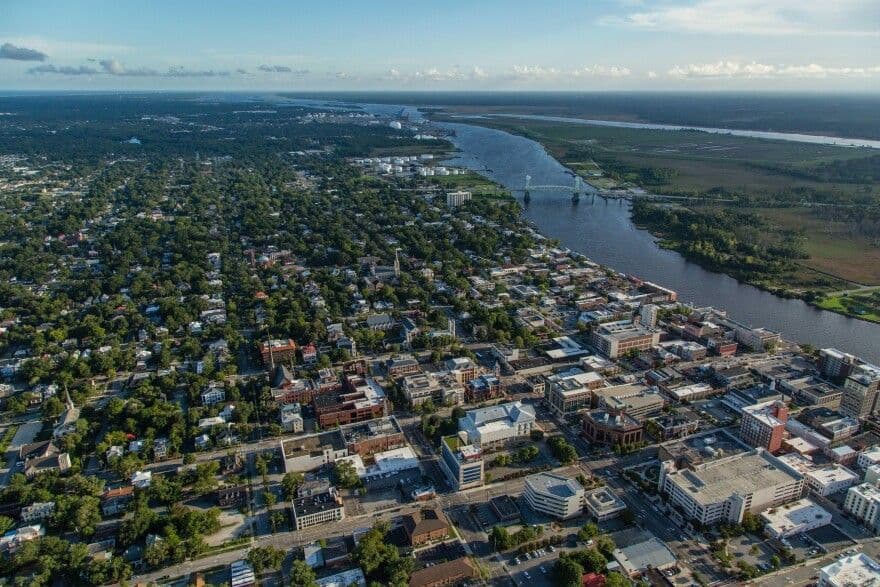
New Hanover County committed up to $1.9 million in performance-based local incentives across four companies projected to deliver 1,064 jobs, $110 million in aggregate payroll, and at least $126.2 million in capital investment over five years. The deals — spanning fintech, logistics, and warehousing/distribution — carry a blended county incentive cost of roughly $1,786 per job, a fraction of the $13,000–$75,000 per-job packages seen in marquee North Carolina recruitments. For a mid-sized metro still building its industrial brand, the ROI math deserves close scrutiny.
Fast Facts
- Projects: Clear, Transit (MegaCorp Logistics), Speed (Port City Logistics), Buckeye
- Total projected jobs: 1,064 over 5 years
- Total projected capital investment: $126.2M+ (Transit investment undisclosed)
- Total county incentives: $1.9M | Total estimated local incentives (county + city): $2.6M
- Average wages: Range from $62,000 (Transit) to $131,000 (Clear)
- Incentive structure: Performance-based, paid over 5 years, no upfront disbursements
- Approval date: February 2022 (county); city portions approved by March 2022
- Location: Wilmington / New Hanover County, NC — specific sites undisclosed
- Partners: NC State Ports Authority, Cape Fear Community College, UNCW
What Happened
New Hanover County commissioners approved up to $1.9 million in local incentive grants in February 2022 for four coded projects. Two have since been unmasked: Project Transit is MegaCorp Logistics, a freight brokerage founded in Wilmington in 2009, committing 300 jobs at an average salary of approximately $62,917; Project Speed is Port City Logistics, a Savannah-based operator investing $16 million in a high-velocity transload facility with 75 jobs averaging $64,000 — roughly 16% above the area's $53,421 wage benchmark.
Project Clear, described as an existing southeastern employer with decades in the community, represents the largest single commitment: $85.2 million minimum investment and 485 jobs at an average $131,000 salary. Project Buckeye, an existing local fintech employer with 500+ current workers, pledged $25 million and 204 new positions averaging $113,000. The City of Wilmington approved complementary grants totaling an additional $695,000 across the four deals, bringing the combined local incentive total to approximately $2.6 million.
All incentives are performance-contingent — no public dollars flow until hiring and investment benchmarks are verified by the state employment commission.
Why It Matters
The package is notable less for its size than for what it signals about Wilmington's sector trajectory. Two of the four projects are fintech operations paying well above double the area median wage, while the logistics deals align with growing port-adjacent freight activity supported by the NC State Ports Authority. If fully realized, the $110 million in cumulative payroll would generate meaningful income-tax and property-tax recapture against a combined public outlay of just $2.6 million.
For workforce planners, the 689 fintech jobs (Clear + Buckeye) averaging roughly $124,000 represent a qualitative shift — these are not warehouse floor roles. The logistics additions, while more modest in pay, fill a strategic gap in the region's port-to-distribution supply chain.
What Stands Out
- Incentive cost discipline is exceptional. At ~$1,786 per job (county only) or ~$2,456 per job (county + city), these deals are an order of magnitude cheaper than North Carolina's Hyundai package (~$75,000 per job) and well below the $13,000/job benchmark seen in mid-tier state deals.
- Wage quality is bifurcated. The fintech projects average $113,000–$131,000; logistics projects average $62,000–$64,000. Investors should weight the aggregate job count accordingly — 65% of projected positions come from the two high-wage fintech deals.
- Performance-based structure limits taxpayer exposure. No upfront grants; annual payouts over 5 years with clawback implied by contingency language.
- Project Clear dominates the portfolio. It accounts for 67% of total capital investment and 46% of total jobs — concentration risk if that single project stalls.
- Identities remain partially shielded. As of available reporting, Project Clear and Project Buckeye have not been publicly confirmed, limiting independent verification of wage and investment claims. (Note: Project Buckeye's profile — $25 million investment, 204 jobs, $113,000 average salary, existing local fintech employer — closely mirrors Live Oak Bank's separately announced September 2022 expansion, though a direct link has not been officially confirmed in public records.)
- Port City Logistics wages sit 16% above area average, a useful benchmark for future logistics recruitment negotiations.
Market Lens: Public Incentive ROI
The ROI calculus here favors the county. Against $1.9 million in committed incentives, the projected $126.2 million in capital investment yields an incentive-to-investment ratio of roughly 1.5% — meaning the county is spending $1.50 for every $100 of private capital attracted. On the payroll side, $110 million in cumulative payroll over five years at even a conservative combined local effective tax capture rate of 1–2% would recoup the full incentive outlay within the first several years of full employment.
Compare this to Live Oak Bank's separate but regionally complementary deal announced in September 2022: $25 million investment, 204 jobs at $101,000 average, and $1.5 million in state JDIG support over 12 years, plus $300,000 from New Hanover County and $200,000 from the City of Wilmington over five years — a longer payback horizon at the state level but similarly disciplined on a per-job basis (~$7,353/job for state incentives alone, or ~$9,804/job including local incentives). The county's four-project package, by contrast, achieves a lower per-job cost with higher aggregate employment, largely because it relies on local-only dollars with shorter commitment windows.
For site selectors benchmarking Wilmington against peer Southeast metros, the takeaway is clear: New Hanover is offering modest, performance-gated incentives rather than competing on subsidy scale. That strategy works when labor supply and quality-of-life factors close the deal — it becomes a vulnerability when competing against deep-pocket state packages in Georgia, South Carolina, or the Triangle.
Risks & Watch-Outs
- Execution verification gap. These projections date to early 2022. No public reporting confirms whether hiring and investment milestones have been met for any of the four projects. Investors should treat the 1,064-job figure as aspirational until annual performance reports surface.
- Project Clear concentration. A single unidentified company carrying $85.2 million and 485 jobs creates portfolio-level risk. If Clear underperforms, the headline numbers collapse by nearly half.
- Labor market absorption. Adding 1,064 positions — particularly 689 at six-figure salaries — in a metro of Wilmington's size will pressure the local talent pipeline. Cape Fear Community College and UNCW involvement helps, but fintech roles at $131,000 typically require specialized skills not abundant in the existing labor shed.
- Logistics wage ceiling. At $62,000–$64,000, the logistics jobs are solid but not transformative. If regional warehouse and trucking wages continue to inflate, these projections may understate actual employer costs or overstate job counts.
- No state incentive detail for the four projects. The absence of confirmed state Job Development Investment Grants (JDIG) or One North Carolina Fund awards for these specific projects means the full public cost is unclear. State-level incentives, if layered on, could materially change the per-job ROI calculation.
- Holly Shelter Road readiness. The county's 300-acre industrial tract pursuing Duke Energy site certification could absorb some of this demand — but certification timelines are uncertain, and shovel-ready status is not confirmed in public records.

Maya Shelton
Maya Shelton joined the Wilmington reporting scene after four years in Big 4 advisory, where she worked with real estate and infrastructure clients across the Southeast. She brings a data-savvy, no-nonsense perspective to emerging business stories, with a focus on economic development and early-stage investment trends.
Related Posts
More stories from the same category




Recent Posts
Stay up to date with our latest stories







Subscribe to Newsletter
Provide your email to get email notification when we launch new products or publish new articles