Brunswick County's 24% Population Surge Collides With Sewer Capacity Limits
Brunswick County leads NC in growth at 4.68%, but sewer capacity is gating development approvals and repricing project risk across the corridor.

May 02 2026
1 min read
Business Summary
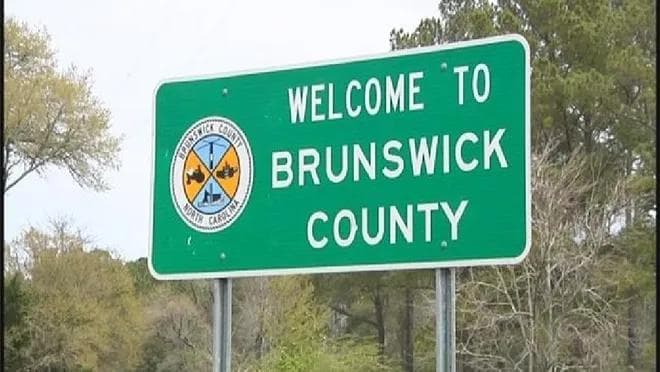
Brunswick County added 7,813 residents in a single year and has grown 24% since 2020, making it North Carolina's fastest-growing county — outpacing both Wake and Mecklenburg. But the growth thesis is now running headfirst into a hard infrastructure constraint: sewer system capacity is functioning as the de facto regulator of development scale, density, and approval timelines across the county. For developers, lenders, and investors betting on the southern flank of the Cape Fear region, the question is no longer whether demand exists — it's whether capital can be deployed on a timeline that infrastructure will allow.
Fast Facts
- 24% population growth since 2020, confirmed by state officials
- 4.68% year-over-year growth rate from 2024 to 2025 — highest in North Carolina
- 7,813 net new residents added in the most recent annual period
- Cape Fear MSA population: ~480,000, projected to exceed 600,000 within 20 years
- $1.14 billion in visitor spending in adjacent New Hanover County in 2024, up 1.5% year-over-year
- Sewer capacity identified as the primary constraint on new development approvals
- Thousands of new housing units approved or in pipeline, per county officials
- Ranked #1 destination for domestic movers in recent migration analyses
What Happened
WilmingtonBiz Magazine published a detailed examination on April 13, 2026, framing Brunswick County as a test case for how fast-growing exurban counties manage development pipelines when infrastructure can't keep pace with demand. The piece arrives as Census-confirmed population data shows Brunswick leading all 100 North Carolina counties in growth rate, pulling ahead of the state's traditional high-growth engines in the Triangle and Charlotte metro areas.
The county's planning apparatus is processing a surge of residential and commercial proposals — including commercial projects like the Publix lease in Leland — while contending with sewer system limitations that directly gate what can be approved, at what scale, and on what timeline. The Publix lease, confirmed in February 2025, is for a 50,325-square-foot store at the Shoppes at Savannah Branch (also known as Savannah Branch Town Center) at the corner of U.S. Highway 17 and Lanvale Road in Leland, with construction projected to start in mid-2025 and an opening likely in late 2026. The store is expected to employ 140 associates.
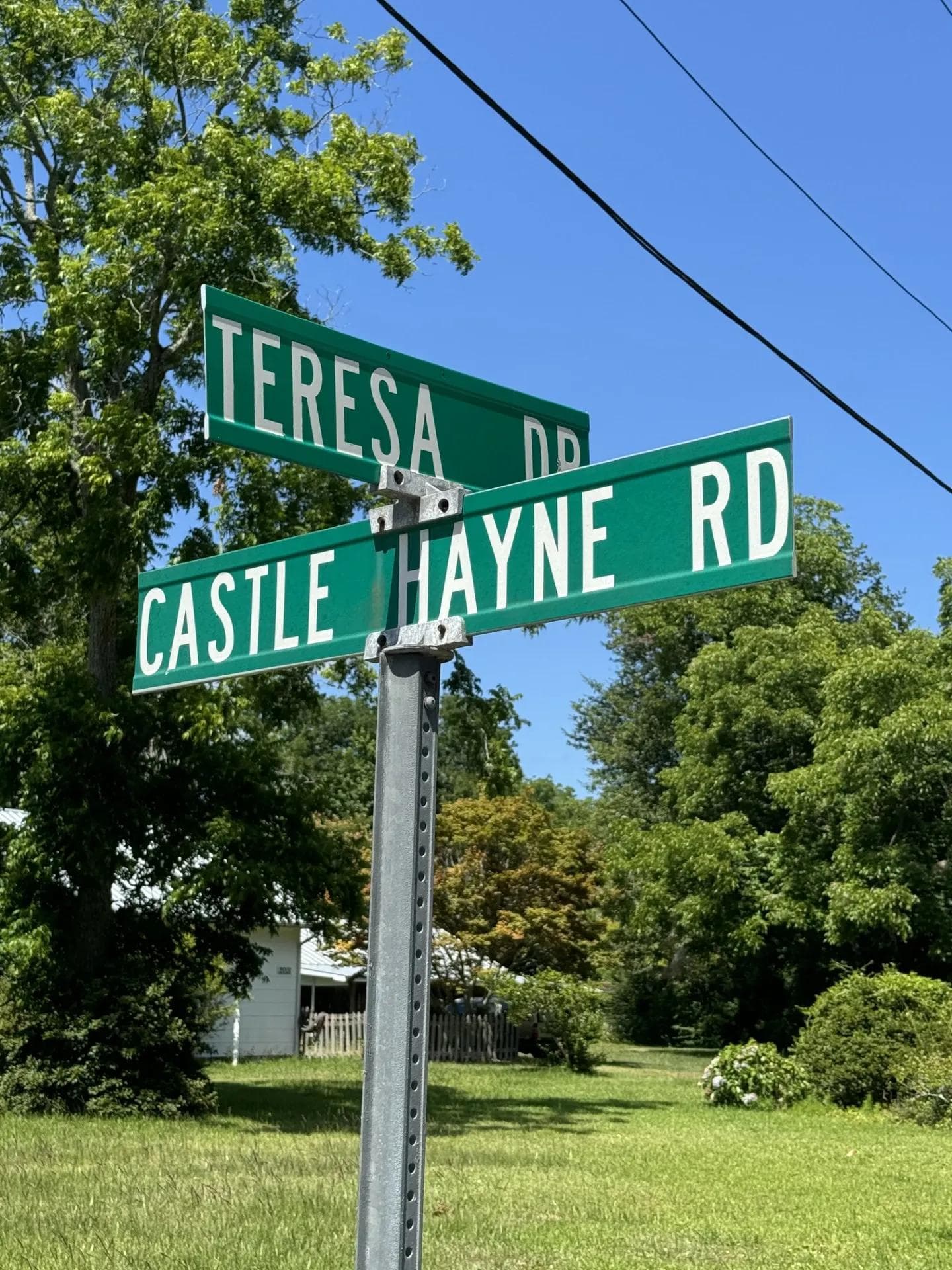
Separately, the broader Cape Fear region is also contending with large-scale residential proposals such as the Hilton Bluffs development — an 1,800-home project on 1,809 acres in Castle Hayne, New Hanover County — which received Technical Review Committee approval on March 10, 2026, but faces appeals and a temporary stay issued April 29, 2026. While Hilton Bluffs is not in Brunswick County, it illustrates the regional growth pressures radiating across the Cape Fear area.
Multiple sewer expansion projects are in various stages of construction, planning, or permitting in Brunswick County, but none appear to be delivering capacity ahead of demand.
Why It Matters
This is a capital allocation story with regional implications. Brunswick County sits at the convergence of strong domestic migration, available land, relatively lower price points than coastal New Hanover, and proximity to Wilmington's employment base. That combination has attracted significant residential development capital — but the sewer constraint introduces a variable that reprices project risk.
Developers face elongated entitlement timelines and potential density restrictions that affect unit counts and per-unit economics. Lenders underwriting horizontal development in Brunswick need to model infrastructure lag into their draw schedules. Commercial operators eyeing the corridor — grocery-anchored retail, medical office, self-storage — must assess whether rooftop delivery will match their lease-up assumptions.
The Cape Fear MSA's trajectory toward 600,000 residents is a structural tailwind, but the growth is concentrating in exurban areas like Leland where infrastructure was never designed for metro-scale density. That mismatch between demand velocity and infrastructure capacity is the core tension.
What Stands Out
- Sewer is the bottleneck, not demand or capital. In most markets, growth constraints are financial or regulatory. In Brunswick, physical utility capacity is the binding constraint — a harder problem to solve quickly because expansion projects carry multi-year construction timelines.
- Growth rate exceeds the Triangle and Charlotte metros. Brunswick's 4.68% annual growth rate puts it ahead of North Carolina's largest and most resourced counties, which raises questions about whether Brunswick's fiscal and planning capacity is scaled for what's coming.
- Visitor economy spillover is confirmed. New Hanover's $1.14 billion in visitor spending — its third consecutive year above $1 billion — signals sustained demand that radiates into Brunswick for housing, services, and workforce support.
- The Leland corridor is the pressure point. Most exurban growth is concentrating in Leland and surrounding communities, where commercial projects like the Publix-anchored Shoppes at Savannah Branch are betting on near-term rooftop growth that sewer delays could slow.
- Housing construction outlook is uncertain despite population momentum. Economists tracking the local market note the demand signal is strong, but actual construction volume faces headwinds from infrastructure approvals, labor availability, and financing conditions.
Market Lens
Angle: Infrastructure/Logistics
Brunswick County's growth story is fundamentally an infrastructure timing problem. The demand signal — 7,813 new residents per year, #1 domestic migration ranking, a metro on track for 600,000 people — is as clear as any market in the Southeast. But infrastructure delivery is lagging demand by what appears to be multiple years.
This creates a two-speed market. Projects with existing sewer access or capacity commitments hold a significant competitive advantage and are likely to see accelerated absorption. Projects dependent on future capacity expansion face approval uncertainty, potential redesigns to lower density, and construction delays that increase carry costs. For investors, the distinction between "permitted and connected" versus "planned and waiting" is the single most important diligence variable in Brunswick right now.
The county's ability to finance, permit, and deliver sewer expansion on a timeline that doesn't choke its own growth pipeline will determine whether Brunswick captures its demographic tailwind — or watches capital redeploy to better-served corridors.
Risks & Watch-Outs
- Sewer expansion execution risk. Multiple projects are underway, but timelines, cost overruns, and permitting complications could extend the capacity gap beyond current projections.
- Planning and staffing capacity. A county government scaled for a smaller population may not have the staff, systems, or fiscal reserves to process the volume of entitlements and inspections this growth requires.
- Interest rate and financing sensitivity. Horizontal residential development in exurban markets is among the most rate-sensitive asset classes; any tightening cycle hits Brunswick's pipeline disproportionately.
- Political and regulatory risk. Rapid growth often generates community pushback on density, rezoning, and impact fees — any of which could slow or reprice projects mid-pipeline.
- Absorption timing for commercial. Grocery, retail, and medical office tenants are underwriting rooftop counts that assume housing delivery on schedule; infrastructure delays could create a gap between commercial lease commencements and actual population arrival.
Bottom line for decision-makers: Brunswick County's demand fundamentals are the strongest in North Carolina, but the infrastructure deficit is real and quantifiable. The investable edge right now belongs to projects with secured utility capacity. Everyone else is underwriting a timeline they don't control.
Topics

Maya Shelton
Maya Shelton joined the Wilmington reporting scene after four years in Big 4 advisory, where she worked with real estate and infrastructure clients across the Southeast. She brings a data-savvy, no-nonsense perspective to emerging business stories, with a focus on economic development and early-stage investment trends.
Related Posts
More stories from the same category




Recent Posts
Stay up to date with our latest stories




Subscribe to Newsletter
Provide your email to get email notification when we launch new products or publish new articles