Wilmington Defense Summit Courts Billions but Hard Numbers Remain Elusive
Wilmington's April 2026 defense construction summit drew an expected 850 attendees but disclosed no contract values — a sector diversification signal with unverified economics.

Apr 29 2026
1 min read
Investment Summary
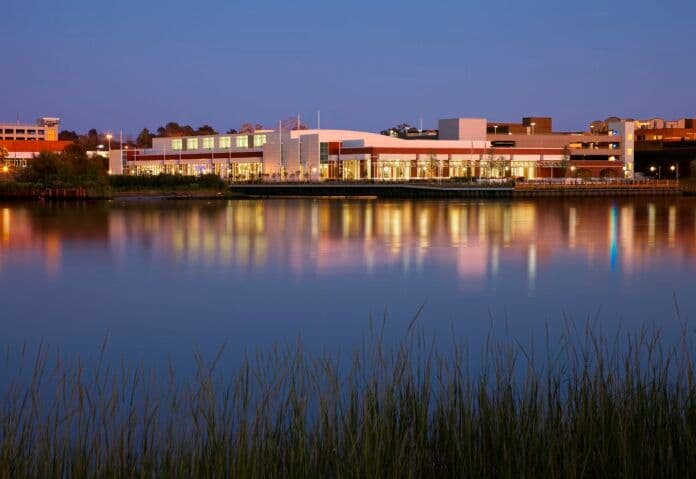
The Southeast Region Federal Construction, Infrastructure & Environmental Summit convened an expected 850 attendees from federal agencies, military installations, and construction firms at the Wilmington Convention Center on April 14-16, 2026, targeting what organizers characterized as billions of dollars in federal defense construction contracts. While the event signals meaningful pipeline potential for the Cape Fear region's construction and logistics sectors, no specific contract awards, job creation figures, or investment commitments have been publicly verified — making this a market signal to monitor, not a deal to underwrite.
Fast Facts
- Event: Southeast Region Federal Construction, Infrastructure & Environmental Summit
- Dates: April 14-16, 2026
- Location: Wilmington Convention Center, Wilmington, NC
- Expected attendance: ~850 (sources report 800-1,000 range)
- Organizers: Offices of U.S. Senators Thom Tillis and Ted Budd; North Carolina Military Business Center (NCMBC)
- Participating agencies: U.S. Army Corps of Engineers, Naval Facilities Engineering Systems Command (NAVFAC), Fort Liberty, Marine Corps Installations East, Seymour Johnson AFB, U.S. Coast Guard, Department of Veterans Affairs, General Services Administration
- Verified contract values: None publicly disclosed
- Verified job projections: None publicly disclosed
- Incentive packages: None identified
What Happened
The summit brought together federal procurement officers and Southeast-region general contractors, specialty contractors, designers, and construction suppliers for three days of matchmaking sessions, networking, and a trade show. The event format — organized at the congressional level with support from NCMBC — is designed to connect contractors with upcoming federal construction, infrastructure, and environmental remediation projects across military installations in the Carolinas and broader Southeast.
The gathering drew from a deep bench of federal buyers. NAVFAC, which manages the Navy and Marine Corps' global facilities portfolio, and the U.S. Army Corps of Engineers, one of the largest federal construction contracting agencies, were both represented. The presence of Marine Corps Installations East is particularly relevant given Camp Lejeune's proximity to Wilmington and its ongoing modernization requirements.
Why It Matters
For the Wilmington market, this summit matters less as a single event and more as a demand signal for defense-adjacent construction and professional services employment. The Cape Fear region already benefits from two significant federal military assets: Camp Lejeune and Military Ocean Terminal Sunny Point (MOTSU), the Department of Defense's largest East Coast ammunition port. Located on the west bank of the Cape Fear River in Brunswick County, MOTSU spans thousands of acres and serves as the military's primary East Coast strategic ammunition seaport, handling storage, shipping, and transshipment of DOD ammunition and explosives. These installations generate recurring procurement cycles in construction, environmental services, logistics, and facilities maintenance.
The region's significant industrial pipeline — including major projects such as the Wilmington Trade Center, the ILM Depot 1 logistics facility, and new Leland and Brunswick County industrial facilities — is driven primarily by commercial logistics and manufacturing activity but could find secondary demand from defense subcontractors seeking warehousing, staging, and fabrication space. However, this remains speculative absent specific contract awards or facility siting announcements.
Defense construction dollars also tend to carry higher prevailing wage requirements under the Davis-Bacon Act, which could improve job quality metrics for the local construction labor force compared to private-sector commercial projects.
What Stands Out
- No verifiable dollar amounts have been attached to specific contracts or pipeline opportunities from this summit — the "billions" framing originates from aggregate federal defense construction budgets, not Wilmington-specific commitments
- Congressional-level organization (Tillis and Budd offices) suggests sustained political capital directed at steering federal construction dollars into North Carolina, which could benefit the Cape Fear region disproportionately given its military infrastructure
- ~850 expected attendees makes this one of the larger business-to-government events hosted in Wilmington in recent years, though post-event actual attendance figures have not been published
- NAVFAC and Army Corps participation are the highest-value signals — these two agencies alone award tens of billions annually in construction contracts nationwide
- No local or state incentive packages appear tied to this event, which is unusual for deals of regional economic significance — though defense contracting operates outside typical incentive frameworks
- Environmental remediation was explicitly included in the summit scope, opening a potential niche for Wilmington-area environmental services firms dealing with PFAS contamination and related military site cleanups
Market Lens
Angle: Sector Diversification
Wilmington's economic base has diversified meaningfully over the past decade — from film production and tourism toward life sciences, advanced manufacturing, and logistics. Defense-sector construction represents a potential additional pillar that could reduce the region's exposure to private-sector cyclicality. Federal construction budgets operate on multi-year authorization cycles that are less sensitive to interest rate environments and commercial real estate sentiment than private development.
However, the region's ability to capture a meaningful share of defense construction spending depends on factors that remain unquantified: local contractor bonding capacity, security clearance workforce depth, and proximity advantages versus competitors in Hampton Roads, VA, Charleston, SC, and Jacksonville, FL — all of which host larger defense installation complexes. Wilmington's competitive edge is narrow and installation-specific, primarily tied to Camp Lejeune and MOTSU work scopes.
The NCMBC has historically played a facilitation role rather than a deal-closing one. Translating summit connections into awarded contracts typically takes 12-24 months through federal procurement timelines, meaning any local economic impact from this event would not materialize before mid-2027 at the earliest.
Risks & Watch-Outs
- Pipeline ≠ Commitment: The absence of disclosed contract values, project timelines, or company-specific awards means the economic impact remains entirely projection-based — investors and workforce planners should treat this as an early indicator, not an actionable data point
- Federal budget uncertainty: Defense construction appropriations face annual continuing resolution risk; a shift in congressional priorities or sequestration-style caps could shrink the available pipeline before contracts reach award stage
- Labor absorption capacity: New Hanover County's construction sector could face additional strain if defense contract demand layers onto existing residential and commercial building activity, potentially tightening an already constrained skilled trades labor market
- Security clearance bottleneck: Federal defense construction often requires cleared personnel, a workforce segment in chronic short supply nationally — Wilmington lacks the established cleared-workforce ecosystem of larger defense metro areas
- No clawback provisions to evaluate: Because no public incentives were extended, there is no incentive ROI to assess — but this also means the public sector has no contractual leverage to ensure local hiring or spending commitments from participating contractors
Topics

Maya Shelton
Maya Shelton joined the Wilmington reporting scene after four years in Big 4 advisory, where she worked with real estate and infrastructure clients across the Southeast. She brings a data-savvy, no-nonsense perspective to emerging business stories, with a focus on economic development and early-stage investment trends.
Related Posts
More stories from the same category


Recent Posts
Stay up to date with our latest stories





Subscribe to Newsletter
Provide your email to get email notification when we launch new products or publish new articles