Novant's $2B Coastal Bet Puts a New Hospital North of Wilmington for First Time in 60 Years
Novant Health opens a 66-bed hospital at Scotts Hill in June 2026, the first in New Hanover County in 60 years, reshaping the northern corridor.

May 02 2026
1 min read
Business Summary
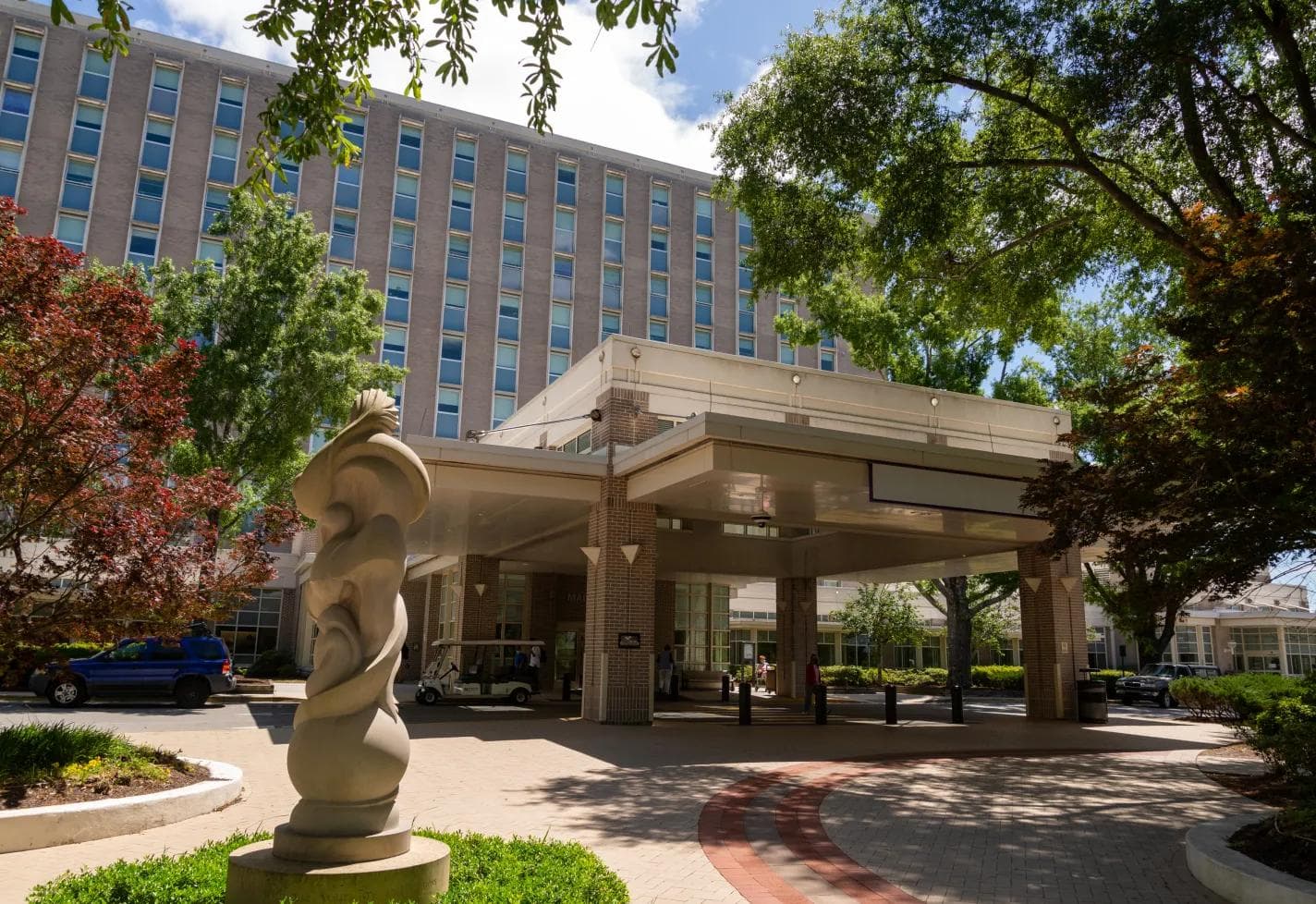
Novant Health will open the 66-bed Scotts Hill Medical Center on June 16, 2026 — the first new hospital built in New Hanover County in 60 years. The eight-story tower with a doubled emergency department anchors the northern growth corridor toward Hampstead and Pender County, and it is the centerpiece of a nearly $2 billion regional investment campaign Novant has executed since acquiring New Hanover Regional Medical Center (NHRMC) in February 2021 for $1.5 billion. For investors and developers tracking the Cape Fear region, this is the clearest signal yet that healthcare infrastructure is following rooftops north — and pulling commercial gravity with it.
Fast Facts
- 66 inpatient beds and a doubled emergency department at the new Scotts Hill facility
- June 16, 2026 opening date
- Nearly $2 billion invested by Novant in the coastal region since 2021
- $1 billion+ master plan for Wilmington-area expansions over 5–7 years
- 180 physicians and advanced practice providers added since acquisition; 50–60 more per year planned
- 150,000-square-foot former Verizon call center to reopen as medical office space by 2027
- Eight-story Heart & Vascular tower at NHRMC's South 17th Street campus targeting a 2031 opening
- 80,000-square-foot second heart and vascular medical office building planned
- 60-private-room rehabilitation hospital on 15 acres at the Wrightsville Avenue campus
- All major expansions subject to Certificate of Need (CON) state review
What Happened
Novant confirmed the June 16, 2026 opening of Scotts Hill Medical Center, its largest single expansion project in the Wilmington region. The facility sits along the US-17 northern corridor in New Hanover County, positioning it to absorb demand from fast-growing residential communities in Scotts Hill, Hampstead, and eastern Pender County — areas that have lacked a full-service hospital and have relied on the NHRMC downtown campus for emergency and inpatient care.
The hospital is one piece of a broader capital deployment. Novant's master plan includes a new Heart & Vascular tower replacing the existing rehab hospital at NHRMC's South 17th Street campus by 2031, a 60-room rehabilitation hospital near its orthopedic campus on Wrightsville Avenue, and the conversion of a 150,000-square-foot former call center into medical office space. The system has added 180 providers since closing its $1.5 billion acquisition of NHRMC in February 2021 and plans to recruit 50–60 more annually.
Why It Matters
The Scotts Hill opening redraws the healthcare map for the Wilmington metro. For the first time in six decades, emergency and inpatient capacity will exist north of the city's urban core, relieving pressure on NHRMC's downtown ED — which has been a persistent bottleneck as New Hanover and Pender counties have grown. North Carolina ranks among the nation's fastest-growing states by recent Census data, and the northern corridor has absorbed a disproportionate share of that residential expansion.
From a capital allocation standpoint, nearly $2 billion deployed in five years is an outsized commitment to a mid-size metro. It signals Novant's conviction that the Wilmington region can support specialty and acute-care volumes well beyond current levels. For competing systems and independent providers — including Wilmington Health, which broke ground in April 2026 on its own 64,000-square-foot Midtown II medical office building — the competitive pressure is intensifying.
The commercial real estate implications extend beyond healthcare. Hospitals generate dense clusters of ancillary demand: pharmacies, outpatient clinics, medical office buildings, food service, and workforce housing. The Scotts Hill site and the 150,000-square-foot Midtown medical office conversion will create new demand nodes that developers and landlords should be watching.
What Stands Out
- Geographic rebalancing is the real story. Scotts Hill doesn't just add beds — it shifts the center of gravity for acute care northward, matching where population growth is actually occurring. The facility is located in New Hanover County but serves both northern New Hanover and eastern Pender County communities. The corridor implications for land values, commercial development, and ancillary services are significant.
- Recruitment velocity is a leading indicator. Adding 180 providers in roughly four years, with plans for 50–60 more per year, suggests Novant is building toward specialty service lines (cardiac, vascular, orthopedic) that generate higher revenue per patient. That's a demand signal, not just a staffing metric.
- The $1 billion+ master plan is phased and CON-dependent. The Heart & Vascular tower, rehab hospital, and major campus reconfigurations are staggered over 5–6 years and require state regulatory approval. Execution risk is real — CON denials or delays could alter the timeline materially.
- Competitive dynamics are tightening. Wilmington Health's 64,000-square-foot Midtown II build — with a projected completion by summer 2027 — shows that independent groups are also investing aggressively. The market is absorbing significant new medical square footage simultaneously.
- Downstream commercial impact is underpriced. A new hospital on the northern corridor will accelerate commercial and retail development in Scotts Hill and Hampstead, areas where infrastructure has lagged residential growth.
Market Lens
Corridor Strength. The US-17 northern corridor has been a residential growth story for years, but it has lacked the institutional infrastructure — hospitals, large medical campuses, employment anchors — that converts bedroom communities into self-sustaining economic nodes. Scotts Hill Medical Center changes that calculus. A 66-bed hospital with a full emergency department is an institutional anchor that generates permanent jobs, attracts specialty providers, and creates demand for adjacent commercial development. For developers and investors evaluating land positions between Wilmington and Hampstead, the hospital's opening date is a catalyst event. The corridor is graduating from residential infill to mixed-use economic development, and Novant's capital is leading that transition.
Risks & Watch-Outs
- CON regulatory risk. Multiple planned expansions — the Heart & Vascular tower, the rehab hospital — require Certificate of Need approval from the state. Denials or modifications could delay or downsize future phases.
- Labor market pressure. Recruiting 50–60 providers per year in a competitive national market is ambitious. Physician and nursing shortages remain a structural headwind for every health system in the Southeast.
- Construction cost escalation. A 5–7 year phased build-out exposes Novant to material and labor cost inflation, which has been volatile nationally.
- Volume ramp uncertainty. A new hospital in a growth corridor still needs to prove patient volumes justify the capital. Early utilization rates will be closely watched.
- Competitive saturation. With Novant, Wilmington Health, and other systems all expanding simultaneously, the Wilmington metro is absorbing an unusual amount of new medical capacity. If population growth slows or insurance reimbursement tightens, margin pressure could emerge.
- Infrastructure gaps. The northern corridor's road network and utility capacity have not always kept pace with residential growth. Hospital-driven traffic and development could expose those gaps further.
Bottom line for decision-makers: Novant's Scotts Hill opening is the most significant healthcare infrastructure event in New Hanover County in a generation. It validates the northern corridor as a primary growth axis, creates immediate commercial development opportunities around the hospital site, and raises the competitive bar for every provider in the market. But the broader $1 billion+ master plan is phased, CON-dependent, and exposed to execution risk. Track the regulatory approvals and early patient volumes — those will determine whether the full vision materializes or gets resized.
Topics

Jordan Reese
Jordan Reese covers commercial real estate and business trends across Wilmington and the greater Cape Fear region. With a focus on investment activity and regional growth, Jordan provides clear, research-informed reporting for business owners, investors, and civic stakeholders.
Related Posts
More stories from the same category

Recent Posts
Stay up to date with our latest stories


Subscribe to Newsletter
Provide your email to get email notification when we launch new products or publish new articles