Downtown Wilmington's Homeless Day Center Faces Closure as Grant Dries Up
A $200K grant loss and forced relocation threaten Wilmington's only downtown homeless day center — exposing gaps in the city's social infrastructure.

May 02 2026
1 min read
Business Summary
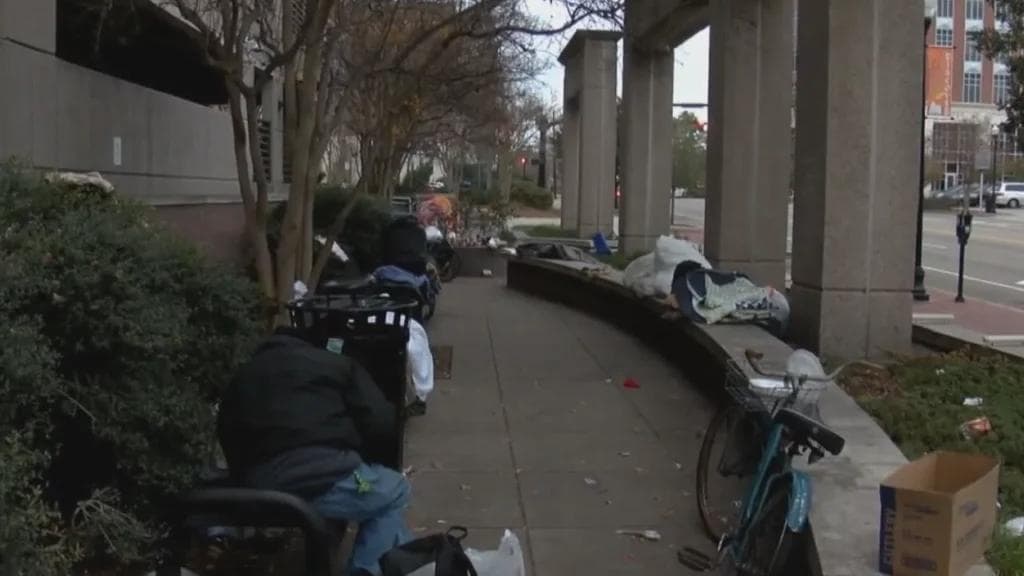
Living Hope Day Center, the only dedicated daytime resource for homeless individuals in downtown Wilmington, is confronting a dual crisis: the loss of a $200,000 grant that comprised 35% of its 2025 budget and forced relocation from its rent-free space at First Baptist Church on 411 Market Street. The situation exposes a widening gap between downtown's commercial reinvestment trajectory — anchored by projects like Thalian Hall's $25 million renovation and rising occupancy at Skyline Center — and the fragility of the social infrastructure operating in that same corridor.
Fast Facts
- Average daily served: 71 people per day (when open)
- Meals provided (2024–2025): 17,000
- Housing placements: 31 individuals
- Shelter placements: 25 individuals
- Detox referrals: 48 individuals
- Lost grant: $200,000 from New Hanover Community Endowment (35% of 2025 budget)
- Current operating hours: Monday–Wednesday, 9 a.m.–1 p.m. (3 days/week)
- Space needed for relocation: 4,000–8,000 sq ft, downtown location required
- Relocation deadline: Originally end of July 2026; church renovation delayed to 2027, providing approximately one additional year
- Government funding to date: $0 from City of Wilmington or New Hanover County
What Happened
Living Hope Day Center launched in 2023 as a collaboration between five faith-based organizations — including Hope Recovery UMC, The Feast Gathering UMC, The Anchor UMC, Living Hope Street Ministries, and First Baptist Church — after Living Hope Street Ministry formed in 2020 to fill service gaps created during COVID-19. The center secured 501(c)(3) status and in 2024 received a $200,000 grant from the New Hanover Community Endowment, enabling expanded hours and the addition of a case worker.
That grant was fully expended by the end of 2025. The Endowment declined to renew, citing the center's instability from its impending relocation and internal policy limits on funding organizations where its grant exceeds a certain share of total budget. The Endowment has also signaled it wants to see city and county participation — neither of which has contributed funding.
First Baptist Church, which has hosted the center rent-free, is planning a major renovation that will displace the operation. The original deadline was end of July 2026, but the church has since pushed its remodel timeline to 2027, granting roughly one extra year. Center founders Tony Perez (CEO) and Christine Perez have reached out to the mayor's office seeking municipal space but have received no public commitments.
Private support has materialized in smaller amounts. Tom Harris, co-owner of Front Street Brewery, made a $5,000 personal donation to help sustain operations. No total shortfall figure has been publicly disclosed.
Why It Matters
The center's crisis is a market-level signal, not just a nonprofit story. Downtown Wilmington is absorbing significant capital — the Thalian Hall renovation alone represents $25 million in public cultural investment, and Skyline Center is reporting rising office occupancy with projections to exceed 85% once pending leases are finalized. Property values in the core are appreciating. That appreciation creates direct pressure on nonprofits that depend on donated or below-market space.
A center serving 71 people per day with demonstrated placement outcomes (31 into housing, 25 into shelter, 48 into detox) functions as de facto social infrastructure for the downtown corridor. Its closure would not simply affect the individuals it serves — it would increase visible homelessness in the commercial core at the exact moment the city is investing to attract tenants, visitors, and capital.
What Stands Out
- Single-funder dependency proved fatal. A $200,000 grant representing 35% of the annual budget created structural vulnerability. When the Endowment declined renewal, no backup existed.
- Zero government funding is the real story. Neither the City of Wilmington nor New Hanover County has contributed to the center's operations — unusual for a facility with measurable housing and detox placement outcomes.
- The Endowment's position is a policy signal. Its refusal to renew, combined with its explicit call for city/county co-investment, reads as a deliberate attempt to force public-sector engagement rather than subsidize it indefinitely.
- Nonprofit real estate math is breaking. Securing 4,000–8,000 sq ft in downtown Wilmington at nonprofit-viable rates is a fundamentally different proposition in 2026 than it was in 2020. Rising assessed values and lease rates make this a competitive disadvantage that no amount of fundraising fixes alone.
- Operating on 12 hours per week. Three days, four hours each — the center is already at minimum viable capacity. Further cuts likely mean closure, not reduced service.
Market Lens
Angle: Corridor Strength
Downtown Wilmington's investment narrative is strong on paper: cultural anchors being renovated, office occupancy climbing, private capital flowing into mixed-use projects. But corridor strength is not just a function of capital deployed — it reflects the stability of the environment that capital enters. A functioning day center absorbs social friction that would otherwise manifest as street-level disorder, retail disruption, and public safety costs.
The absence of any municipal or county funding for Living Hope suggests a disconnect between the corridor's commercial ambitions and its social operating costs. Investors and developers pricing downtown exposure should note that this gap, if it widens, introduces reputational and quality-of-life risk to the very assets the city is trying to upgrade. The Endowment's posture — funding once, then demanding government participation — is an early signal that philanthropic capital alone will not carry the load.
Risks & Watch-Outs
- Execution risk on relocation: Finding 4,000–8,000 sq ft of affordable downtown space is the center's existential challenge. The 2027 church deadline provides runway, but no viable site has been identified publicly.
- Funding concentration: Without a diversified donor base or public-sector commitment, the center remains one grant cycle from insolvency at any point.
- Political risk: Homeless services are politically complex. Municipal leaders may avoid direct funding commitments ahead of election cycles, extending the gap.
- Macro headwinds: Federal funding uncertainty for social services and tightening philanthropic budgets nationally could reduce the pool of available grants.
- Downstream commercial impact: If the center closes and street homelessness increases in the Market Street corridor, it creates headwinds for the very commercial and cultural investments — Thalian Hall, Skyline Center — that define downtown's current trajectory.
Bottom line for decision-makers: The Living Hope Day Center crisis is a stress test for Wilmington's downtown model. The city is spending $25 million on a performing arts hall but $0 on the only dedicated daytime homeless facility in the same corridor. That asymmetry is a risk variable — not just for the center's clients, but for every commercial stakeholder banking on downtown's upward arc.
Topics

Marcus Lane
Marcus Lane writes about real estate, urban planning, and regional business strategy across Southeastern North Carolina. With a background in market analysis and civic reporting, he brings practical insights to emerging development stories and public-private partnerships.
Related Posts
More stories from the same category
Recent Posts
Stay up to date with our latest stories


Subscribe to Newsletter
Provide your email to get email notification when we launch new products or publish new articles