Curtis Media Buys 5 Wilmington Radio Stations for $1.75M — What the Price Says
Curtis Media Group acquires five Wilmington radio stations for $1.75M. What the below-market price signals for local media competition.

May 04 2026
1 min read
Business Summary
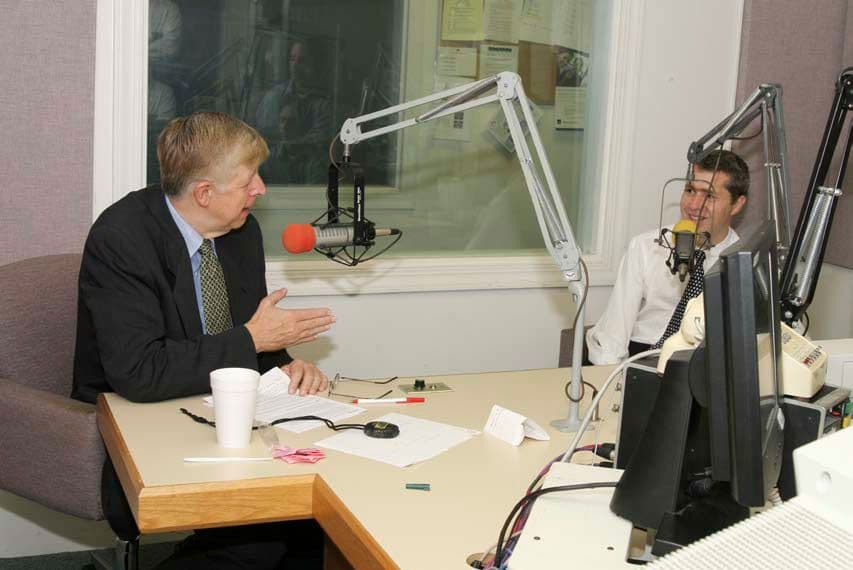
Curtis Media Group, a Raleigh-based privately held broadcaster, closed on five radio stations and two FM translators in the Wilmington–Cape Fear market from Capitol Broadcasting Company's Sunrise Broadcasting subsidiary for $1.75 million on or around May 1, 2026. The deal consolidates a meaningful share of local broadcast inventory under one of the Southeast's largest private radio operators — at a price that raises pointed questions about asset valuation, local investment intent, and the competitive future of Wilmington radio advertising.
Fast Facts
- Purchase price: $1.75 million for seven signals (five stations, two translators)
- Earnest money deposit: $180,000, held by broker Kalil & Co., Inc. (Tucson, AZ)
- Stations acquired: WRMR 98.7 FM (Jacksonville, 100 kW), WKXB 99.9 FM (Boiling Spring Lakes, 26 kW), WAZO 107.5 FM (Southport, 21 kW), WMFD 630 AM (Wilmington, 0.8 kW day / 1 kW night), plus translators 101.7 FM (W269DF-FX) and 95.9 FM (W240AS-FX) (Wilmington, 0.25 kW each)
- Market: Wilmington–New Bern–Jacksonville (Nielsen market ranking not independently confirmed for 2026; one research source cited #133, though verification was inconclusive)
- Metro population: approximately 300,000
- New Hanover County population growth: approximately +1.1% YoY (2024–2025 Census estimates; county population estimated at 245,959 as of mid-2025)
- No confirmed details on staff retention, format changes, or local capital expenditure plans
What Happened
Capitol Broadcasting Company, best known for its Triangle-region TV and multimedia assets, divested its Wilmington-area radio cluster through its Sunrise Broadcasting subsidiary. Curtis Media Group, already one of North Carolina's dominant private radio operators, picked up the bundle — spanning the Cape Fear coast from Jacksonville to Southport — for a confirmed $1.75 million per FCC records.
The portfolio includes one high-power FM (WRMR at 100 kW), two mid-power FMs, one AM station, and two low-power FM translators covering Wilmington proper. The deal was brokered by Kalil & Co. and closed without disclosed financing terms or post-close investment commitments.
Why It Matters
This transaction matters for three reasons: price signal, consolidation dynamics, and local ad market implications.
At $1.75 million, the deal came in well below the $5 million–$15 million range typical for comparable multi-station packages in similarly sized markets, according to industry observers. Commentators flagged surprise at the discount relative to signal strength, particularly the 100 kW WRMR. The low price likely reflects the AM-heavy revenue mix, limited Class C FM inventory, and broader secular pressure on terrestrial radio valuations — but it also suggests Capitol Broadcasting prioritized a clean exit over maximizing sale proceeds.
For the Wilmington advertising market, the consolidation of five stations under a single operator with statewide scale introduces both efficiency and concentration risk. Retailers, healthcare systems, and real estate firms that rely on radio reach now negotiate with a larger counterparty. Whether that means better bundled rates or reduced pricing competition depends on how Curtis operates the cluster.
What Stands Out
- Below-market pricing: $1.75 million for seven signals in a growing metro is aggressively low. Either Capitol was a motivated seller, or these assets are underperforming relative to their technical reach.
- No local investment disclosures: Curtis has announced no plans for format changes, staffing decisions, or studio investment. The absence of detail is itself a signal — consolidation plays in mid-markets often lead to centralized programming and reduced local headcount.
- Population tailwind is real: New Hanover County grew by approximately 1.1% from 2024 to 2025 (to an estimated 245,959 residents), which supports advertiser demand, but radio's share of local ad budgets continues to erode against digital. Curtis needs the demographic trend to outpace the channel trend.
- Capitol's strategic pivot: The divestiture aligns with Capitol Broadcasting's apparent refocus on Triangle-region multimedia, signaling that Wilmington radio wasn't core to its long-term portfolio.
- Competitive landscape uncertainty: No public data confirms how many independently programmed stations remain in the market post-deal. The concentration question is material for local advertisers.
Market Lens
Angle: Competitive Positioning
This deal repositions Curtis Media Group as the dominant private radio operator in the Cape Fear corridor, extending a statewide footprint that already ranks among the largest in the Southeast. For Wilmington, the competitive read is nuanced.
On one hand, a well-capitalized operator with statewide sales infrastructure could attract regional and national ad dollars that smaller independents can't pursue. Curtis's scale allows format optimization across the cluster — potentially improving ratings performance and, by extension, CPM rates for advertisers.
On the other hand, mid-market consolidation historically correlates with reduced local content investment. If Curtis centralizes programming or trims on-air staff, the stations risk losing the local identity that drives listener loyalty in a market like Wilmington, where community connection still matters to advertisers. The absence of any public commitment to local operations is the most telling data point in the deal.
For competing media — digital publishers, local TV, outdoor, and podcast networks — the consolidation creates a window. If Curtis underinvests in local content, advertisers seeking authentic Cape Fear reach may accelerate their shift to alternative channels.
Risks & Watch-Outs
- Centralization risk: Curtis's track record in other NC markets should be studied closely. Centralized operations reduce costs but can erode local ad revenue if listener engagement drops.
- Secular headwinds: Terrestrial radio continues to lose share to digital, streaming, and podcast advertising nationally.
- Staffing unknown: No confirmed job counts, retention plans, or local management structure. Any significant staff reductions would be a negative signal for content quality and community engagement.
- Regulatory clarity pending: Full FCC approval details and any conditions have not been publicly confirmed as of this writing.
- Valuation floor risk: The $1.75 million price may accurately reflect the revenue-generating capacity of these signals. If so, Curtis's upside is capped unless it can meaningfully grow ratings or restructure ad pricing.
Bottom line for decision-makers: This deal tells you more about the state of mid-market radio economics than it does about Wilmington's growth trajectory. The $1.75 million price is a valuation data point local media buyers, competing broadcasters, and commercial real estate owners with tower or studio leases should internalize. Watch for Curtis's first format and staffing moves — they'll reveal whether this is a growth play or a margin play, and the distinction matters for every advertiser and media competitor in the Cape Fear market.

Jordan Reese
Jordan Reese covers commercial real estate and business trends across Wilmington and the greater Cape Fear region. With a focus on investment activity and regional growth, Jordan provides clear, research-informed reporting for business owners, investors, and civic stakeholders.
Related Posts
More stories from the same category

Recent Posts
Stay up to date with our latest stories


Subscribe to Newsletter
Provide your email to get email notification when we launch new products or publish new articles