Amazon's 3M-SF Pender Complex: Labor and Land Impact for Cape Fear
Amazon's 3M-SF Pender County complex will add 1,000+ jobs at $22/hr, reshaping Cape Fear's labor market, land values, and infrastructure.

Apr 01 2026
1 min read
Business Summary
Amazon's twin-facility buildout at Pender Commerce Park — a 3 million sq ft robotics fulfillment center and a 142,000 sq ft last-mile delivery station — is the largest single industrial footprint ever constructed in the Cape Fear region. When the fulfillment center launches in Fall 2026, it will inject over 1,000 full-time jobs into a metro of roughly 300,000 people, creating a labor demand shock that will ripple through wages, housing, and transportation planning in a county with a thin commercial tax base. For investors and developers watching this corridor, the calculus is no longer speculative: Amazon has committed to Pender County, and the downstream effects are already in motion.
Fast Facts
- Fulfillment center (Project Whale): 3 million sq ft, building shell complete, robotics interior outfitting underway, Fall 2026 launch target
- Delivery station (Project Tuna): 142,000 sq ft, foundation slab poured, vertical construction imminent
- Site: Pender Commerce Park, Currie, NC — 450-acre industrial park off U.S. Highway 421, 3 miles from I-140, 13 miles from the Port of Wilmington
- Jobs: 1,000+ full-time at the fulfillment center at $22/hour average; 100 full-time at the delivery station
- Throughput: Nearly 800,000 packages per day — Amazon's largest facility in North Carolina
- Land acquisition: Amazon purchased 40 acres for the delivery station in 2022
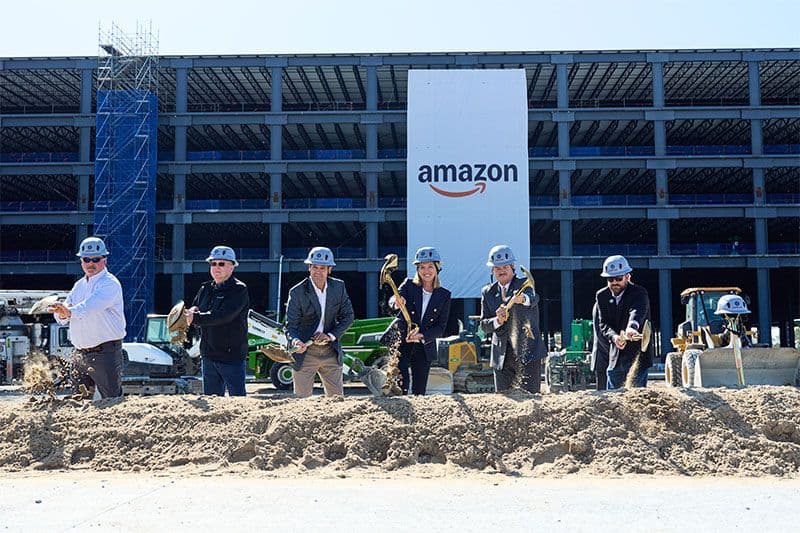
- Groundbreaking: A groundbreaking ceremony was held in early 2025 (scheduled for February 20, 2025); full construction completion expected late 2026
What Happened
Construction on both Amazon facilities is advancing on parallel tracks. The fulfillment center's building shell is complete, with landscaping nearing final stages and interior robotics installation underway. The delivery station — which will handle last-mile sorting and dispatch via Amazon-branded vans serving Greater Wilmington — has its foundation slab poured and utilities progressing, with vertical construction expected shortly.
The fulfillment center will process nearly 800,000 packages per day, making it Amazon's largest operation in the state. Amazon's land position in Pender County dates to at least 2022, when the company acquired 40 acres for the delivery station, signaling a multi-year, phased commitment to this corridor well before the fulfillment center broke ground.
Wilmington Business Development CEO Scott Satterfield has characterized Pender Commerce Park's trajectory — from concept to hosting "some of the world's most successful companies" — as validation of the park's long-term competitive positioning.
Why It Matters
The business significance here is threefold: labor absorption, land pricing, and infrastructure strain.
On labor: Adding 1,000+ jobs at $22/hour average into a ~300,000-person metro is not a rounding error. That wage floor will exert upward pressure on competing warehouse, logistics, and light-industrial employers across New Hanover and Pender Counties. Businesses already struggling to staff at lower pay bands — hospitality, retail, food service — should expect further compression.
On land: Pender Commerce Park's 450 acres are now anchored by a globally recognized tenant. Speculative industrial development is already picking up regionally — Zephyr Development and others are adding inventory in adjacent New Hanover County. Amazon's presence de-risks the corridor for follow-on investment, but it also reprices remaining industrial land upward.
On infrastructure: Pender County's commercial tax base is limited. The county will absorb significant new traffic — both employee commuting and delivery van dispatching — on a road network that was not designed for mega-facility throughput. The Wrightsville Beach bridge replacement, still in design phase with construction not starting until spring 2028, underscores that regional infrastructure upgrades are lagging behind development velocity.
What Stands Out
- $22/hour average wage at the fulfillment center sets a new floor for industrial pay in the region, creating competitive pressure across sectors well beyond logistics.
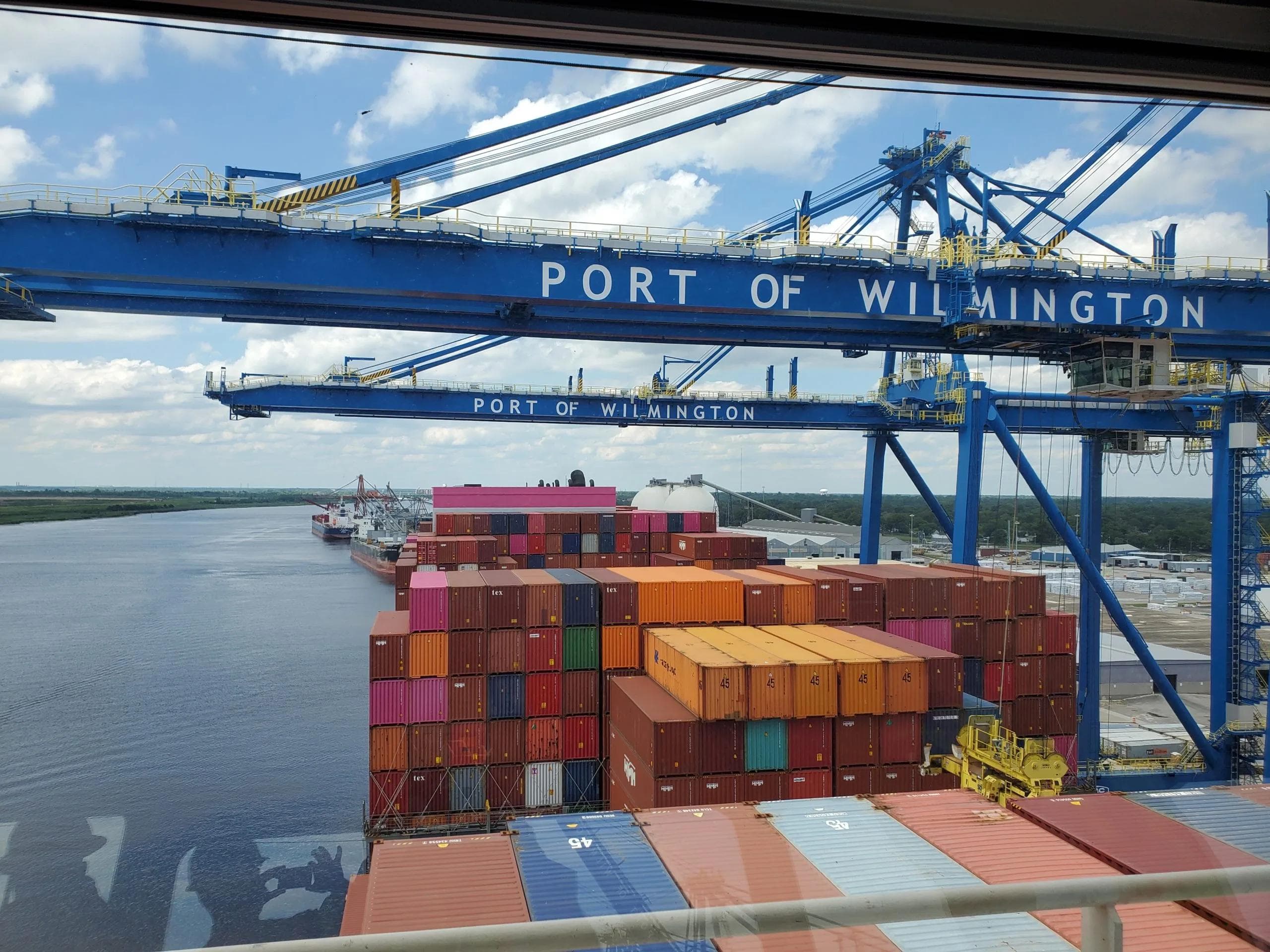
- 800,000 packages per day throughput implies a massive inbound freight volume that should benefit the Port of Wilmington, located just 13 miles away, and attract ancillary logistics providers — though no confirmed supplier follow-ons have been publicly reported.
- Amazon's 2022 land acquisition for the delivery station suggests a deliberate, multi-year corridor strategy, not an opportunistic deal. The fulfillment center buildout three years later confirms the company doubled down.
- No disclosed capital investment figure is publicly available for either project. For a 3 million sq ft robotics facility, comparable Amazon builds nationally have been estimated in the range of $200 million to $500 million+, but no specific number has been confirmed for Pender County.
- Speculative industrial inventory rising nearby (Zephyr Development, others) signals that private capital is already betting on Amazon-driven demand spillover, even before the facility opens.
Market Lens
Angle: Employment / Workforce
The core market signal is labor displacement. A metro this size does not absorb 1,000+ new industrial jobs at $22/hour without visible effects on competing employers. Hospitality and service-sector businesses — which dominate Wilmington's employment base — will face an intensified hiring headwind. Regional workforce developers and community colleges should expect demand for logistics-specific training to spike. The question for decision-makers is not whether Amazon changes the labor market — it will — but whether housing supply and transportation access can scale fast enough to support a workforce that may need to commute from Brunswick, Columbus, or Duplin Counties. The Wilmington Chamber's ongoing housing policy discussions suggest local leadership recognizes the gap but has not yet closed it.
Risks & Watch-Outs
- Housing supply: Pender County lacks the residential inventory to house 1,000+ new workers and their households. Without accelerated housing development, commute distances and turnover costs will rise.
- Transportation infrastructure: U.S. Highway 421 and I-140 will absorb significant new commercial and commuter traffic. No announced road capacity improvements are tied to this project.
- Tax base limitations: Pender County's thin commercial tax base means the public infrastructure costs of supporting a mega-facility may outpace near-term revenue gains.
- Labor competition: Amazon's wage floor could destabilize staffing for smaller employers who cannot match $22/hour, particularly in tourism-dependent Wilmington.
- Execution risk: Interior robotics outfitting for a 3 million sq ft facility is complex. Any supply chain delays for automation equipment could push the Fall 2026 launch.
- Ancillary investment uncertainty: No confirmed supplier or logistics firm follow-ons have been publicly announced. The anticipated clustering effect is logical but unverified.
Bottom line for decision-makers: Amazon's Pender County commitment is the single most consequential industrial investment in the Cape Fear region's modern history. The downstream effects on wages, land values, housing demand, and infrastructure capacity are not hypothetical — they are already being priced in by speculative developers. Employers, lenders, and public officials who wait for the Fall 2026 opening to adjust their planning will be late.

Jordan Reese
Jordan Reese covers commercial real estate and business trends across Wilmington and the greater Cape Fear region. With a focus on investment activity and regional growth, Jordan provides clear, research-informed reporting for business owners, investors, and civic stakeholders.
Related Posts
More stories from the same category
Recent Posts
Stay up to date with our latest stories



Subscribe to Newsletter
Provide your email to get email notification when we launch new products or publish new articles