Azalea Festival Projects $20.8M in Visitor Spending Across Wilmington
Wilmington's Azalea Festival projects $20.8M in visitor spending over five days — what it means for hospitality, retail, and the Q2 tourism calendar.

Mar 29 2026
1 min read
Business Summary
The North Carolina Azalea Festival returns April 8–12, 2026, projecting $20,803,258 in direct visitor spending across a five-day run that draws an estimated 250,000 attendees to downtown Wilmington, Wrightsville Beach, and surrounding venues. For hospitality operators, retailers, and commercial landlords positioned along the festival corridor, this is the single largest demand concentration event on the annual calendar — and the spending figure signals a measurable lift for Q2 revenue across tourism-dependent sectors.
Fast Facts
- Event dates: April 8–12, 2026 (Wednesday–Sunday)
- Estimated attendance: 250,000–300,000 across all events
- Predicted event spending: $20,803,258
- Historical regional economic impact: $50+ million (2011 UNCW study)
- Total events: 25+, spanning ticketed concerts, garden tours, a street fair, and military displays
- Parade attendance alone: 100,000+ (April 11, 3rd Street corridor)
- Street Fair foot traffic: 200,000+ estimated over three days
- Recognition: Southeast Tourism Society Top 20 Event
- Founded: 1948
What Happened
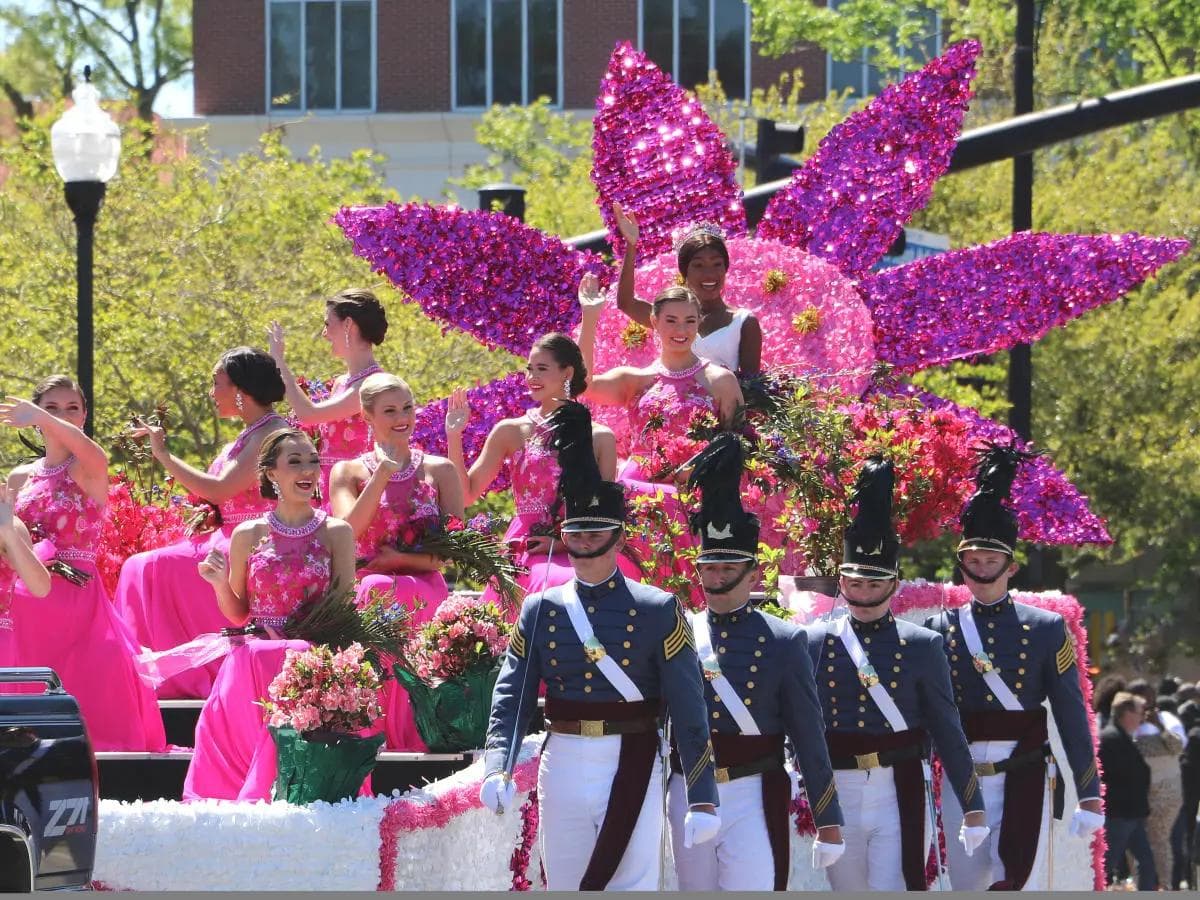
The North Carolina Azalea Festival has confirmed its April 8–12 schedule with programming distributed across multiple Wilmington-area venues. Opening night features the Queen's Coronation aboard the USS North Carolina, followed by a Scholarship Pageant and Spring Fashion Show.
The festival's heaviest programming concentrates on the weekend. April 11 anchors the Festival Parade along 3rd Street from Market to Brunswick — a two-hour, televised event that historically draws 100,000+ spectators — followed by ticketed concerts at Live Oak Bank Pavilion featuring Lil Jon and Dustin Lynch.
The Street Fair runs Friday through Sunday in downtown Wilmington with an estimated 200,000+ attendees. Overlapping with the festival, the Cape Fear Garden Club's Azalea Garden Tour opens private and public gardens April 10–12, a ticketed, self-guided experience featured in Southern Living. Additional programming includes the Azalea Aviation Static Military Display at Wilmington International Airport, Tunes & Blooms at Greenfield Lake Amphitheater, and Historic Home Tours coordinated by the Historic Wilmington Foundation.
Why It Matters
The $20.8 million spending projection — focused on visitor-driven expenditures — represents concentrated seasonal demand for Wilmington's hospitality, food and beverage, and retail sectors. For context, a 2011 UNCW study estimated the festival's broader regional economic effect at $50+ million, accounting for indirect and induced spending from the river to the coast.
This is not a single-venue event. Programming spans downtown Wilmington, Wrightsville Beach, Airlie Gardens, Wilmington International Airport, and residential garden districts — distributing foot traffic and spending across a wide commercial geography. That geographic spread matters for commercial real estate operators and retailers beyond the immediate downtown core.
The festival's Southeast Tourism Society Top 20 Event designation reinforces its role as a regional draw, pulling visitors from across the Southeast rather than relying solely on local attendance. That visitor mix drives higher per-capita spending on lodging, dining, and transportation compared to locally attended events.
What Stands Out
- Spending density is notable: $20.8 million across five days translates to roughly $4.16 million per day in projected visitor expenditures — a significant short-term demand surge for a mid-size metro.
- Parade corridor is a commercial activation zone: 100,000+ spectators along 3rd Street from Market to Brunswick creates a concentrated, high-visibility window for businesses along that route.
- Ticketed + free programming creates a wide funnel: The mix of free events (parade, street fair, military display) and ticketed experiences (concerts, garden tours, home tours) captures spending across multiple price points.
- Garden tour overlap amplifies the draw: The Cape Fear Garden Club's Azalea Garden Tour running concurrently adds a curated visitor segment — the kind of audience that generates ancillary spending at restaurants and boutique retail.
- Live Oak Bank Pavilion bookings signal venue activity: National acts during festival week position the pavilion as an anchor for event-driven tourism programming.
Market Lens: Tourism & Visitor Economy
Wilmington's visitor economy depends on a handful of high-impact seasonal events to bridge the gap between summer beach season and the quieter winter months. The Azalea Festival's April timing fills a critical early-spring window, generating demand before Memorial Day kicks off peak tourism season.
The $20.8 million spending figure, while meaningful, should be viewed as a projection from predictive event analytics, tied to direct visitor expenditures. The $50+ million regional impact from the 2011 UNCW study — now 15 years old — suggests the true economic footprint may be larger, though updated research is overdue. The absence of a recent comprehensive study is a gap that makes precise year-over-year trend analysis difficult.
For hotels, short-term rentals, and restaurants, the festival represents one of the year's highest-demand windows. Operators who haven't locked in staffing and inventory plans for the April 8–12 window are already behind.
Risks & Watch-Outs
- Weather dependence: A five-day outdoor festival in early April is fully exposed to weather disruption. A single washout day during the weekend could materially reduce the 200,000+ street fair turnout and downstream spending.
- No updated economic impact study: The most recent comprehensive analysis dates to 2011. The $20.8 million projection comes from predictive event analytics, not a local economic study — useful but less granular.
- Labor strain on hospitality: 250,000 attendees arriving during a period when Wilmington's hospitality sector is still staffing up for summer creates short-term labor pressure, particularly for food service and lodging.
- Infrastructure load: Parking, traffic management, and public safety costs for an event of this scale are borne in part by the city. The net fiscal return after municipal costs is not publicly detailed.
- No disclosed vendor or sponsorship data: Without transparency on vendor counts, sponsorship revenue, or festival operating budget, it's difficult to assess the event's financial sustainability or growth trajectory independently.
Bottom line for decision-makers: The Azalea Festival remains Wilmington's most significant single-week demand event outside peak summer. The $20.8 million spending projection validates its commercial importance, but the market would benefit from an updated, independent economic impact study to replace the 2011 benchmark. Hospitality and retail operators along the festival corridor — particularly the 3rd Street parade route and downtown street fair zone — should treat April 8–12 as a peak operating window and staff accordingly.

Maya Shelton
Maya Shelton joined the Wilmington reporting scene after four years in Big 4 advisory, where she worked with real estate and infrastructure clients across the Southeast. She brings a data-savvy, no-nonsense perspective to emerging business stories, with a focus on economic development and early-stage investment trends.
Related Posts
More stories from the same category



Recent Posts
Stay up to date with our latest stories


Subscribe to Newsletter
Provide your email to get email notification when we launch new products or publish new articles