Wilmington Health's 64K-SF Midtown II Build Sharpens Healthcare Corridor Race
Wilmington Health's 64,000-SF Midtown II build intensifies the healthcare corridor race against Novant Health in a growing New Hanover County market.

Apr 30 2026
1 min read
Business Summary
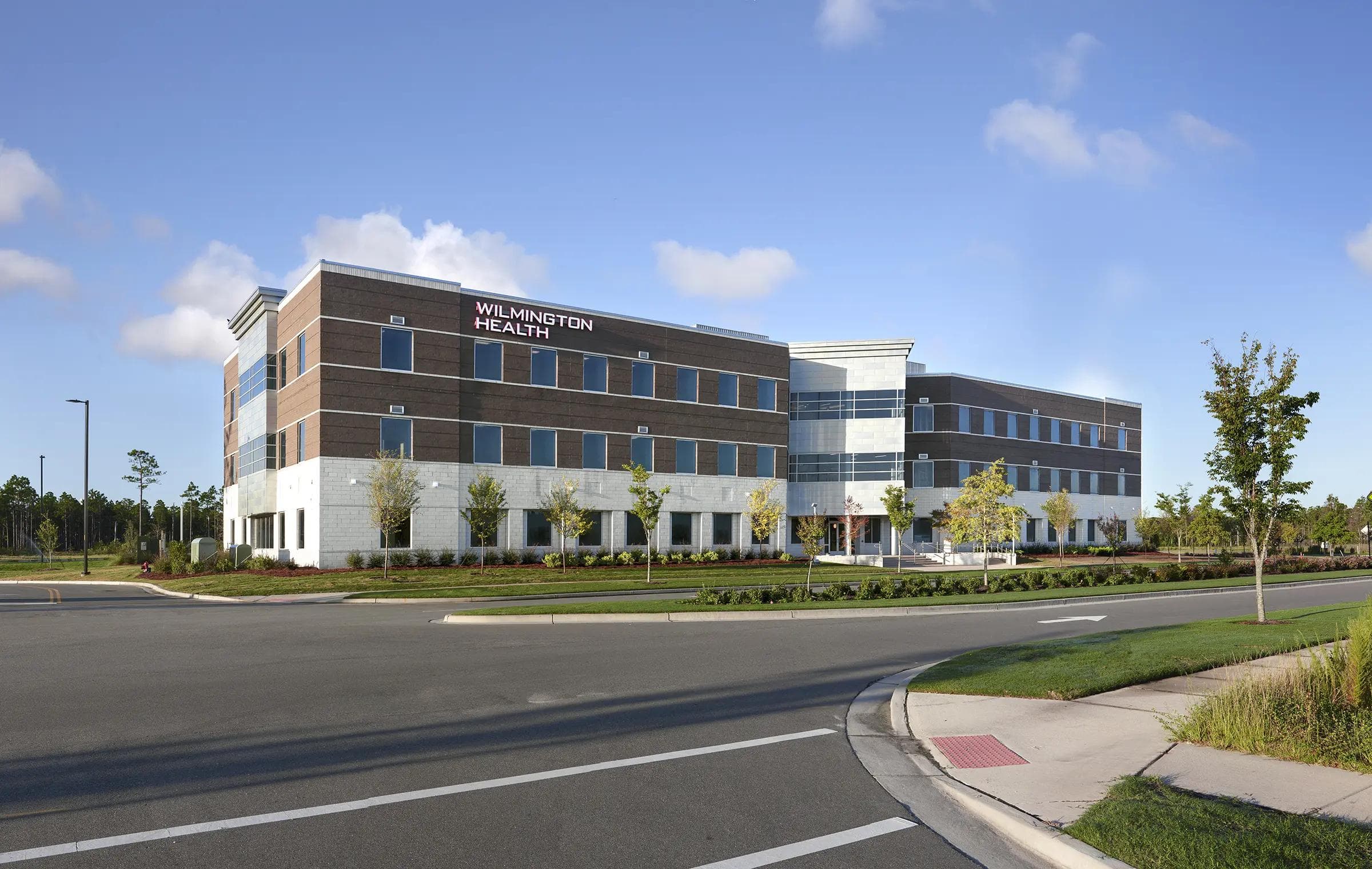
Wilmington Health broke ground on April 24, 2026, on Midtown II, a 64,000-square-foot, three-story medical office building off Gallery Park Drive in Wilmington, NC. The project consolidates specialty clinics, imaging, lab, urgent care, and medical research into a single outpatient hub — one of the larger single-tenant healthcare builds in the Cape Fear region's recent pipeline. The expansion lands in a midtown corridor where Novant Health is simultaneously scaling its own ambulatory footprint, setting up a direct competitive overlap for specialty outpatient market share.
Fast Facts
- Facility size: 64,000 gross square feet, three stories
- Groundbreaking: April 24, 2026
- Targeted completion: Summer 2027 (~15-month construction timeline; a separate leasing document references Q1 2027)
- Design-builder: Monteith Construction (tilt-up panel construction)
- Architect: Bowman Murray Hemingway Architects
- Services housed: Cardiology, orthopedics, urology, dermatology, vascular, foot/ankle, nuclear medicine, urgent care, GE-provided CT/MRI imaging, fully automated lab, medical research space
- Parking: Minimum 5 spaces per 1,000 SF; site plans reference 642+ spaces regionally
- Project cost and job creation figures: Not publicly disclosed
- Location: Adjacent to existing Wilmington Health Midtown campus, near The Pointe at Barclay
What Happened
Wilmington Health purchased land near The Pointe at Barclay and moved to vertical construction on a 64,000-SF medical office building designed to consolidate seven-plus specialty practices, an urgent care operation, advanced imaging, a fully automated lab, and dedicated medical research space under one roof. Monteith Construction is executing a tilt-up panel build with a targeted 15-month timeline pointing to a summer 2027 opening, though one pre-leasing flyer references a Q1 2027 delivery — a discrepancy worth tracking.
The organization describes the project as a response to population-driven demand in New Hanover County, where growth has strained existing medical infrastructure. Wilmington Health operates one of the region's largest private research departments, and the new facility is designed to expand clinical trials access alongside outpatient volume.
No construction cost, permit valuation, or job creation data has surfaced in public filings or reporting. A separate listing references a ±40,000-SF Midtown Medical Building II at Converse Rd/Diligence Rd — it is unclear whether this is the same project at a different measurement standard or a distinct development.
Why It Matters
This is a capacity play in a market where outpatient healthcare real estate has lagged population growth. New Hanover County has added residents faster than the medical office inventory has expanded, and Wilmington Health's decision to build a single-tenant, purpose-built facility — rather than lease existing commercial space — signals confidence in long-term patient volume and reimbursement economics.
The build also represents a meaningful addition to the midtown commercial corridor. At 64,000 SF, the project ranks among the larger single-asset commercial construction starts in the Wilmington metro outside of industrial and multifamily. Healthcare-anchored real estate tends to carry lower vacancy risk and longer effective lease durations, which has implications for adjacent land values and follow-on development.
What Stands Out
- Direct corridor competition with Novant Health: Novant Health Midtown Medical Plaza, a repurposed former Verizon building with over a dozen specialties, is opening in 2026 in the same area. Two major health systems building specialty outpatient hubs within close proximity of each other is an unusually aggressive overlap for a metro of Wilmington's size.
- Research as a differentiator: Embedding medical research space into an outpatient facility is uncommon for independent physician groups. It positions Wilmington Health to capture clinical trial revenue and recruit specialists — a strategic hedge against system-employed physician competition.
- GE imaging partnership: Anchoring CT/MRI through a named equipment provider suggests a capital equipment agreement that may offset upfront imaging costs — a model that accelerates break-even on high-cost diagnostic services.
- No disclosed project cost is notable: For a 64,000-SF medical office build, national averages for medical office construction run approximately $375–$500 per SF as of 2025–2026. That would place an estimated total project cost in the range of $24M–$32M, though this is inference based on national benchmarks, not confirmed project data.
- Tilt-up construction method: Choosing tilt-up panels over steel frame suggests cost and timeline discipline — consistent with a 15-month delivery target on a project of this scale.
- Timeline discrepancy: The gap between a Q1 2027 reference in a leasing flyer and a summer 2027 target in groundbreaking coverage is small but worth monitoring for slippage.
Market Lens
Angle: Competitive Positioning
The strategic read here is that Wilmington Health is making a capital-intensive bet to hold market position against Novant Health's regional expansion. Novant has steadily consolidated physician practices and expanded ambulatory assets across southeastern North Carolina. By building a purpose-built, multi-specialty hub in the same corridor where Novant is planting its own flag, Wilmington Health is forcing a head-to-head comparison on access, convenience, and specialty breadth.
For the broader market, this dynamic benefits patients and employers but pressures margins. Two competing outpatient hubs of this scale in close proximity will compete for the same commercially insured patient base, the same specialist talent pool, and the same referral networks. The winner will likely be determined by execution speed — whoever opens first and stabilizes patient volumes sets the baseline.
For commercial real estate professionals, the midtown corridor is now anchored by two healthcare campuses drawing daily traffic. That strengthens the case for adjacent retail, food service, and professional office development. The Pointe at Barclay and surrounding parcels should see a demand lift from the combined employee and patient census of both facilities.
Risks & Watch-Outs
- Cost opacity: No disclosed budget means outside observers cannot assess financial stress, leverage, or return thresholds. Independent physician groups typically carry thinner balance sheets than hospital systems.
- Labor market pressure: A 15-month construction timeline in the current Wilmington subcontractor market is ambitious. Residential and commercial pipelines are competing for the same trades.
- Specialist recruitment: Filling cardiology, orthopedics, urology, and vascular positions in a market where Novant is also hiring is a real execution risk. Physician recruitment timelines often exceed construction timelines.
- Reimbursement headwinds: Medicare and commercial payer rate pressure on outpatient specialty services could compress the revenue model that justifies a build of this scale.
- Permitting and timeline: The Q1 2027 vs. summer 2027 discrepancy, combined with the 64,000 vs. ±40,000 SF question in public documents, suggests planning details may still be shifting.
- Macro risk: Rising construction material costs and interest rates affect project economics for any healthcare build that is not fully self-financed.
Bottom line for decision-makers: This is the clearest signal yet that Wilmington's midtown corridor is becoming a healthcare real estate battleground. Wilmington Health's willingness to build 64,000 SF of purpose-built outpatient space directly adjacent to a Novant expansion indicates the independent group sees enough demand — and enough competitive urgency — to commit significant capital. Adjacent landowners, developers, and lenders should watch absorption rates at both facilities post-opening as the leading indicator of whether this corridor can support the density being built into it.
Topics

Marcus Lane
Marcus Lane writes about real estate, urban planning, and regional business strategy across Southeastern North Carolina. With a background in market analysis and civic reporting, he brings practical insights to emerging development stories and public-private partnerships.
Related Posts
More stories from the same category




Recent Posts
Stay up to date with our latest stories








Subscribe to Newsletter
Provide your email to get email notification when we launch new products or publish new articles