nCino's Wilmington Cultural Pledge: What the Numbers Actually Support
Project Grace, a confirmed $77M museum-library project in downtown Wilmington, includes nCino's $160K pledge for the Digital Dome theater. Here's what the numbers support.

Apr 27 2026
1 min read
Business Summary
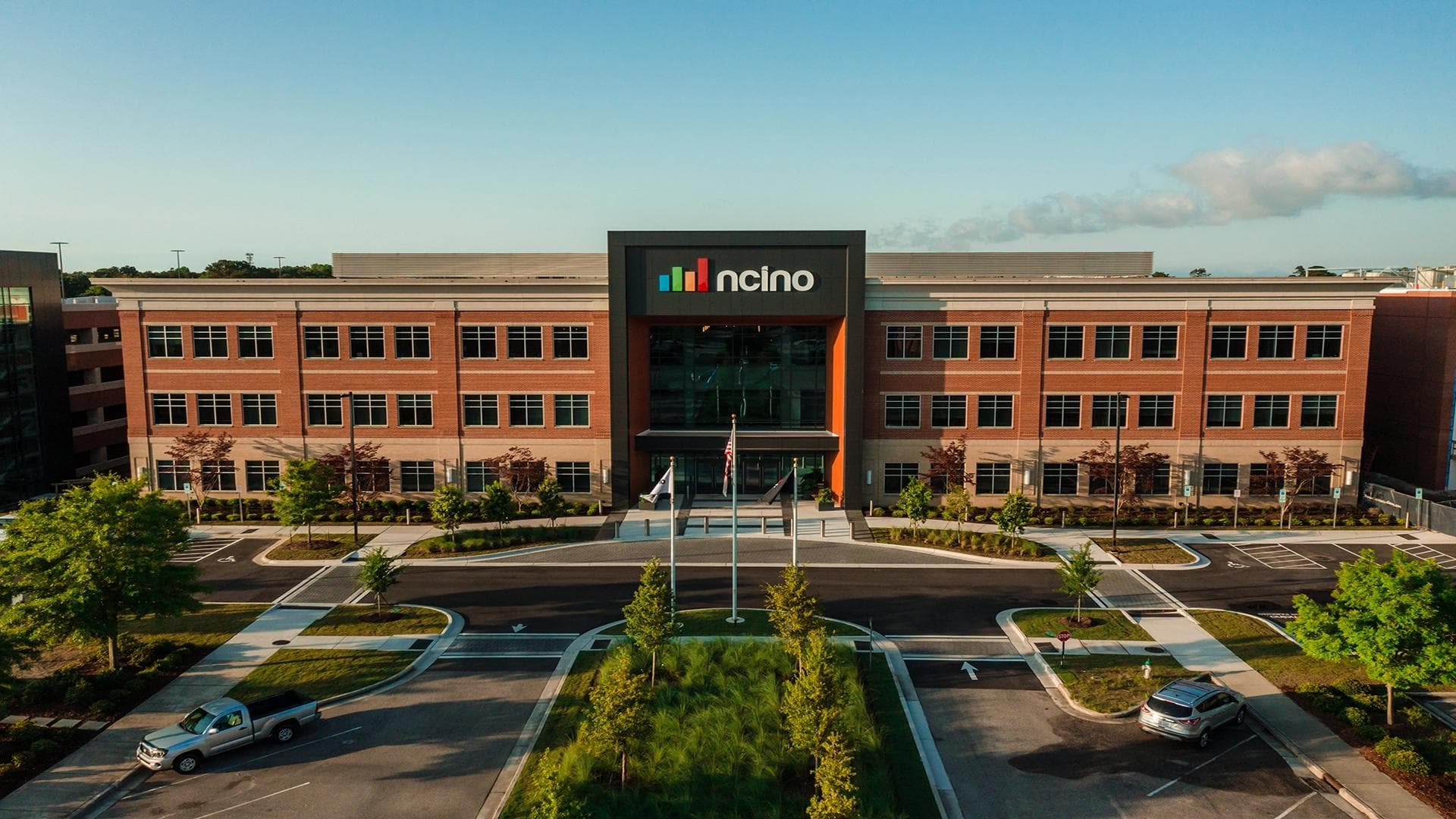
nCino, the Wilmington-based fintech firm, has committed $160,000 over 10 years toward the immersive theater/planetarium component of Project Grace — a $77 million, 95,000-square-foot combined Cape Fear Museum and public library project in downtown Wilmington. The project, confirmed through New Hanover County records and local reporting, also includes nCino's naming sponsorship of the nCino Digital Dome, a 60-seat immersive planetarium. The museum is targeted to open summer 2026, with the library opening October 2025. nCino's pledge sits alongside a broader pattern of six- and seven-figure community investments that signal the company's deepening institutional role in the region.
Fast Facts
- Project Grace: $77M+, ~95,000 sq ft combined Cape Fear Museum and public library on the block between Second and Third streets (north side facing Grace Street); confirmed in New Hanover County records and local reporting
- nCino pledge: $160,000 over 10 years specifically for the immersive theater/planetarium; confirmed via WilmingtonBiz reporting
- nCino Digital Dome: 60-seat immersive planetarium within the new museum; exhibit fabrication started April 2025; museum targets summer 2026 opening
- Finishing costs: $21.5M for exhibits and fit-out — including $14.7M for exhibit design/fabrication, $3M for exhibit infrastructure, $1.7M for furniture/equipment/signage, $1M for A/V/security
- Developer scope: Cape Fear Development's scope expanded to $61.4M maximum (from $55.9M); county funding ~$16.1M of finishing costs
- Verified prior pledge: $1M over 5 years (announced 2021) to Food Bank of Central & Eastern NC for a 35,000 sq ft hunger solutions center
- nCino Sports Park: 64 acres, $20.5M total cost, 11 fields, ribbon cutting October 9, 2024
- Recent M&A: $52.5M cash acquisition of Sandbox Banking (plus up to $10M earn-out), announced February 11, 2025
What Happened
nCino has pledged $160,000 over 10 years specifically for the immersive theater/planetarium within Project Grace, a $77 million downtown Wilmington redevelopment that will house the relocated Cape Fear Museum and a new public library in an approximately 95,000-square-foot facility. The project occupies the block between Second and Third streets on the north side facing Grace Street.
The project's scope and budget have been confirmed through New Hanover County records, WHQR, and WilmingtonBiz reporting. Recent updates show the county received an updated $77 million price tag, with Cape Fear Development's construction scope expanding to a $61.4 million maximum (up from $55.9 million). Finishing costs of $21.5 million — covering exhibit fabrication, infrastructure, furniture, and A/V systems — are partially funded by the county at approximately $16.1 million.
Exhibit fabrication began in April 2025. The library portion targets an October 2025 opening, while the museum — including the nCino Digital Dome — targets summer 2026. The broader vision, branded as "The Grace District," includes shared spaces, an outdoor terrace, and synergy between the library and museum, with the former library site on the south side sold to Cape Fear Development for mixed-use development.
Why It Matters
A $77M cultural infrastructure project is among the largest in the Wilmington metro's history. It carries significant implications for public bonding capacity, tourism revenue projections, and downtown corridor development. The confirmed funding structure — blending public investment, county allocations, and private development — establishes a capital stack that is now visible, if still complex.
What is also confirmed underscores a separate but important signal: nCino is functioning as a quasi-institutional civic anchor in Wilmington. The company's verified commitments — $1M to the food bank, naming rights on a $20.5M sports park, sponsorship of the Digital Dome, and $52.5M+ in recent acquisitions that reinforce its Wilmington HQ footprint — collectively point to a homegrown tech firm filling a role typically played by legacy corporations or regional foundations.
What Stands Out
- Project Grace is confirmed at $77M. New Hanover County records, WHQR, and WilmingtonBiz all document the project's scope, budget, and timeline. This is not speculative — it is an active, funded project with exhibit fabrication underway.
- nCino's $160K pledge is confirmed but modest relative to the project. At roughly 0.2% of the $77M total, the pledge is meaningful as a naming-rights signal for the theater component but negligible as a capital source.
- nCino's verified community investment pattern is substantial. A $1M pledge for the hunger solutions center, which distributed 8.7M+ meals (10.4M lbs) in its first year, demonstrates execution capacity — not just pledging.
- The Digital Dome is a targeted component within the larger project. At 60 seats, it is a planetarium-style immersive theater — a signature feature of the museum, not a standalone capital project.
- Inflation risk is documented locally. The 2016 $38M parks bond saw significant overruns — the MLK Center jumped from $4M to $6.6M after HVAC/electrical costs rose 100% and site work 120%. Project Grace's own scope expansion (Cape Fear Development's contract rising from $55.9M to $61.4M) reflects similar pressure.
- No tourism or economic impact projections have been published for Project Grace.
Market Lens
Angle: Capital Allocation
nCino's pattern of community investment is notable not for its size relative to the company's revenue — nCino reported $540.7M in revenue for FY2025 (ended January 31, 2025), up 13% year-over-year — but for its consistency and local concentration. The food bank center, the sports park naming, the Digital Dome, and the company's continued Wilmington HQ presence collectively function as a soft infrastructure subsidy for the metro. For commercial real estate professionals and economic development officials, the question is whether nCino's civic capital can catalyze co-investment from institutional sources — or whether it remains a standalone corporate goodwill play.
Project Grace's confirmed $77M budget requires a blend of county funding, developer investment, and private support. nCino's $160K pledge against a $77M project represents roughly 0.2% of the total — meaningful as a signal, negligible as a capital source. The real test is whether such a pledge, combined with naming visibility, unlocks larger corporate and institutional commitments.
Risks & Watch-Outs
- Capital stack complexity: While the overall $77M figure is confirmed, the full breakdown of public bonding, state/federal funding, and other corporate commitments beyond the county's ~$16.1M share of finishing costs has not been fully disclosed.
- Inflation and construction cost exposure: Wilmington's own 2016 bond program demonstrated that mid-project cost escalation of 100%+ on key trades is a real risk. Project Grace's developer scope has already expanded from $55.9M to $61.4M.
- Tourism revenue assumptions: No visitor projections or economic impact studies have been published, making ROI modeling impossible at this stage.
- Execution timeline: The library targets October 2025 and the museum targets summer 2026, but exhibit fabrication only began in April 2025, leaving a compressed timeline.
Bottom line for decision-makers: Project Grace is a confirmed, active $77M cultural infrastructure project in downtown Wilmington, with nCino's $160K pledge anchoring the immersive theater component. nCino's role as Wilmington's most visible corporate civic investor is well-documented and growing. Professionals making capital, lending, or development decisions in this corridor should monitor county disclosures and city council actions for further capital stack detail and timeline updates.

Marcus Lane
Marcus Lane writes about real estate, urban planning, and regional business strategy across Southeastern North Carolina. With a background in market analysis and civic reporting, he brings practical insights to emerging development stories and public-private partnerships.
Related Posts
More stories from the same category
Recent Posts
Stay up to date with our latest stories


Subscribe to Newsletter
Provide your email to get email notification when we launch new products or publish new articles