Kesseböhmer's $30M HQ Build Marks a Turning Point for 421 Corridor
German manufacturer Kesseböhmer commits $30M to a 93,000 sq ft purpose-built U.S. HQ on Wilmington's 421 corridor, validating the region's industrial shift.

Apr 06 2026
1 min read
Business Summary
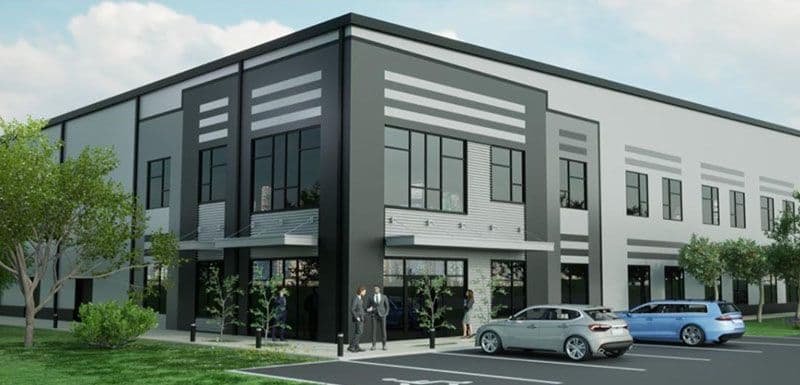
Kesseböhmer, a family-owned German metal processor headquartered in Bad Essen, has built a $30 million purpose-built U.S. headquarters at 4031 U.S. Highway 421 N in New Hanover County, consolidating operations previously split between a downtown Wilmington office and a leased warehouse in Leland. The 93,000-square-foot Class-A industrial complex sits on 10 acres and includes a state-of-the-art powder-coating factory for metal processing. The investment is a textbook foreign direct investment retention play — a mid-market European manufacturer choosing to deepen its footprint in the Cape Fear region rather than relocate to a lower-cost market. For the Wilmington-Leland corridor, this is a signal that the area's industrial base is graduating from logistics pass-through to sticky, owner-occupied manufacturing capital.
Fast Facts
- Investment: $30 million
- Company: Kesseböhmer — family-owned, Bad Essen, Germany; 3,500+ employees across 12 global facilities
- Facility type: 93,000 sq ft Class-A purpose-built consolidated HQ and manufacturing site on 10 acres, with room to potentially double in size
- Location: 4031 U.S. Highway 421 N, New Hanover County
- Operations: Two divisions — retail merchandising displays (serving clients like Lidl and Walgreens) and kitchen storage solutions for U.S. and international markets, including powder-coating factory
- Prior footprint: Downtown Wilmington office + leased Leland warehouse; operating in Wilmington since 2007
- Employment: Current local workforce of 16–25 people, expected to double initially to around 30, with further growth planned
- Timeline: Construction began September 2023, with completion targeted for June 2024 and production starting in 2025
What Happened
Kesseböhmer relocated its North American operations from two separate leased locations into a single, company-owned 93,000-square-foot facility on the U.S. 421 corridor. The move consolidates the firm's retail display and kitchen storage manufacturing divisions under one roof, eliminating the operational drag of split sites and converting lease exposure into owned real estate. The location was selected in part for proximity to the Port of Wilmington, local suppliers, and recent infrastructure investments including $15.5 million in water and sewer services by Cape Fear Public Utility Authority.
The project represents a deliberate reinvestment by a foreign parent company that had every opportunity to exit the market. Instead, Kesseböhmer committed $30 million in new capital to a purpose-built facility — a stronger signal of confidence than a lease renewal or modest expansion would have been. The company, which has operated in Wilmington since 2007, announced the project in September 2023.
The site has room for potential doubling in size, suggesting the company anticipates further growth beyond its current workforce of approximately 16–25 local employees.
Why It Matters
Foreign direct investment retention is harder to quantify than a greenfield announcement, but it arguably matters more. When an overseas manufacturer with existing operations chooses to build permanent infrastructure rather than consolidate back to a home market or shift to a competing U.S. region, it validates the local labor pool, logistics access, and cost structure in a way that press conferences don't.
Kesseböhmer's decision lands in a corridor that is accumulating industrial commitments at a pace that reshapes how the market should be underwritten. The 421 corridor now anchors a pipeline that includes the $18 million+ Treeline Industrial Park, Edgewater Ventures' expansion to 212 acres with up to 3.3 million sq ft of planned industrial space, and the $22.6 million NC Ports Authority Intermodal Facility expected to complete by spring 2025. Add Amazon's 650,000 sq ft robotics fulfillment center launching in 2026 with 1,000+ jobs, and the corridor is no longer speculative — it's an emerging industrial district with diversified tenancy.
For lenders and appraisers, $30 million in owner-occupied manufacturing construction provides a hard comp in a submarket that has been weighted toward spec logistics space.
What Stands Out
- Retention over recruitment: This wasn't an incentive-driven relocation from another state. Kesseböhmer was already here — operating in Wilmington since 2007 — and chose to stay and build permanent infrastructure, a data point that speaks to workforce stability and operational satisfaction more than tax credits.
- Owner-occupied construction in a lease-heavy market: Most corridor activity involves spec industrial or build-to-suit leases. A $30 million owner-built facility introduces a different risk and commitment profile.
- Niche manufacturing, not commodity logistics: Retail merchandising displays and kitchen storage solutions are higher-value, lower-volume products — reinforcing the corridor's shift toward advanced and specialty manufacturing.
- Regional cabinetry/fixtures cluster forming: NexGen Cabinets ($6.7 million, 42 jobs, Duplin County) and Design Mode Cabinetry ($13 million, 139 jobs, Duplin County) add to a nascent building-products cluster in Southeast NC.
- European and international FDI pipeline quiet but active: Kesseböhmer joins Advanced Glazings (a Canadian company and Protocase subsidiary planning a sales office and future manufacturing campus targeting up to 500 jobs) as international firms planting flags in the Wilmington market without major public subsidy fanfare.
Market Lens
Angle: Corridor Strength
The U.S. 421 corridor is becoming the spine of Wilmington's industrial identity. Within a roughly 15-mile stretch, the market now has active or committed projects spanning Amazon fulfillment, Frontier Scientific Solutions' 500,000 sq ft pharmaceutical storage (part of $1.5 billion in GID-backed projects, completion August 2025), Performance Team/RL Cold's 285,000 sq ft cold storage in Pender Commerce Park, and now Kesseböhmer's purpose-built manufacturing HQ.
What makes this corridor interesting for capital allocators is the diversification. It's not a single-tenant bet or a single-sector story. Pharmaceuticals, e-commerce, cold chain, and now specialty metal manufacturing are co-locating along the same infrastructure. That mix reduces concentration risk for the submarket and supports more durable land-value appreciation than a single anchor would.
Five Southeast NC projects ranked among the state's top 25 job-rich developments last year. That kind of density doesn't happen without sustained infrastructure investment — and the intermodal facility and port upgrades are the connective tissue that makes the corridor work for manufacturers shipping internationally.
Risks & Watch-Outs
- Post-construction status unclear: Construction was targeted for completion by June 2024 with production starting in 2025, but no public updates confirming current operational status have been identified. Decision-makers should verify through New Hanover County permits or NC Commerce filings.
- Labor absorption: The corridor is stacking commitments — 1,000+ jobs at Amazon alone, up to 500 at Protocase/45Drives/Advanced Glazings — against a regional labor pool that is growing but not unlimited. Wage pressure and recruitment competition are emerging risks for every operator on the corridor.
- Infrastructure lag: Road capacity on U.S. 421 and supporting routes has not been tested against the buildout now underway. If NCDOT improvements don't keep pace, logistics advantages erode.
- Tariff and trade exposure: A German manufacturer shipping product for U.S. and international markets faces currency and tariff risk on both the input and output side. Any escalation in U.S.-EU trade friction could affect operational economics.
- Spec supply risk: With Edgewater Ventures planning up to 3.3 million sq ft, absorption rates need to hold. A demand slowdown could create vacancy pressure that weighs on rents and asset values corridor-wide.
Bottom line for decision-makers: Kesseböhmer's $30 million owner-occupied build is a quiet but meaningful validation of the 421 corridor's maturation. The stronger signal isn't the dollar amount — it's that a foreign manufacturer with exit optionality chose to build permanent infrastructure here. Watch the corridor's labor absorption and infrastructure capacity as the binding constraints on how far this momentum can run.

Marcus Lane
Marcus Lane writes about real estate, urban planning, and regional business strategy across Southeastern North Carolina. With a background in market analysis and civic reporting, he brings practical insights to emerging development stories and public-private partnerships.
Related Posts
More stories from the same category


Recent Posts
Stay up to date with our latest stories





Subscribe to Newsletter
Provide your email to get email notification when we launch new products or publish new articles