Wilmington Health Breaks Ground on 64,000-SF Midtown II Medical Office
Wilmington Health breaks ground on a 64,000-SF medical office in Midtown, signaling healthcare real estate as a key demand driver in the MSA.

Apr 27 2026
1 min read
Investment Summary
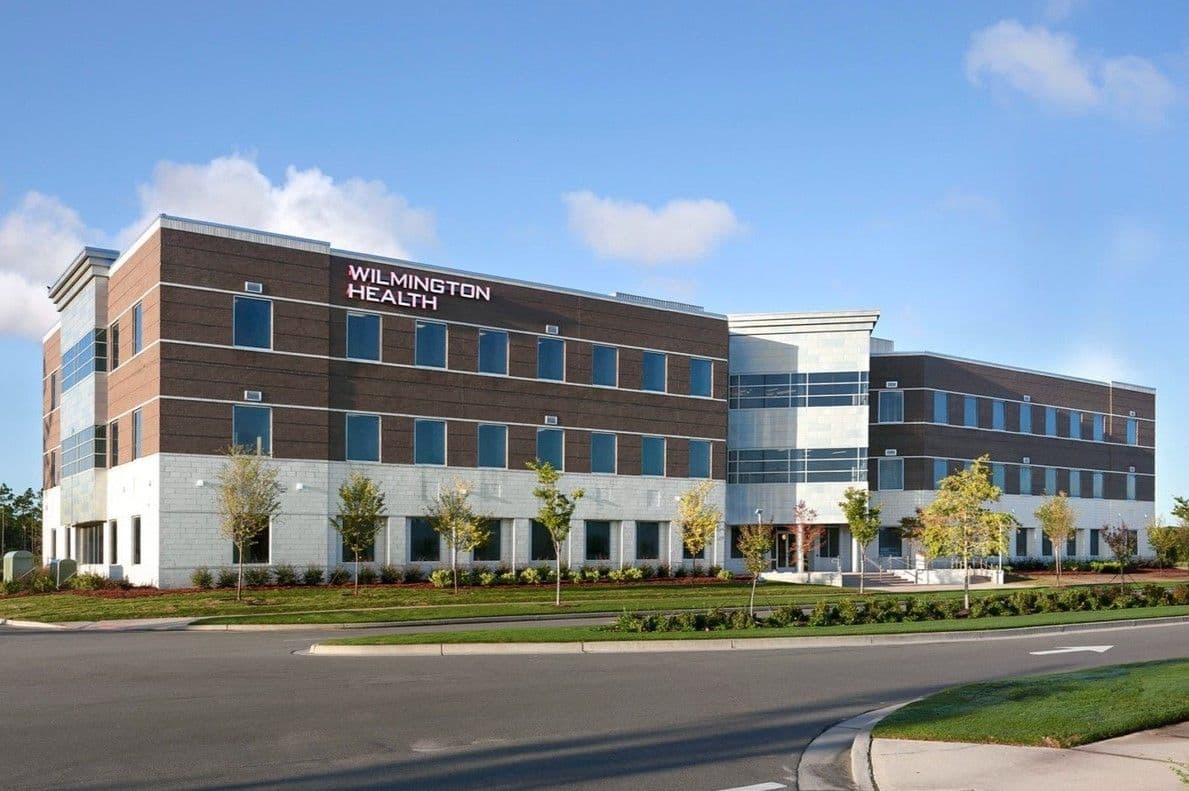
Wilmington Health, a prominent independent physician group serving the region since 1971, broke ground April 24, 2026, on Midtown II, a 64,000-square-foot, three-story medical office building on its expanding Midtown Campus off Gallery Park Drive.
While the total capital investment and projected job count remain undisclosed, the project represents a material bet on healthcare real estate as a primary growth vector in a metro that added roughly 12,000 residents between 2024 and 2025.
With construction targeting a summer 2027 completion, the facility positions multi-specialty ambulatory care as a suburban demand driver alongside the logistics and industrial sectors that have dominated recent capital flows in the Wilmington MSA.
Fast Facts
- Company: Wilmington Health (independent physician group, est. 1971)
- Project: Midtown II medical office building
- Size: 64,000 sq ft | 3 stories
- Location: Gallery Park Drive, adjacent to existing Midtown Campus, near The Pointe at Barclay — Wilmington, NC
- Groundbreaking: April 24, 2026
- Construction timeline: ~15 months
- Target completion: Summer 2027
- Total investment: Not publicly disclosed
- Job count / wages: Not specified; regional healthcare roles average $60,000–$120,000/yr per BLS benchmarks
- Incentives: None announced
What Happened
Wilmington Health acquired land near The Pointe at Barclay to expand its Midtown Campus and held a formal groundbreaking for the new facility on April 24, 2026. The Midtown II building will house cardiology, orthopedics, urology, dermatology, vascular care, and diagnostic services under a "one-stop shop" model designed to consolidate specialty access in a single suburban location.
The project follows a broader land-acquisition strategy by Wilmington Health, though the purchase price, total development cost, and acreage have not been disclosed in any public filing or announcement reviewed to date. No state or local incentive packages — including NCDEQ grants or municipal tax abatements — have been referenced in connection with the project.
Why It Matters
The Wilmington MSA's population growth — approximately 12,000 new residents added between 2024 and 2025, part of a roughly 16.6% increase since 2020 — is generating sustained demand pressure on healthcare infrastructure. Midtown II is a direct capacity response: a purpose-built ambulatory facility that consolidates high-value specialties in a corridor already anchored by the existing Wilmington Health Midtown Campus and Novant Health's Midtown Medical Plaza renovation nearby.
From a labor market perspective, Wilmington Health has not released any job projections for the facility. If staffing follows regional norms for medical office buildings of this scale, average wages would range from $60,000 to $120,000 annually per BLS benchmarks, placing these roles firmly in the upper tier of the Wilmington wage distribution. That wage profile matters: healthcare jobs carry higher multiplier effects than many service-sector roles, driving downstream spending in housing, retail, and professional services.
What Stands Out
- No public incentives announced. Unlike many industrial or logistics deals in the region, this expansion appears to be a purely private capital commitment — a notable signal of organic market confidence in healthcare demand.
- Independent operator, not a hospital system. Wilmington Health's investment as an independent physician group — operating 18 locations across Southeastern North Carolina — distinguishes it from the system-driven expansions typical of Novant or other large health systems. Independent groups making facility-scale capital bets suggest the ambulatory market supports standalone economics.
- Suburban campus model accelerating. The Midtown corridor is now absorbing healthcare real estate from at least two providers (Wilmington Health and Novant Health), reinforcing suburban medical office as a competitive land use against industrial and multifamily.
- Data gaps are significant. The absence of disclosed investment totals, job counts, and incentive terms limits rigorous ROI analysis. Investors and policymakers should watch for building permits, tax records, and subsequent hiring announcements to fill these gaps.
- Diagnostic services on-site. Including imaging and diagnostics in a multi-specialty office reduces referral leakage and increases per-visit revenue — a strategic design choice, not just a facilities decision.
Market Lens
Angle: Real Estate Demand Signal
Healthcare is quietly emerging as a primary demand driver in Wilmington's commercial land market. The Midtown corridor now has two simultaneous medical office developments — Wilmington Health's 64,000-SF new build and Novant Health's renovation of a former Verizon facility into a multi-specialty plaza. This clustering signals that healthcare providers view suburban Wilmington land as strategically essential, not supplementary.
For site selectors and commercial real estate investors, the implication is clear: healthcare-anchored corridors are competing directly with logistics and industrial parks for quality parcels in a market with finite developable land. Medical office buildings command higher per-square-foot lease rates than general office and carry lower vacancy risk in high-growth metros, making them attractive to institutional capital. If the MSA's recent population growth trajectory holds, expect additional ambulatory facility announcements within 12–18 months, particularly along corridors where residential rooftops are outpacing service infrastructure.
The absence of public incentives in this deal reinforces the thesis: healthcare real estate in Wilmington does not need subsidy to pencil out. That is a fundamentally different market signal than the incentive-heavy industrial recruitment the region has historically relied upon.
Risks & Watch-Outs
- Healthcare workforce availability. The Wilmington MSA faces staffing challenges common to mid-sized Southeast metros. A 64,000-SF facility will require meaningful clinical staffing; if labor is unavailable, the building opens under capacity and the economic impact diminishes.
- Undisclosed financials limit accountability. Without a public investment figure or job commitment, there is no benchmark against which to measure performance — and no clawback mechanism if outcomes fall short.
- Construction cost escalation. A 15-month build extending into 2027 exposes the project to materials and labor cost volatility. While medical office construction costs have been subject to inflationary pressure in recent years, Southeast-specific data shows cost increases have moderated — with some markets even seeing slight year-over-year declines in 2024–2025 — rather than the double-digit annual increases seen in prior cycles.
- Competitive clustering risk. Two medical office projects in the same corridor could create short-term tenant or provider overlap, particularly in specialties like imaging and dermatology where patient volumes are market-sensitive.
- Macro headwinds. Federal reimbursement changes, potential Medicaid adjustments, and broader healthcare policy uncertainty could shift the financial calculus for independent physician groups between now and the summer 2027 opening.

Marcus Lane
Marcus Lane writes about real estate, urban planning, and regional business strategy across Southeastern North Carolina. With a background in market analysis and civic reporting, he brings practical insights to emerging development stories and public-private partnerships.
Related Posts
More stories from the same category

Recent Posts
Stay up to date with our latest stories





Subscribe to Newsletter
Provide your email to get email notification when we launch new products or publish new articles