Fort Fisher Aquarium's $70M+ Closure Puts Kure Beach Revenue at Risk
Fort Fisher Aquarium's $70M+ renovation means a 30-month closure starting May 26, 2026. What it signals for Kure Beach tourism revenue.

Apr 18 2026
1 min read
Business Summary
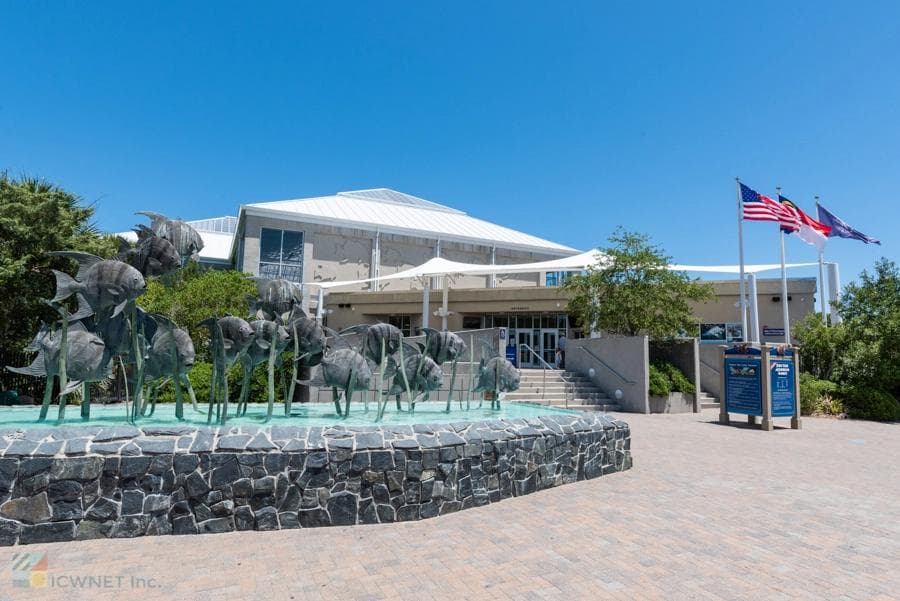
The North Carolina Aquarium at Fort Fisher — a half-million-visitor-per-year anchor for Kure Beach and Pleasure Island — will close on May 26, 2026 for a renovation and expansion project exceeding $70 million. The prolonged shutdown removes the single largest tourism draw from a corridor where hotels, restaurants, and small retailers depend heavily on aquarium-driven foot traffic. For operators on Pleasure Island, this is simultaneously the biggest near-term revenue threat and the most significant long-term public reinvestment the sub-market has seen in two decades.
Fast Facts
- Closure date: May 26, 2026
- Project cost: $70 million–$90 million (multiple state budget references)
- State funding secured: $50 million in direct state support; $27 million via CZM Grants
- New sand tiger shark habitat: 400,000 gallons (current Cape Fear Shoals main tank holds 235,000 gallons)
- Additional new exhibits: 10,000-gallon Pacific coral habitat, interactive shark and ray touch pool, new education center
- New rooftop deck: 4,000 sq ft
- Estimated construction duration: ~30 months (reopening estimated around late 2028)
- Record visitation: 500,000 visitors in fiscal year 2022–2023
- Cumulative visitors since last expansion: ~10 million
- Last major renovation: Approximately 20 years ago (2002 expansion)
What Happened
State officials and aquarium leadership have confirmed that the Fort Fisher Aquarium will shut its doors on May 26, 2026 to begin a comprehensive renovation and expansion. The project will include a new 400,000-gallon sand tiger shark habitat, a 10,000-gallon Pacific coral habitat, an interactive shark and ray touch pool, a new education center, and a 4,000-sq-ft rooftop deck.
Construction is expected to last approximately 30 months, pointing to a reopening around late 2028.
Funding comes from at least two major sources: $50 million in state appropriations and $27 million through Coastal Zone Management Grants, pushing the total past the $70 million threshold. Some state budget documents reference a range as high as $90 million, suggesting the final scope could grow.
The project fits into a broader North Carolina aquarium modernization strategy spanning all three state-operated facilities — Fort Fisher, Pine Knoll Shores, and Roanoke Island — though Fort Fisher's allocation appears to be the largest single tranche.
Why It Matters
Fort Fisher's aquarium is not just a regional attraction — it is the primary demand generator for an entire micro-economy. With a record 500,000 visitors in FY 2022–2023, the facility anchors a visitor funnel that feeds Kure Beach lodging, dining, and retail. Removing that anchor for an estimated 30-month construction period — with a projected reopening around late 2028 — creates a measurable gap in seasonal foot traffic.
For New Hanover County's southern beach corridor, the closure tests a fundamental question: how much of Pleasure Island's visitor economy is aquarium-dependent versus beach-destination-driven? Operators who have been riding a post-pandemic surge in coastal tourism may get an unwelcome answer.
On the capital side, $70 million–$90 million in public investment is among the largest single tourism infrastructure commitments in the Cape Fear region. When reopened, the expanded facility should meaningfully increase visitor capacity, dwell time, and per-visit spending — but those returns are approximately 2.5 years away.
What Stands Out
- Scale of public commitment: At $70M+, this ranks among the most significant single-site public tourism investments in southeastern North Carolina. The funding structure — $50M state plus $27M CZM — signals strong legislative prioritization of coastal attraction assets.
- Visitation momentum at risk: The aquarium hit 500,000 visitors in a single fiscal year. That traffic does not simply redistribute — a meaningful share will leave the Pleasure Island corridor entirely during closure.
- 30-month construction timeline: The estimated construction duration of approximately 30 months from the May 2026 closure gives hospitality operators a planning window, though timelines on projects of this scale can shift.
- Construction-phase offset is unquantified: While construction activity will generate temporary economic inputs (labor, materials, lodging for crews), no job counts or spending estimates have been released.
- 20-year renovation cycle: The last expansion was completed around 2002 — roughly two decades ago. Deferred reinvestment cycles of this length often mean higher costs and longer timelines once work begins.
Market Lens
Tourism / Visitor Economy
Pleasure Island's hospitality operators face a binary scenario: either the beach-and-lifestyle draw is strong enough to sustain 2022–2023-level occupancy and spend without the aquarium, or it is not. History suggests the answer is somewhere in between. Coastal lodging demand on the southern beaches has structural support from beach access, Fort Fisher State Historic Site, and the Carolina Beach Boardwalk corridor to the north. But the aquarium is the region's only year-round, weather-independent attraction of scale — its closure disproportionately impacts shoulder-season and rainy-day visitation, precisely the periods when hotels and restaurants are most dependent on non-beach draws.
For investors evaluating hospitality assets on Pleasure Island, the closure should be modeled as a roughly 2.5-year drag on RevPAR growth in the immediate Kure Beach submarket. Conversely, the reopened facility — with a 400,000-gallon sand tiger shark habitat and 4,000-sq-ft rooftop deck — should reset visitor capacity meaningfully higher, creating a potential inflection point for nearby commercial real estate values post-completion.
Operators at Carolina Beach, roughly 2.5 to 3 miles north, may absorb some displaced traffic, making that submarket a relative beneficiary during the closure window.
Risks & Watch-Outs
- Timeline risk: The estimated 30-month construction period suggests a reopening around late 2028, but public aquarium projects of this scale frequently encounter permitting, engineering, and supply-chain delays. A 2029 or later reopening is plausible.
- Budget escalation: The $70M–$90M range in state documents already implies scope uncertainty. Construction cost inflation in coastal environments remains elevated.
- Revenue gap for small business: Kure Beach restaurants and retailers operating on thin margins may not survive a multi-year traffic decline without diversification or financial reserves.
- No mitigation plan disclosed: Neither state officials nor local government have publicly outlined strategies to offset lost visitation during the closure — no temporary attraction programming, shuttle incentives, or marketing redirects.
- Macro headwinds: A broader slowdown in coastal tourism spending — driven by insurance costs, inflation, or weather events — could compound the closure's impact.
Bottom line for decision-makers: Model the May 26, 2026 closure as a near-certain 2.5-year drag on Kure Beach visitor volume and shoulder-season revenue. The $70M+ reinvestment will ultimately strengthen the corridor, but operators and investors should stress-test their exposure to aquarium-dependent foot traffic now — before the doors close.

Jordan Reese
Jordan Reese covers commercial real estate and business trends across Wilmington and the greater Cape Fear region. With a focus on investment activity and regional growth, Jordan provides clear, research-informed reporting for business owners, investors, and civic stakeholders.
Related Posts
More stories from the same category

Recent Posts
Stay up to date with our latest stories


Subscribe to Newsletter
Provide your email to get email notification when we launch new products or publish new articles