GE Aerospace's $60M Wilmington Upgrade Signals Sustained Aerospace Reinvestment
GE Aerospace commits $60M to Wilmington plant modernization, pushing cumulative site investment past $195M and strengthening NC aerospace positioning.

Apr 26 2026
1 min read
Investment Summary
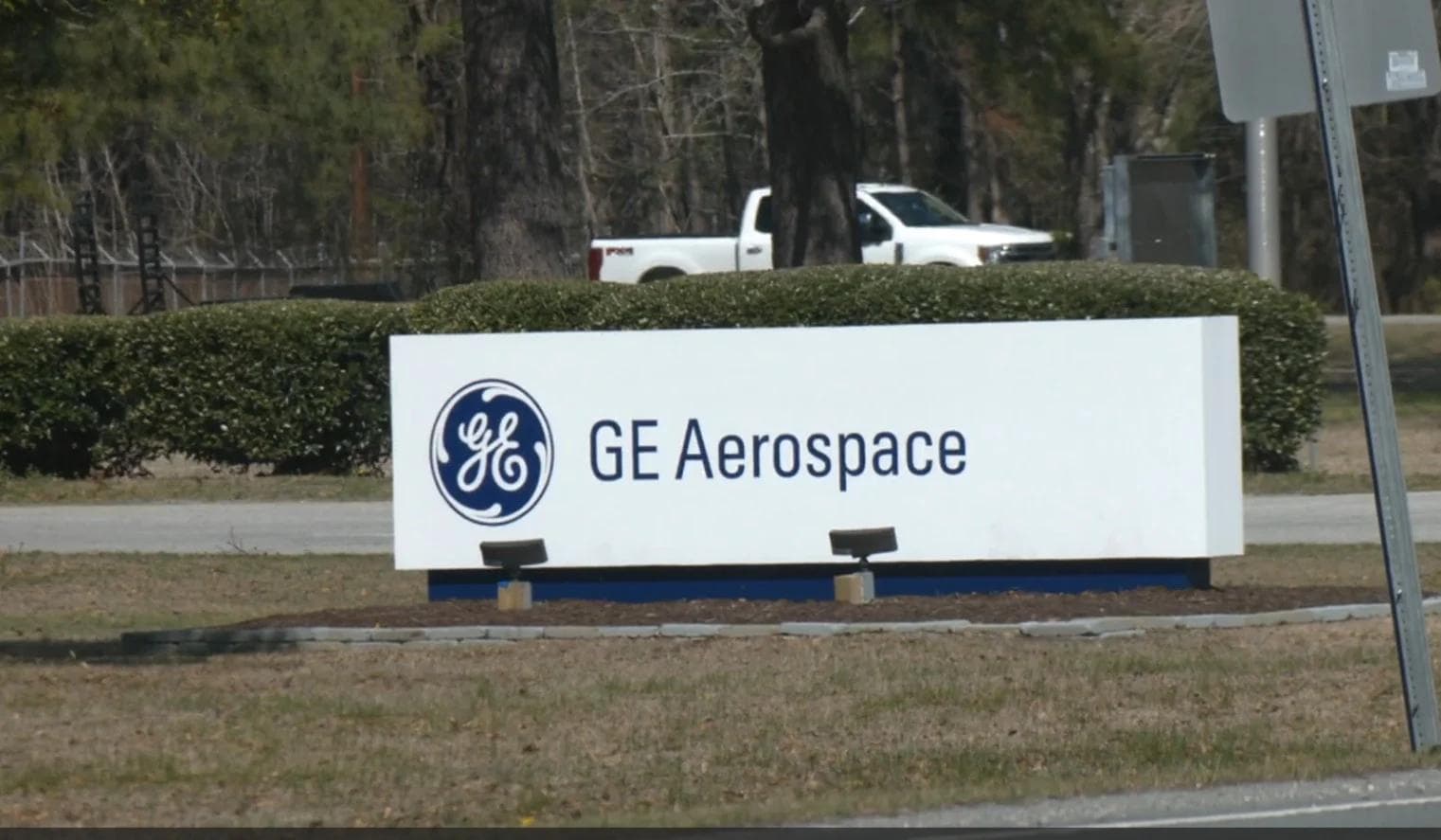
GE Aerospace is deploying $60 million into its Wilmington manufacturing facility on Castle Hayne Road during 2026, extending a reinvestment streak that now totals more than $195 million at this single site over four years.
The capital targets advanced machining equipment, upgraded heat treatment furnaces, and building modernization — capacity moves tied to surging demand for narrowbody and widebody aircraft engine components, military fighter jet parts, and naval ship parts.
For a region still building its advanced manufacturing identity, the sustained commitment from a Fortune 100 aerospace OEM is the strongest competitive signal Wilmington's industrial base has received in years.
Fast Facts
- Company: GE Aerospace (NYSE: GE)
- Investment: $60M in 2026 facility modernization
- Cumulative Wilmington investment: $135M+ over prior three years; $195M+ total including 2026 tranche
- North Carolina 2026 allocation: Over $160M across Wilmington ($60M), Durham ($20M), Asheville ($48M), West Jefferson ($35M), and Fayetteville ($500K)
- National program: $1B across 30+ U.S. sites in 17 states; 5,000 new U.S. hires planned
- Location: Castle Hayne Road, Wilmington, NC
- Products: Components for commercial aircraft engines, military fighter jets, naval vessels
- New jobs announced (Wilmington-specific): Not disclosed
- Incentives disclosed: None identified
- Timeline: 2026; no specific groundbreaking date provided
What Happened
GE Aerospace announced on March 9, 2026 that its Wilmington plant would receive $60 million in modernization capital as part of a $1 billion nationwide manufacturing initiative — the second consecutive year the company has committed $1 billion to U.S. manufacturing. The investment covers new advanced machining equipment, heat treatment furnace upgrades, and building improvements designed to accelerate throughput on engine components for both commercial and defense platforms.
Mark Moon, Wilmington site leader, stated: "We're bringing more equipment online to better serve our customers and meet growing demand, and that is good news for this community as the team grows."
The Wilmington allocation is the largest single-site slice of the $160M+ GE Aerospace is directing to North Carolina in 2026, which also includes $48 million in Asheville, $35 million in West Jefferson, $20 million in Durham for specialized engine assembly tooling, and $500,000 in Fayetteville for a veteran training program. Nationally, the company plans 5,000 new hires in manufacturing and engineering roles across its footprint in more than 30 communities across 17 states, though no Wilmington-specific headcount has been disclosed.
According to GE Aerospace CEO Larry Culp, the investments are driven by a substantial $200 billion backlog of orders accumulated over recent years, with demand surging from commercial airlines responding to increased air travel needs and interest from the U.S. military and its partners.
Why It Matters
The deal's significance lies less in the $60 million headline than in the cumulative reinvestment pattern. With $135 million+ already deployed at the Castle Hayne Road facility over the prior three years, the 2026 tranche pushes total site-level capital above $195 million — an unusual concentration of sustained OEM spending in a mid-size metro.
For Wilmington's labor market, GE Aerospace is already one of the Port City's largest industrial employers. Even without a disclosed job count, equipment modernization at this scale typically supports both direct machinist and technician positions and indirect demand across maintenance, logistics, and tooling vendors. The defense component — fighter jet and naval parts work — adds contract stability that insulates the site from commercial aviation cycle downturns.
Downstream, the investment strengthens Wilmington's claim as a node in the national aerospace supply chain, a positioning argument that site selectors weigh when evaluating secondary and tertiary markets for supplier co-location.
What Stands Out
- No disclosed incentives. The absence of any reported state or local grants, tax abatements, or performance-based incentives is notable. If accurate, the reinvestment is occurring purely on operational merit — a strong endorsement of the site's workforce, logistics access, and cost structure.
- Reinvestment velocity is accelerating. The $60M 2026 tranche represents roughly 44% of the $135M+ spent over the prior three years combined, suggesting GE sees capacity constraints it needs to address quickly.
- Defense diversification matters. Military and naval engine work provides revenue stability independent of commercial aviation order books, reducing cyclical risk for the local workforce.
- No job count is a gap, not a red flag. Modernization capital often preserves and upskills existing positions rather than creating net-new headcount. Investors should watch for subsequent workforce disclosures tied to production ramp timelines.
- NC is absorbing a disproportionate share. At $160M+, North Carolina captures roughly 16% of GE Aerospace's $1B national initiative — well above its share of U.S. manufacturing employment.
Market Lens: Competitive Positioning vs. Peer Markets
The analytical question is whether $195M+ in cumulative OEM reinvestment repositions Wilmington from a legacy production site into a nationally competitive aerospace manufacturing cluster.
Compare this to peer Sun Belt metros chasing aerospace investment. Markets like Huntsville, AL and Savannah, GA attract headline-grabbing greenfield deals but often require heavy incentive packages. Wilmington is accumulating comparable capital intensity without visible public subsidy, which implies either superior site economics or a deeply embedded operational footprint that makes relocation impractical for GE.
The $160M+ North Carolina allocation also positions the state's aerospace corridor — Wilmington, Durham, Asheville, West Jefferson, Fayetteville — as an integrated production network rather than a collection of isolated plants. For supply chain vendors evaluating Southeast locations, that network density matters. It lowers logistics friction, enables shared workforce pipelines, and creates the agglomeration effects that attract second-order investment.
Wilmington's challenge remains visibility. The market lacks a branded aerospace identity comparable to Wichita, Hartford, or even Charleston. Sustained GE reinvestment is a necessary but not sufficient condition for that recognition. What would change the calculus: a Tier 1 supplier co-location announcement, a dedicated aerospace workforce training facility, or a disclosed production volume milestone that peers can benchmark.
Risks & Watch-Outs
- Job quality is unverifiable. Without disclosed headcount, wage ranges, or benefit details, it is impossible to assess whether this capital creates high-quality advanced manufacturing employment or primarily funds automation that holds headcount flat.
- Commercial aviation demand risk. While defense work provides a floor, the narrowbody and widebody engine component lines are exposed to OEM production rate decisions at Boeing and Airbus, both of which face supply chain and quality control headwinds.
- No incentive clawback leverage. If no public incentives are attached, policymakers have no contractual mechanism to enforce job creation or retention targets — a double-edged sword.
- Labor pipeline pressure. Wilmington's advanced manufacturing labor pool is finite. If GE's national 5,000-hire plan pulls meaningfully on this site, competition for CNC machinists, metallurgists, and quality inspectors will tighten in an already constrained regional market.
- Verification gap. All investment and cumulative spending figures originate from company announcements. Independent capital expenditure verification through permit filings or equipment import records has not been reported.

Maya Shelton
Maya Shelton joined the Wilmington reporting scene after four years in Big 4 advisory, where she worked with real estate and infrastructure clients across the Southeast. She brings a data-savvy, no-nonsense perspective to emerging business stories, with a focus on economic development and early-stage investment trends.
Related Posts
More stories from the same category

Recent Posts
Stay up to date with our latest stories






Subscribe to Newsletter
Provide your email to get email notification when we launch new products or publish new articles