$16M Port City Logistics Facility Brings 75 Jobs at $64K Avg to Wilmington Port Corridor
Port City Logistics invests $16M in a 151,200 sq. ft. transload facility near Wilmington's port, creating 75 jobs at ~$65K avg with minimal public incentives.

Apr 23 2026
1 min read
Investment Summary
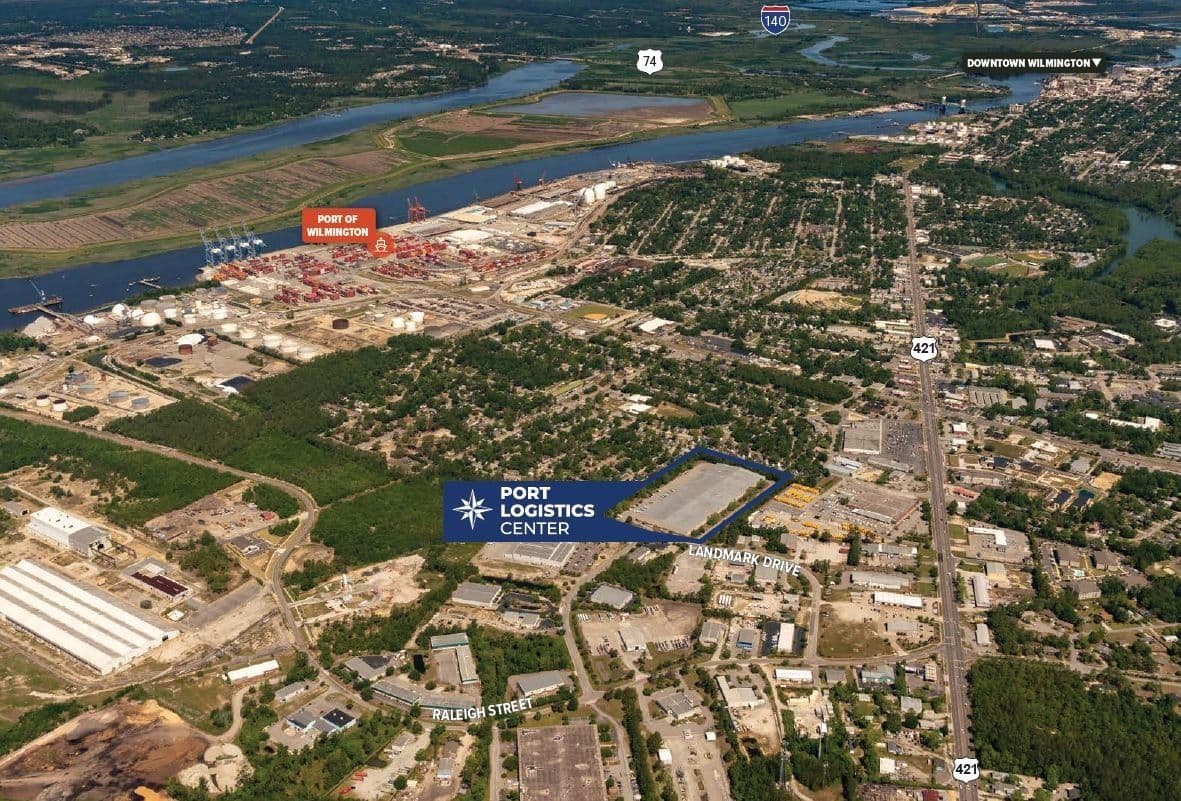
Port City Logistics, a Savannah-based transload and cross-dock operator, is deploying $16 million to build a 150,000+ sq. ft. high-velocity transload facility less than one mile from the Port of Wilmington — a capital-intensive bet on the region's freight corridor that creates 75 jobs averaging over $64,000 annually, or 16% above the county's average wage.
At ~$213,000 invested per job, this is not a generic warehouse play; it is infrastructure-grade logistics capacity positioned to capture growth in containerized import/export flows through southeastern North Carolina.
Fast Facts
- Company: Port City Logistics (Savannah, GA)
- Sector: Logistics & supply chain — transload and cross-dock services
- Total investment: $16 million
- Facility size: ~151,200 sq. ft. on 42.2 acres
- Location: 187 Raleigh Street, New Hanover County (< 1 mile from Port of Wilmington)
- Land acquisition: 42.2 acres purchased from North Carolina State Ports Authority for $2.15 million
- Jobs created: 75
- Average annual salary: ~$65,000 ($64,000+ per original research; verification sources cite "nearly $65,000")
- Annual payroll impact: $4.9 million
- Public incentives: $112,500 over 5 years (performance-based)
- State incentive match: One North Carolina Fund (contingent on meeting benchmarks)
- Incentive-to-investment ratio: 0.7%
- Cost per job (public): ~$1,500
- Groundbreaking (planned): March 2023
- Announced: August 2, 2022
What Happened
Port City Logistics announced on August 2, 2022 that it would construct a purpose-built transload facility on a 42.2-acre parcel at 187 Raleigh Street, purchased from the North Carolina State Ports Authority for $2.15 million after approval by the N.C. Council of State. The site is directly adjacent to the Port of Wilmington's operational footprint. The project was unveiled alongside Governor Roy Cooper's office and approved by both New Hanover County and the City of Wilmington as part of a broader package that included incentives for MegaCorps Logistics and two other projects collectively labeled "Projects Buckeye, Clear, Speed, and Transit."
Governor Cooper stated: "We are delighted to welcome Port City Logistics to New Hanover County, North Carolina. When companies are ready to connect with global markets, they are drawn to our state because of our workforce, excellent transportation network, and attractive quality of life."
The facility will handle high-velocity transload and cross-dock operations for importers and exporters, featuring 250 trailer parking slots and 45 dock doors on each side of the building to maximize container throughput. The company also plans a brokerage transportation office in downtown Wilmington. Roles span truck drivers, drayage brokers, forklift operators, warehouse workers, and management. Groundbreaking was targeted for March 2023, with site plans submitted to the city by December 2022 and scheduled for review by the Wilmington Technical Review Committee in January 2023.
Port City Logistics chose Wilmington over competing locations in Savannah, Charleston, and Mobile after collaboration with NC Ports and Wilmington Business Development.
Note: No public confirmation of construction completion or operational launch has been independently verified as of this analysis.
Why It Matters
The $4.9 million annual payroll injection lands in a labor market that was already tight at 3.4% unemployment when the deal was announced. That wage floor — ~$65,000 average — is meaningful in a logistics sector where many comparable warehouse and distribution roles in the Wilmington market pay significantly less. Port City Logistics is pricing its workforce above market to staff a specialized transload operation, not a standard fulfillment center.
The facility also reinforces Wilmington's emerging identity as a freight and logistics node along the Blue Clay Road / U.S. 421 North corridor. Container volume at the Port of Wilmington was up 6% in FY22, and this investment physically extends the port's operational reach by adding dedicated transload capacity within walking distance of the terminal. That proximity eliminates drayage miles and positions the facility as a first-touch point for inbound containerized cargo.
What Stands Out
- Incentive discipline is notable. The combined $112,500 in public incentives — $67,500 from the county, $45,000 from the city — amounts to just 0.7% of total investment and roughly $1,500 per job. All payments are performance-based with no upfront disbursement, with additional support from the state's One North Carolina Fund contingent on meeting job and investment benchmarks. This is among the leanest incentive structures in recent Wilmington-area deals.
- Capital intensity signals infrastructure, not flex-space. At $213,000 per job, this investment ratio is significantly higher than a typical light-industrial or warehouse staffing model. The capital is going into purpose-built transload infrastructure — dock doors, heavy-load flooring, yard capacity — not speculative shell space.
- Wage premium is real but the job count is modest. 75 jobs is a small cohort relative to peers like MegaCorps Logistics' 300-job commitment announced in the same incentive package. The quality is high; the scale is limited.
- Port adjacency is the strategic asset. Sub-one-mile proximity to the port terminal is a durable competitive advantage that cannot be replicated by inland competitors. This is a location-locked investment.
- Savannah operator expanding into a rival port market is itself a signal — Port City Logistics sees enough volume growth at Wilmington to justify a $16 million greenfield build outside its home port.
Market Lens
Analyst Angle: Supply Chain & Logistics Infrastructure
Wilmington's port has historically been undersized relative to Charleston and Savannah in capturing containerized freight share along the Southeast seaboard. This investment — while modest in absolute dollars — addresses a specific bottleneck: dedicated transload capacity proximate to the terminal. The port's 6% container volume growth in FY22 suggests increasing demand from importers seeking alternatives to congested Tier 1 ports, and Port City Logistics is building the physical infrastructure to service that demand.
The broader corridor story matters here. When stacked alongside MegaCorps Logistics' 300-job freight brokerage expansion and the additional "Projects Buckeye and Clear" investments totaling a combined $125+ million in economic impact, Wilmington is assembling a logistics cluster — not just isolated facilities. North Carolina's freight rail network, contributing $1.88 billion in annual direct economic impact statewide, provides the backbone, but the last-mile transload link at the port has been a gap. Port City Logistics fills it.
For site selectors evaluating Wilmington against peer markets, this deal signals that third-party logistics operators with Southeast networks now view the port as viable for specialized, capital-intensive operations — not just bulk or break-bulk commodity moves.
Risks & Watch-Outs
- Labor absorption at 3.4% unemployment. Recruiting 75 specialized workers — particularly CDL-holding truck drivers and experienced drayage brokers — in a sub-4% unemployment market is a real execution risk. The ~$65,000 average wage helps, but supply constraints in transportation trades persist regionally and nationally.
- Construction and timeline verification. Groundbreaking was planned for March 2023, and site plans were submitted in December 2022 for review, but no public confirmation of construction completion or operational launch has been independently verified as of this analysis. Readers should treat job creation and payroll projections as announced, not yet verified.
- Port volume dependency. The facility's utilization is directly tied to container throughput at the Port of Wilmington. A sustained downturn in trade volumes — whether from macroeconomic contraction, tariff disruptions, or shipping line route changes — would pressure occupancy and hiring.
- Incentive clawback protection is in place but the dollar amounts are small enough that non-performance would have negligible fiscal impact on the county or city. The real risk is reputational: a stalled project on a high-profile parcel adjacent to the port.
- No anchor tenant disclosure. Port City Logistics has not publicly identified the importers or exporters whose cargo will flow through this facility. Customer concentration risk is unknowable from available data.

Maya Shelton
Maya Shelton joined the Wilmington reporting scene after four years in Big 4 advisory, where she worked with real estate and infrastructure clients across the Southeast. She brings a data-savvy, no-nonsense perspective to emerging business stories, with a focus on economic development and early-stage investment trends.
Related Posts
More stories from the same category


Recent Posts
Stay up to date with our latest stories




Subscribe to Newsletter
Provide your email to get email notification when we launch new products or publish new articles