8.36-Acre Wrightsboro Rezoning Tests Whether North NHC Can Absorb Park-Scale Commercial
NHC approves 8.36-acre Wrightsboro Business Park rezoning — a corridor-defining move that tests north-end commercial demand with limited data.

May 01 2026
1 min read
Business Summary
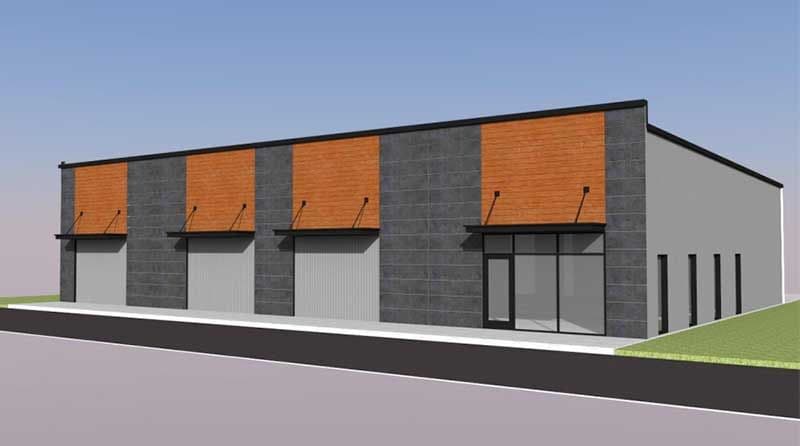
New Hanover County commissioners approved Case Z26-03 on April 6, 2026, rezoning 8.36 acres from agricultural-residential and B-2 to conditional B-2 for Wrightsboro Business Park off Castle Hayne Road. The approval — one of the county's largest recent single-parcel commercial rezonings in a historically AR-zoned area — is a direct test of whether the northern end of NHC can generate tenant demand for park-scale commercial space outside the established Market Street and Military Cutoff retail corridors. With the first buildings already under construction as part of a proposed 17-building park, the project signals a northward push of commercial capital into a historically agricultural zone.
Fast Facts
- Acreage rezoned: 8.36 acres to conditional B-2
- Case number: Z26-03
- Developer/filer: Ryan Beil
- Location: Wrightsboro area, Castle Hayne Road, north of downtown Wilmington
- I-140 access: Via Exit 17 at NC 133 (Castle Hayne Road)
- Planning Board recommendation: March 5, 2026
- Commissioner approval: April 6, 2026
- Planned scope: 17-building business park (first buildings under construction as of early December 2025)
- Previous zoning: AR (agricultural-residential) and B-2
- Nearby competing project: Approximately 15-acre business park by Joe Jacobus in northern NHC (announced January 2026)
- Dollar amounts, square footage, job counts, tenant details: Not publicly available at time of analysis
What Happened
The NHC Planning Board recommended approval of the rezoning on March 5, 2026, and county commissioners followed with formal approval on April 6, 2026. The conditional B-2 designation limits allowable uses to business park operations, effectively locking out general retail and other commercial categories that full B-2 zoning would permit. The parcel had been zoned AR and partially B-2, reflecting the Wrightsboro area's historical agricultural-residential character.
The project was filed by Ryan Beil, with no corporate affiliation disclosed in public records. A December 2025 report from WilmingtonBiz confirmed that crews poured concrete slabs and erected steel frames for the first buildings in the proposed 17-building park on Castle Hayne Road — meaning site work preceded the formal rezoning by several months, likely under existing B-2 entitlements for a portion of the tract.
Notably, the same Wrightsboro corridor was the subject of a workforce housing rezoning proposal in March 2020, which went to public hearing but did not advance. The pivot from residential to commercial use on overlapping geography reflects a material shift in how developers — and the county — view the area's highest and best use.
Why It Matters
This rezoning is a leading indicator for northern NHC's commercial trajectory. The Wrightsboro corridor has historically been a buffer between Wilmington's urban core and the more industrial Castle Hayne area. Approving 8.36 acres of conditional commercial zoning signals county willingness to expand the commercial footprint into zones that were, until recently, considered residential or agricultural fringe.
For investors and developers, the question is absorption. A 17-building business park requires sustained tenant demand for flex, office, or light-service space — demand that has not been publicly demonstrated through leasing data or pre-lease commitments for this project. The conditional zoning mitigates some risk by preventing the parcel from defaulting to strip retail, but it also narrows the tenant pool.
The timing matters as well. Joe Jacobus — founder of Markraft Cabinets in Wilmington — is separately developing an approximately 15-acre northern NHC business park at 2400 Castle Hayne Road, announced in January 2026. Jacobus has said he envisioned developing the site for decades. Two park-scale projects within the same corridor could either validate the submarket thesis or split a shallow tenant pool.
What Stands Out
- One of the largest single-parcel commercial rezonings in NHC's recent pipeline in a historically AR-zoned area — at 8.36 acres, this is not incremental infill; it's a corridor-defining entitlement.
- Construction preceded formal rezoning — first buildings were underway by early December 2025, with concrete slabs poured and steel frames erected, suggesting the developer moved aggressively on buildable portions before the full parcel was entitled.
- Conditional zoning limits downside risk — restricting uses to business park operations prevents the parcel from becoming another general commercial strip, which protects adjacent land values.
- Two competing business parks in northern NHC — Wrightsboro Business Park (8.36 acres, 17 buildings) and Jacobus's approximately 15-acre project create a submarket supply question with no public absorption data to anchor expectations.
- Failed workforce housing precedent — the same corridor's 2020 residential rezoning attempt did not advance, signaling that commercial use is now the politically and economically viable path.
- No disclosed tenants, square footage, or project cost — the absence of hard financial metrics limits the ability to model returns or gauge pre-leasing momentum.
Market Lens
Angle: Corridor Strength
The Wrightsboro/Castle Hayne Road corridor is positioning itself as NHC's emerging commercial middle ground — north of the saturated Market Street and Military Cutoff cores, south of the heavy industrial zones along US-421 and in Pender County. The county's approval of park-scale commercial entitlements in a historically AR-zoned area is a policy signal that this corridor is being groomed for a different category of demand: flex space, small-office tenants, and service businesses priced out of core Wilmington.
But corridor strength is only real if tenants show up. Neither project has disclosed pre-lease rates, anchor tenants, or per-square-foot asking rents. Without those metrics, the rezoning is a bet on trajectory — not a confirmation of demand. For comparison, Pender Commerce Park and the 421 corridor have attracted industrial users tied to port logistics and manufacturing, giving those areas a clearer demand thesis. Wrightsboro's commercial play is less defined and more speculative at this stage.
The corridor's proximity to I-140 (accessible via Exit 17 at Castle Hayne Road) and broader Castle Hayne Road connectivity gives it logistical relevance, but the tenant profile for a 17-building business park in this location remains undefined. This is a submarket to watch quarterly — not one to underwrite on approvals alone.
Risks & Watch-Outs
- Absorption risk: No public leasing data, pre-lease commitments, or tenant announcements for either Wrightsboro or the competing Jacobus park. Two park-scale projects in the same emerging corridor could outpace demand.
- Infrastructure capacity: Conditional rezoning does not guarantee that roads, water, and sewer can support full buildout of 17 buildings without county capital investment or developer-funded improvements.
- Execution uncertainty: Ryan Beil has no disclosed corporate affiliation or track record in public records reviewed. Lenders and partners should verify capitalization and development history.
- Macro headwinds: Rising construction costs and elevated interest rates compress margins on speculative commercial development. Without anchor tenants, financing terms could shift unfavorably.
- Regulatory evolution: Conditional B-2 zoning restricts use today, but future variance or rezoning requests could alter the project's character — a risk for adjacent landowners and early tenants.
- Data gap: The absence of square footage, project cost, and rental rate data means market participants are operating with incomplete information. Monitor NHC building permits and GIS filings for buildout metrics as they become available.

Marcus Lane
Marcus Lane writes about real estate, urban planning, and regional business strategy across Southeastern North Carolina. With a background in market analysis and civic reporting, he brings practical insights to emerging development stories and public-private partnerships.
Related Posts
More stories from the same category

Recent Posts
Stay up to date with our latest stories


Subscribe to Newsletter
Provide your email to get email notification when we launch new products or publish new articles