1,800-Unit Hilton Bluffs Stay Freezes Wilmington's Largest Housing Pipeline
The Board of Adjustment unanimously stayed all permits for Copper Builders' 1,800-unit Hilton Bluffs project, freezing Wilmington's largest identified housing pipeline.

May 01 2026
1 min read
Business Summary
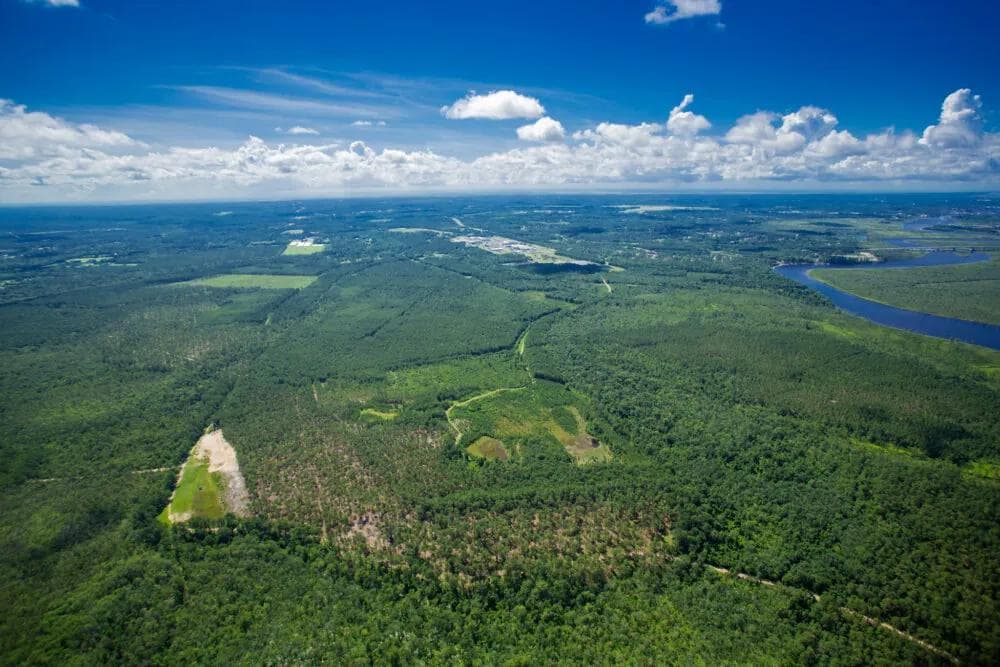
New Hanover County's Board of Adjustment unanimously stayed all permits for Copper Builders' Hilton Bluffs project on April 29, 2026, effectively freezing one of the Cape Fear region's largest residential developments — 1,800 units across approximately 1,800 acres of the Sledge Forest tract. The stay halts permitting for up to three months or until appeals are resolved, with hearings tentatively set for June 23–24 or no later than July 31, 2026. For a regional housing market already supply-constrained, this delay removes a significant pipeline project from any near-term delivery timeline and introduces material uncertainty for stakeholders banking on density in this corridor.
Fast Facts
- Developer: Copper Builders, LLC (Charlotte-based); CEO Wade Miller
- Project: Hilton Bluffs — 1,800 residential units across ~1,800 acres (reduced from an initial 4,000-unit concept)
- Density: 1 unit per acre under Rural Agricultural zoning, clustered on ~600 acres of uplands
- Preservation: ~1,200 acres of wetlands and forest to remain undeveloped
- Phase 1: 580 homes conditionally approved by the county Technical Review Committee (conditional approval granted March 10, 2026)
- Tree removal permit (Phase 1): Filed March 30, 2026 — covers 34,437 caliper inches (~1,629 significant trees) on 581 upland acres
- Total estimated tree clearing (all phases): ~122,660 trees removed; ~12,698 retained
- Stay granted: April 29, 2026 — unanimous Board of Adjustment vote on two separate requests
- Appeals hearings: Tentatively scheduled June 23–24, 2026, with potential dates in July; stay expires no later than July 31
- Appellants: "Save the Hayne" (representing 39 residents) and the Southern Environmental Law Center (representing seven Castle Hayne residents)
- Zoning pathway: By-right under the county's Unified Development Ordinance (UDO) — no commissioner vote required if compliant
- Developer appeal window: Copper Builders has 30 days from April 29 to appeal the stay itself
What Happened
Copper Builders filed a tree removal permit on March 30, 2026, covering Phase 1 of the Hilton Bluffs project. That phase had already received conditional approval from the county's Technical Review Committee on March 10, 2026, for up to 580 homes on 581 acres covering phases 1 and 2, subject to state/federal permits, final plats, and a two-year TRC timeline. Opponents — including the Southern Environmental Law Center (SELC), representing seven Castle Hayne residents, and "Save the Hayne", representing 39 residents — filed appeals in early April challenging the project's permits and requested the Board of Adjustment stay all county permitting activity.
On April 29, the Board voted unanimously to grant the stay on both appeal requests. The decision halts all county permitting — including tree removal — until the board issues a final ruling or July 31, 2026, whichever comes first, to avoid irreparable harm to appellants. The appeals challenge claims of errors by the Technical Review Committee in applying rules on road connectivity, traffic safety, and environmental calculations. CEO Wade Miller has stated publicly that the stay will not disrupt the overall project timeline, though no groundbreaking date has been confirmed. Copper Builders has 30 days from the stay decision to appeal it.
The project is designed as a by-right development under Performance Residential standards within the UDO, meaning it does not require a rezoning vote from county commissioners. That legal framework is itself a central point of contention in the appeals.
Why It Matters
Hilton Bluffs represents the largest residential unit count identified in the active New Hanover County pipeline. At 1,800 units, it dwarfs other projects under review — the next largest publicly listed residential projects include Blue Bay (172 units), Everette Bluffs (56 units), and Alton Orchard (54 units). Its removal — even temporarily — from the permitting queue tightens an already constrained housing supply trajectory for the Wilmington metro.
The by-right pathway is the core strategic bet here. If the Board of Adjustment upholds the permits, the project proceeds without elected-body approval, setting a precedent for large-scale Performance Residential development on rural-zoned land. If the appeals succeed, it could force a rezoning process, significantly delaying or restructuring the project and potentially chilling similar by-right plays across the county.
No project cost, unit pricing, or job creation figures have been publicly disclosed, which limits financial modeling. But the sheer unit count — in a region where housing inventory consistently trails demand — makes this a market-moving project regardless of price point.
What Stands Out
- Scale and reduction signal caution: The project was cut from 4,000 units to 1,800, suggesting the developer already adjusted to political and environmental pressure before permitting began. The stay adds another layer of friction.
- By-right exposure: The entire project hinges on UDO compliance, not discretionary approval. If the appeals challenge that interpretation successfully, it redefines what "by-right" means for large-tract residential in New Hanover County.
- Environmental profile is unusually high-stakes: The broader Sledge Forest tract (over 4,000 acres) includes old-growth Nonriverine Swamp Forest and Peatland Atlantic White Cedar Forest, designated by the NC Natural Heritage Program as a Nationally Significant Natural Area (referred to locally as an Exceptional Significant Natural Heritage Area). The tract harbors old-growth bald cypress up to 500 years old, longleaf and loblolly pines over 300 years old, and 13 imperiled plant species. The developer's plan calls for clustering on ~600 acres of previously harvested uplands while preserving ~1,200 acres, though no specific percentage-based preservation mandate has been confirmed in public records.
- Tree removal math is striking: Phase 1 alone would clear ~1,629 significant trees; the full build-out removes an estimated ~122,660 trees. That figure will anchor opposition messaging and could complicate future permitting phases even if Phase 1 clears appeals.
- No financial disclosure yet: The absence of project cost estimates, sales projections, or infrastructure investment figures limits market analysis and suggests the developer is keeping financial details close until permitting risk is resolved.
Market Lens
Angle: Demand Signal
The Hilton Bluffs project is, at its core, a bet that the Cape Fear region's housing demand can absorb 1,800 units on a previously undeveloped rural tract. That bet is directionally sound — Wilmington's population growth, constrained infill supply, and rising land costs all point to sustained residential demand. But demand signals and delivery timelines are different things. The stay introduces a delay of up to three months on a project with no confirmed groundbreaking date and six phases of execution ahead. Investors and builders watching this market should note: even where demand is strong, entitlement and permitting risk on large-scale rural-to-residential conversions in New Hanover County is rising, not falling.
Risks & Watch-Outs
- Appeals outcome (June–July 2026): A ruling against the developer could force rezoning or a fundamental project restructure. A favorable ruling likely triggers renewed opposition at later phases.
- Environmental litigation risk: SELC involvement signals this could escalate beyond local administrative appeals into state or federal environmental challenges, particularly given the Nationally Significant Natural Area designation and the presence of globally significant habitats.
- Permitting precedent: A Board of Adjustment ruling that narrows by-right Performance Residential standards would affect other large-tract developers eyeing similar pathways in unincorporated New Hanover County.
- Infrastructure planning: The developer's plans include public water/sewer and road upgrades, but detailed infrastructure capacity assessments for this corridor have not been fully addressed in public filings to date.
- Market timing: A delay of up to three months lands mid-summer — peak construction season. Each month of delay compresses the window for any 2027 deliveries and increases carry cost for the developer.
- Political risk: Even though the project is by-right, county commissioners face constituent pressure on both sides. Any future UDO amendments could reshape what's permissible on rural-zoned tracts.
Bottom line for decision-makers: Hilton Bluffs is the largest identified housing pipeline project in the Wilmington market and it is now frozen. The appeals hearings this summer will determine not just this project's fate, but the viability of large-scale by-right residential development on rural land in New Hanover County. Until that ruling lands, treat this pipeline as uncertain inventory — and watch for any UDO reform signals from county leadership.

Marcus Lane
Marcus Lane writes about real estate, urban planning, and regional business strategy across Southeastern North Carolina. With a background in market analysis and civic reporting, he brings practical insights to emerging development stories and public-private partnerships.
Related Posts
More stories from the same category


Recent Posts
Stay up to date with our latest stories


Subscribe to Newsletter
Provide your email to get email notification when we launch new products or publish new articles