$5.17M Endowment Grant Targets Wilmington's Skilled Labor Shortage
New Hanover Community Endowment deploys $5.17M in workforce grants as Wilmington faces 3.4% unemployment and nearly 3.9M sq ft industrial construction pipeline.

Apr 18 2026
1 min read
Investment Summary
New Hanover Community Endowment has deployed $5.17 million in workforce development grants aimed squarely at the skilled labor bottleneck constraining the Wilmington market. The capital — split across apprenticeship infrastructure, K-12 career pipelines, and construction trades training — represents the region's most significant philanthropic bet on workforce absorption capacity in recent memory. With an industrial construction pipeline approaching 3.9 million square feet and unemployment hovering near 3.4%, the grants are less about social uplift and more about whether the Cape Fear region can staff the deals it has already announced.
Fast Facts
- Grantor: New Hanover Community Endowment
- Total Grant Package: $5.17 million
- Largest Award: $3 million to Cape Fear Community College Foundation (apprenticeship accelerator)
- K-12 Pipeline Grant: $2 million to Greater Wilmington Chamber Foundation (Career and Leadership Development Academy, grades 7–11)
- Construction Trades Grant: $370,000 to Cape Fear Community College Foundation (co-funded by Lennar Foundation, Charles Koch Foundation, Live Oak Bank)
- Location: New Hanover County, Wilmington, NC
- Timeline: Announced within the last 60 days; no specific program launch dates disclosed
- Direct Jobs Created: Not specified
- Public Incentives: None — entirely philanthropic capital
What Happened
The Endowment, which manages proceeds from the sale of county-owned New Hanover Regional Medical Center to Novant Health — a transaction approved in early 2021 that generated approximately $2 billion — awarded three grants targeting distinct segments of the workforce pipeline. The largest single tranche — $3 million — goes to Cape Fear Community College Foundation to build out a dedicated apprenticeship department under the New Hanover County Apprenticeship Accelerator Program, designed to formalize "earn-and-learn" pathways that connect classroom instruction directly to employer demand.
A second grant of $2 million funds the Career and Leadership Development Academy through the Greater Wilmington Chamber Foundation, embedding hands-on industry exposure, mentorship, and business partnerships into the New Hanover County Schools system for students in grades 7 through 11.
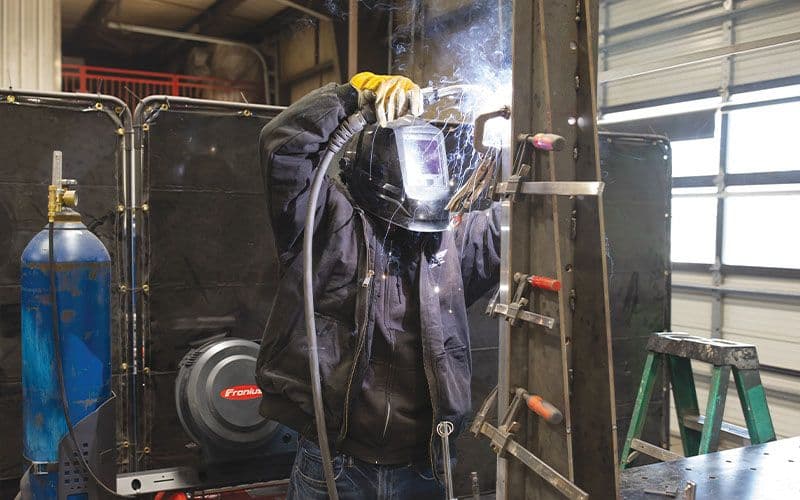
The third and smallest allocation — $370,000 — is a collaborative grant co-funded by the Lennar Foundation, Charles Koch Foundation, and Live Oak Bank. It targets construction trades specifically, funding workplace safety certifications, skills training, and direct job placement through Cape Fear Community College Foundation.
Why It Matters
The Wilmington MSA has added approximately 12,000 residents in the current growth cycle, and the industrial development pipeline has not waited for labor supply to catch up. The region's unemployment rate — 3.4% as of December 2025 (not seasonally adjusted, per BLS/FRED data) — is functionally at or below full employment, meaning incremental hiring for new warehouse, manufacturing, and construction projects is pulling from an increasingly shallow pool.
This is the core tension the grants attempt to address. None of the $5.17 million directly creates jobs or underwrites a corporate expansion. Instead, it funds the institutional infrastructure — apprenticeship departments, K-12 career exposure, trade certifications — that determines whether the region's announced investments actually reach full employment targets. For site selectors and workforce planners, the signal is clear: Wilmington's labor supply constraint is now significant enough to attract major philanthropic intervention.
The construction trades grant is particularly telling. With nearly 3.9 million square feet of industrial space under construction as of Q3 2025, the region needs construction workers to build those buildings before it needs warehouse operators to fill them. The $370,000 allocation is modest, but the co-funding structure — involving a national homebuilder foundation and a major local bank — suggests private-sector urgency.
What Stands Out
- No direct job creation metrics are attached to any of the three grants. This is a significant gap — investors and policymakers have no announced cost-per-job figure, no target credential count, and no projected wage impact to track.
- The $3 million apprenticeship accelerator is the largest single allocation, signaling that post-secondary earn-and-learn models are seen as the highest-leverage intervention for near-term labor supply.
- The K-12 pipeline grant ($2 million) is a long-horizon play — students in grades 7–11 are 3 to 7 years from full labor force participation, meaning this investment addresses structural supply, not the current cycle.
- Private co-funding on the construction trades grant from Lennar Foundation, Charles Koch Foundation, and Live Oak Bank suggests employer-side desperation that philanthropy alone cannot resolve.
- No state or local incentive dollars are involved, meaning taxpayer ROI analysis does not apply — but accountability frameworks for grant outcomes remain unclear.
Market Lens
Angle: Workforce Absorption
The fundamental question for the Wilmington market is not whether capital wants to enter — it clearly does — but whether the labor force can absorb it. The region's unemployment rate near 3.4% places it among the tightest metro labor markets in North Carolina. Every major industrial announcement in the pipeline — logistics parks, life sciences expansions, port-adjacent distribution — depends on hiring workers who do not yet exist in sufficient numbers.
The Endowment's $5.17 million deployment is an implicit admission that market forces alone are not closing the gap. Apprenticeships and trade certifications can compress the timeline between population growth and productive employment, but only if employer participation materializes at scale. No employer commitments or apprenticeship host counts have been disclosed, making it impossible to assess whether the supply-side investment has matched demand-side buy-in.
For investors evaluating Wilmington against peer Southeastern markets — Charleston, Jacksonville, Savannah — the workforce constraint is now the primary risk variable. Markets that solve the skilled trades bottleneck first will capture disproportionate share of the next wave of industrial and logistics capital.
Risks & Watch-Outs
- No measurable outcomes have been defined publicly. Without target credential counts, job placement rates, or wage benchmarks, there is no framework to evaluate whether $5.17 million generates meaningful labor supply impact or dissipates into program overhead.
- The K-12 pipeline has a multi-year lag. The $2 million Career Academy investment will not produce workers for the current industrial cycle — it is a bet on 2029–2033 labor supply.
- Construction trades allocation is undersized relative to demand. At $370,000, the construction training grant is a pilot, not a solution, against an industrial construction pipeline of nearly 3.9 million square feet that requires thousands of skilled tradespeople.
- Apprenticeship models require employer participation to function. If major employers in the region do not commit training slots and supervisory resources, the $3 million accelerator becomes an administrative structure without throughput.
- Tight labor markets can reverse quickly. A national slowdown or interest rate shock that slows the industrial pipeline could render the urgency behind these grants moot within 12 to 18 months.

Maya Shelton
Maya Shelton joined the Wilmington reporting scene after four years in Big 4 advisory, where she worked with real estate and infrastructure clients across the Southeast. She brings a data-savvy, no-nonsense perspective to emerging business stories, with a focus on economic development and early-stage investment trends.
Related Posts
More stories from the same category



Recent Posts
Stay up to date with our latest stories



Subscribe to Newsletter
Provide your email to get email notification when we launch new products or publish new articles