250K Sq Ft Spec Flex Park Tests Wilmington's Industrial Absorption Limits
Zephyr Development's 250K sq ft spec flex park on Blue Clay Road tests Wilmington's industrial absorption limits amid a nearly 3.9M sq ft construction pipeline.

Apr 18 2026
1 min read
Investment Summary
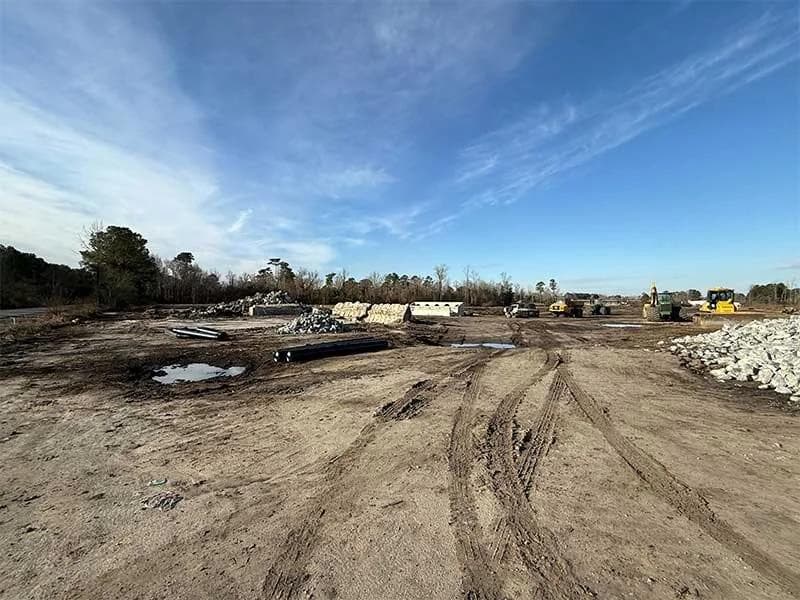
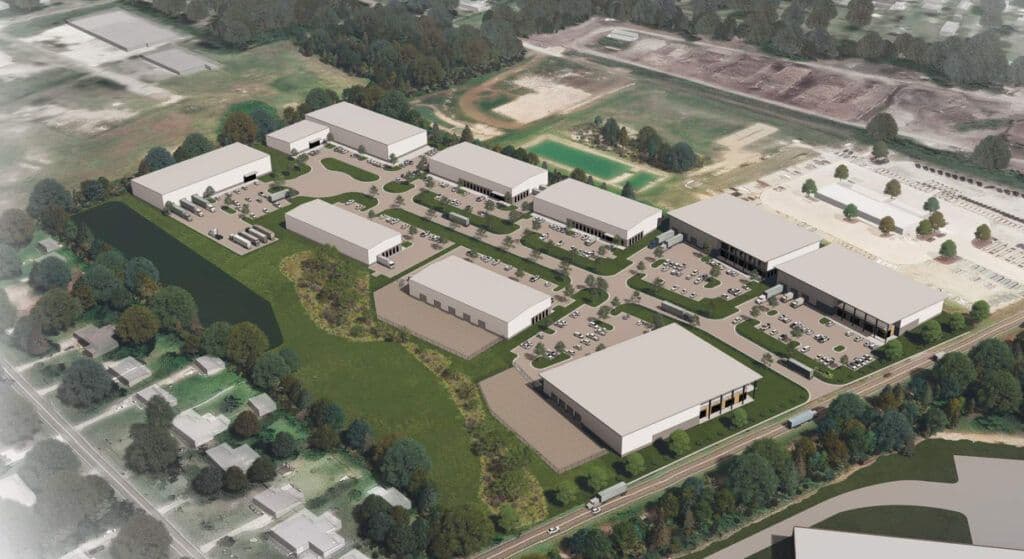
Zephyr Development Co. broke ground January 21, 2026, on the Wilmington Industrial Park, a 23-acre, ~250,000 sq ft Class A flex industrial development at 2501 Blue Clay Road. The project adds meaningful square footage to a regional industrial construction pipeline that totaled approximately 3.88 million sq ft under construction as of Q3 2025 (including both speculative and build-to-suit projects), making absorption capacity — not capital investment — the critical variable for investors and site selectors watching this corridor. No total capital investment, job creation targets, or public incentive packages have been disclosed, which limits the ability to assess deal quality or taxpayer ROI.
Fast Facts
- Developer: Zephyr Development Co. (Wilmington-based; formerly USA InvestCo, rebranded circa April 2025)
- Project: Wilmington Industrial Park — Class A flex industrial
- Location: 2501 Blue Clay Road, Wilmington, NC 28401
- Site: 23 acres | 9 buildings across 8 lots | master-planned
- Size: ~250,000 sq ft (early plans noted 220,000+ sq ft; final figure may shift)
- Timeline: Site work began late 2025; groundbreaking January 21, 2026; site work completion targeted Q1 2026; first building delivery later in 2026
- Total Investment: Not disclosed
- Job Count / Wages: Not announced
- Incentives: None publicly identified
- Transportation Access: I-40, Hwy 421, Hwy 74/76; proximity to Wilmington International Airport (ILM)
What Happened
Zephyr Development Co. commenced site work on a 23-acre master-planned flex industrial park on Blue Clay Road, one of Wilmington's most active industrial corridors. The development is designed to accommodate logistics, warehousing, light manufacturing, distribution, and build-to-suit tenants across 9 buildings.
The park sits adjacent to the Blue Clay Business Park, which has already secured its first tenants — Coastal Millwork and Risley Padula Construction — providing an early demand signal for the corridor. Zephyr, which rebranded from USA InvestCo in 2025, has a local track record that includes a 100,000+ sq ft refrigerated warehouse at the Port of Wilmington and the acquisition of 100+ acres in Castle Hayne for future industrial and commercial use.
Why It Matters
The project's significance is less about any single headline metric and more about what it reveals about supply-side confidence in Wilmington's industrial market. Developers are committing capital to speculative product in a submarket where verified tenant demand has not yet been publicly quantified against the growing pipeline.
With no disclosed job counts, average wages, or incentive commitments, this deal cannot be evaluated on a cost-per-job or incentive-ROI basis. That is a notable gap. For workforce planners and policymakers, the eventual tenant mix will determine whether this park delivers higher-wage advanced manufacturing positions or lower-wage warehouse and distribution roles — a distinction that materially affects the project's economic value to the region.
The Blue Clay Road corridor is also undergoing a land-use transition: 108 acres nearby were rezoned from industrial to residential in November 2025 (zoned for up to 1,080 units, though the developer intends to build fewer), which could create long-term friction between industrial operations and residential density.
What Stands Out
- No capital investment figure disclosed: Unusual for a project of this scale. Based on regional Class A flex construction costs ($80–$120/sq ft), a rough estimate would place total development cost in the $20M–$30M range, but this is unverified and speculative.
- Substantial regional construction pipeline: The park adds ~250,000 sq ft to a Wilmington industrial market that had approximately 3.88M sq ft under construction as of Q3 2025 (per Lee & Associates data, encompassing both speculative and build-to-suit projects). Absorption must accelerate to prevent vacancy overhang.
- No public incentives identified: If confirmed, this is a fully private-capital project — a positive signal for taxpayers but one that also means no clawback protections tied to job creation or wage floors.
- Adjacent tenant activity is encouraging: Coastal Millwork and Risley Padula Construction landing at Blue Clay Business Park suggests the corridor has real pull, though both are local/regional firms, not large external employers.
- Zephyr's expanding footprint: Between the Port cold storage facility, 100+ Castle Hayne acres, and now this park, Zephyr is positioning itself as Wilmington's most active homegrown industrial developer.
Market Lens
Analyst Angle: Real Estate Demand Signal
This project is best understood as a supply-side bet on Wilmington's flex industrial undersupply thesis. Local sources and the developer's own positioning cite a shortage of modern, flexible industrial space in the market — and that thesis has merit. Wilmington's proximity to the Port of Wilmington, its improving highway connectivity, and steady population growth create structural demand drivers.
However, the approximately 3.88M sq ft of industrial space under construction as of Q3 2025 is the countervailing data point. Flex space — which competes for a broader but often shallower tenant pool than bulk distribution — is particularly sensitive to absorption timing. If the market delivers this product faster than tenants materialize, rental rate compression and extended vacancy could follow, pressuring developer returns and potentially stalling later phases.
Investors should watch two leading indicators: first, the pace at which Zephyr secures pre-lease commitments before first delivery in late 2026; second, the tenant profile — whether demand comes from logistics users (lower wage, higher turnover) or light manufacturing and tech-adjacent firms (higher wage, stickier occupancy). The corridor's long-term value depends on which category dominates.
The residential rezoning of 108 nearby acres (approved November 2025) adds a wildcard. Mixed-use adjacency can enhance workforce proximity, but it can also generate noise, traffic, and zoning complaints that constrain industrial expansion over time.
Risks & Watch-Outs
- Absorption risk is the headline concern. Adding 250,000 sq ft to a market with approximately 3.88M sq ft under construction requires sustained tenant demand that has not yet been publicly demonstrated at this pace.
- No job or wage commitments mean the project's workforce impact is entirely dependent on who leases — and that's unknown. A park filled with last-mile distribution tenants delivers a very different economic outcome than one anchored by precision manufacturing.
- Construction cost volatility: Material and labor cost escalation in 2025–2026 could push delivered rents above what smaller flex tenants can absorb, particularly in a market that historically prices below Raleigh-Durham and Charlotte.
- Residential encroachment: The up-to-1,080-unit residential rezoning near the site could generate land-use conflicts that affect future industrial expansion or tenant operations.
- Developer concentration risk: Zephyr is accumulating significant industrial exposure across multiple Wilmington sites. A market correction or absorption slowdown would disproportionately affect a single local developer carrying this much inventory.
- Data gaps: Without disclosed investment totals, job projections, or incentive terms, independent verification of economic impact is not currently possible. Analysts and policymakers should press for transparency as the project advances.

Daniel Price
Daniel Price brings a decade of experience advising developers and institutional investors on large-scale commercial real estate projects. Now based in Wilmington, he covers local business expansion, leasing trends, and the economics behind downtown redevelopment and land use shifts.
Related Posts
More stories from the same category


Recent Posts
Stay up to date with our latest stories


Subscribe to Newsletter
Provide your email to get email notification when we launch new products or publish new articles